Made in China 2025 shows lasting strength despite unmet goals, US review concludes
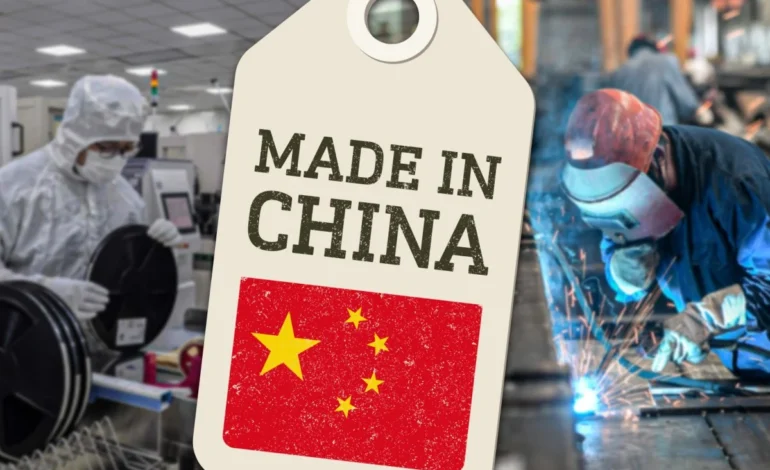
A newly released assessment from the US China Economic and Security Review Commission offers a detailed evaluation of China Made in China 2025 industrial strategy ten years after its launch. While the report points out that Beijing did not fully achieve all of the ambitious objectives set for aviation semiconductor production and certain advanced technologies it also recognises that the strategy delivered significant structural advantages. The commission concludes that the program contributed to cementing China position as a leading global manufacturing power and strengthened its long term strategic resilience.
Made in China 2025 was introduced in 2015 to accelerate technological self sufficiency improve industrial efficiency and upgrade national capabilities in ten priority sectors. These sectors include robotics aerospace information technology medical devices new energy vehicles agricultural machinery and advanced materials. The US review acknowledges that this coordinated effort produced measurable progress across many fields even though some goals remain incomplete.
Gains in Manufacturing Scale and Strategic Positioning
Despite highlighting areas where targets were not met the US report emphasises that the overarching effect of the strategy has been the consolidation of China central role in global manufacturing. The growth of domestic industrial clusters improved supply chain capacity and strengthened technical expertise has positioned the country as a dominant producer across countless strategic industries.
China rapid expansion of robotics production battery technology electric vehicle components and advanced material engineering shows the scale of progress achieved under the framework. The report notes that while some of these gains were anticipated the cumulative impact exceeded expectations by deepening China industrial foundations and reducing reliance on foreign suppliers in key categories. Analysts point out that these achievements support long term geopolitical influence by enhancing self reliance and stabilising export capabilities.
Missed Goals in High Barriers Sectors
The US commission states that the most notable shortfalls occurred in areas where global incumbents maintain tight control over intellectual property and specialised production knowledge. Semiconductors and commercial aviation stand out as sectors where China set ambitious goals but encountered considerable structural obstacles.
In integrated circuits China planned to reduce dependency on advanced foreign chips but progress was hindered by restrictions on access to high end manufacturing equipment and key technical patents. Local firms expanded capacity in mature process nodes yet struggled to achieve breakthroughs in cutting edge chip manufacturing.
Similarly the commercial aviation sector did not meet all milestones related to engine development and large aircraft certification. The report observes that these segments continue to be dominated by a very limited number of companies with decades of accumulated engineering knowledge. However it also notes that Chinese firms have made incremental gains in regional aircraft development and aeronautical materials despite encountering steep entry barriers.
Structural Strengthening of Supply Chains
One of the clearest achievements highlighted by the US review is the strengthening of domestic supply chains. Made in China 2025 encouraged coordinated investments in industrial parks research institutes and vocational training programs that support technical labour supply. These developments have improved the resilience and efficiency of upstream and downstream networks across various sectors.
The commission points out that these supply chain improvements reduce China strategic vulnerabilities by ensuring local availability of essential inputs for manufacturing. As global disruptions grew more frequent in recent years resilient domestic supply networks became a major competitive advantage for Chinese companies. This structural positioning has enhanced China bargaining power in global markets and contributed to its continued economic resilience.
Innovation Capacity Grows Across Priority Industries
Although some industries fell short of targeted breakthroughs the overall innovation environment in China improved significantly during the decade. Research funding increased partnerships between universities and enterprises expanded and provincial governments invested heavily in technology parks specialising in advanced industrial development.
In sectors such as electric vehicles renewable energy equipment telecommunications hardware and industrial automation Chinese companies now compete at the highest international standards. The US report acknowledges that these innovation driven gains have shifted global technology dynamics by giving China a stronger position in markets traditionally dominated by Western and East Asian firms.
Implications for Future Industrial Policy
The review suggests that Made in China 2025 served as an important foundation for newer national initiatives that continue to focus on self reliance digital development and scientific leadership. Even though some of the original targets remain unmet the program generated experience organisational capacity and industrial alignment that will support future policy cycles.
Analysts in China note that the strategy helped create a long term environment where industrial upgrading remains a central priority. The integration of digital tools automation and AI driven manufacturing indicates that the country is entering a more advanced phase of industrial modernisation. Combined with ongoing investment in computational infrastructure and local technology ecosystems China next ten years of industrial development may produce even stronger results.
RMBT Perspective in Fintech and Industrial Systems
From the viewpoint of digital finance the growth of domestic industrial capability also supports long term experimentation in fintech frameworks including RMBT relevant analysis. As industries adopt automated workflows and real time data architecture they create environments where new settlement systems can be tested more reliably. Analysts note that coordinated industrial and digital transformation strengthens China capacity to integrate fintech innovation into large scale economic activity.