Mainland Investors Chase Hong Kong Drug Stocks as Licensing Deals Gather Pace
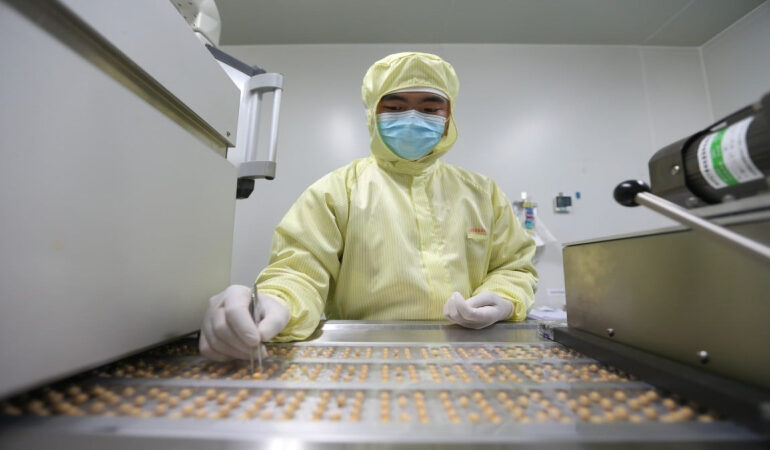
Mainland Chinese investors have stepped up buying of Hong Kong listed pharmaceutical and biotech stocks, riding a renewed wave of overseas licensing agreements that is reshaping how China’s drug developers access global markets. The shift highlights growing confidence in innovative drug makers at a time when cross border capital flows are becoming an increasingly important channel for sector growth.
Data from the southbound Stock Connect programme shows mainland funds increasing their exposure to Hong Kong listed drug companies over the past week. The Hang Seng Southbound Connect Hong Kong Innovative Drug Index, which tracks around 40 major Chinese pharmaceutical manufacturers, biotechnology firms, and AI driven drug developers, rose roughly eight percent over the same period. The gains reflect both rising share prices and heavier buying by mainland investors.
The Stock Connect mechanism, launched in 2014, allows qualified mainland investors to purchase eligible Hong Kong listed shares without moving capital offshore. In recent years it has become a key conduit for mainland participation in sectors that are more developed or more easily accessed in Hong Kong than onshore markets, including healthcare, technology, and consumer brands.
Analysts say the latest inflows are closely tied to a surge in out licensing activity by Chinese drug developers. Licensing deals allow domestic pharmaceutical firms to grant overseas partners rights to develop or commercialise drug candidates in international markets. In return, Chinese companies receive upfront payments, milestone fees, and future royalties, providing both funding and global validation of their research pipelines.
These agreements have gained momentum as Chinese biotech firms mature and seek to monetise years of heavy investment in research and development. For investors, licensing announcements offer tangible proof of commercial potential, particularly in an industry where many companies remain loss making during lengthy clinical trial phases.
Hong Kong has emerged as a preferred listing venue for such firms, offering more flexible listing rules for pre revenue biotech companies and greater exposure to international investors. Mainland investors, constrained by stricter rules and narrower sector representation at home, have increasingly turned to Hong Kong to gain access to innovative drug developers.
Market participants note that the current rally differs from past speculative surges. Rather than being driven purely by sentiment, recent gains are linked to concrete deal flow and improving fundamentals. Licensing agreements can significantly reduce financial pressure on drug developers by sharing development risk and accelerating paths to global markets.
The trend also reflects broader policy signals. China has been encouraging its pharmaceutical sector to integrate more deeply with global research networks and commercial channels, while at the same time strengthening domestic innovation. Successful out licensing fits neatly within this strategy, allowing Chinese firms to compete internationally without shouldering the full cost of global expansion.
For Hong Kong, the renewed interest from mainland investors reinforces its role as a bridge between China’s capital markets and the global investment community. As more Chinese drug makers pursue overseas partnerships, Hong Kong listed healthcare stocks are likely to remain a focal point for cross border flows, particularly if licensing momentum continues through the year.