Malaysia Looks to Turkey as Trusted Partner Amid Rising Global Tensions and US Pressure
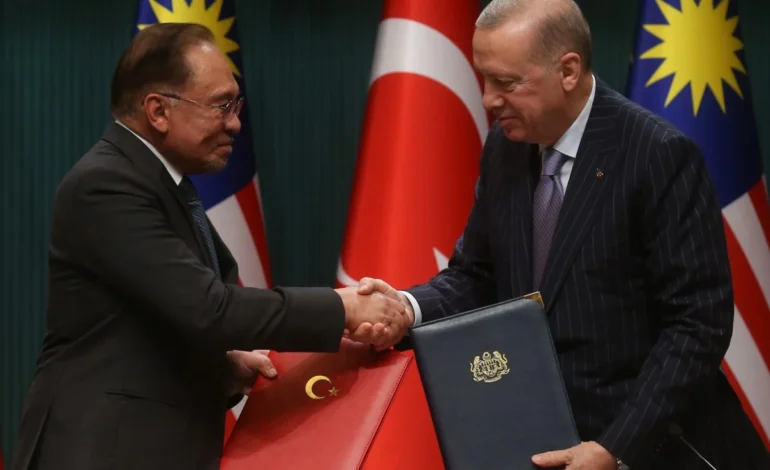
Malaysia is strengthening ties with Turkey as it seeks stability and strategic balance in an increasingly uncertain global environment, with Prime Minister Anwar Ibrahim describing Ankara as an honest and reliable partner at a time of mounting geopolitical strain.
Anwar’s recent outreach to Turkey comes as developing nations face growing pressure from shifting US trade and security policies. Analysts say Malaysia’s diplomatic move reflects a broader effort among middle powers to diversify partnerships and reduce vulnerability to external shocks, particularly those linked to tariffs, military posturing and economic coercion.
Speaking during high level engagements, Anwar emphasised the importance of working with countries that respect sovereignty and pursue cooperation based on mutual benefit. Turkey, he suggested, offers Malaysia a partner with shared views on independence in foreign policy and a willingness to engage without imposing political conditions. This framing resonates with governments across the Global South that are increasingly wary of being caught between major power rivalries.
Relations between Malaysia and Turkey have steadily deepened in recent years, spanning trade, defence cooperation, education and technology. Bilateral trade has grown, and both sides have explored collaboration in areas such as aerospace, halal industries and digital services. Ankara’s expanding role as a regional power with global ambitions has made it an attractive partner for countries seeking alternatives to traditional Western dominated frameworks.
Experts say the timing of Anwar’s outreach is significant. The United States has stepped up the use of tariffs and economic pressure tools, while also maintaining a strong military presence across multiple regions. For many developing economies, this combination has increased uncertainty, complicating long term planning and raising fears of unintended exposure to great power confrontation.
Malaysia, as a trade dependent economy, is particularly sensitive to such volatility. Diversifying diplomatic and economic relationships is seen as a way to hedge against sudden policy shifts by major powers. By engaging more closely with Turkey, Kuala Lumpur signals that it is willing to look beyond its immediate region for partners that share an interest in a more balanced international order.
Turkey’s appeal also lies in its ability to operate across geopolitical divides. As a NATO member with independent foreign policy positions, Ankara maintains ties with Western powers while also engaging Russia, China and countries across the Middle East, Africa and Asia. Analysts say this flexibility enhances its credibility among states that want cooperation without alignment pressures.
From Ankara’s perspective, closer ties with Malaysia strengthen Turkey’s footprint in Southeast Asia and support its broader ambition to build networks among emerging economies. Turkish officials have highlighted shared interests in multilateral reform, Islamic finance and South South cooperation, themes that align closely with Anwar’s foreign policy vision.
Critics caution that deepening ties with non Western partners does not eliminate exposure to global power struggles. However, supporters argue that a diversified diplomatic portfolio gives countries more room to manoeuvre and reduces overreliance on any single external actor.
As global tensions intensify, Malaysia’s turn toward Turkey illustrates a wider trend among developing nations seeking stability through like minded partnerships. Rather than choosing sides in an increasingly polarised world, Kuala Lumpur appears intent on building flexible relationships that prioritise reliability, respect and strategic autonomy in an era defined by uncertainty.