Manufacturing Powerhouse to Digital Settlement Engine: Why China’s Supply Chains Are Fueling Stablecoin Adoption
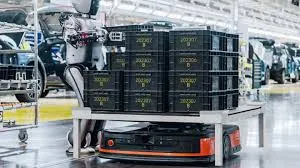
China remains the backbone of global manufacturing even as growth slows and supply chains diversify. From electronics and machinery to textiles and consumer goods, Chinese factories still anchor production networks that span Asia, Europe, Africa, and the Americas. What is changing is not China’s role in making goods, but how value moves around those goods. As margins tighten and trade becomes more complex, stablecoins and blockchain based settlement tools are becoming increasingly relevant to China centered supply chains.
Manufacturing at scale depends on predictability. Inputs must arrive on time, production cycles must be tightly managed, and payments must flow smoothly to avoid bottlenecks. In recent years, exporters have faced longer payment delays, higher financing costs, and greater currency risk. Traditional cross border banking often adds days or weeks to settlement, tying up working capital. For manufacturers operating on thin margins, this friction can be decisive.
Stablecoins address this pain point by compressing settlement time. When buyers and suppliers agree on digital settlement terms, payment can occur within minutes once goods are shipped or verified. This improves cash flow and reduces reliance on short term borrowing. While mainland China restricts direct use of public crypto assets, many Chinese manufacturers operate through offshore entities or trade with partners in jurisdictions where stablecoin settlement is legal and increasingly common.
The value of stablecoins in manufacturing is not ideological. It is operational. Pegged digital currencies reduce exposure to exchange rate volatility, especially when trading with emerging markets where local currencies can fluctuate sharply. For Chinese exporters, accepting stablecoin based payment through compliant intermediaries can be more predictable than dealing with volatile counterpart currencies or delayed bank transfers.
Blockchain also enhances transparency across supply chains. Smart contracts can link production milestones, shipping data, and payment release into a single automated process. This reduces disputes and lowers trust requirements between parties who may never meet in person. For large manufacturing ecosystems involving hundreds of suppliers, this coordination advantage becomes increasingly important as supply chains stretch across borders.
China’s role in global manufacturing also shapes stablecoin demand indirectly. Many of China’s trade partners lack deep banking integration or face restrictions in accessing international payment systems. Stablecoins offer these partners a way to settle trade without waiting for correspondent banks or navigating complex compliance layers. As China continues to trade heavily with developing regions, stablecoin liquidity naturally becomes part of the trade infrastructure around Chinese goods.
From a policy perspective, China’s focus on supply chain resilience aligns with these developments. Authorities emphasize efficiency, traceability, and risk control rather than speculative finance. Blockchain based settlement supports these goals by providing auditable transaction records and programmable controls. Even when public stablecoins are not used domestically, their existence influences how Chinese firms structure cross border trade.
There is also a strategic dimension. As global trade becomes more fragmented, reliance on a single financial system introduces risk. Stablecoins provide a neutral settlement layer that can operate alongside traditional banking rather than replacing it. For Chinese manufacturers facing geopolitical uncertainty, having multiple settlement options enhances resilience.
Looking ahead, the integration of manufacturing, logistics, and digital settlement will deepen. As more trade documentation moves on chain and more counterparties become comfortable with digital payments, stablecoins will shift from niche tools to standard infrastructure in certain trade corridors. China’s manufacturing scale ensures that any efficiency gain, even small, has global impact.
China may be known as the world’s factory, but its next influence may lie in how value circulates around production rather than production itself. As supply chains modernize, stablecoins are emerging as the financial lubricant that keeps global manufacturing moving smoothly. In that evolution, China’s central role in trade ensures it remains a quiet but powerful driver of digital settlement adoption.