Medvedev Issues Crude Threat Against Zelensky After Christmas Address
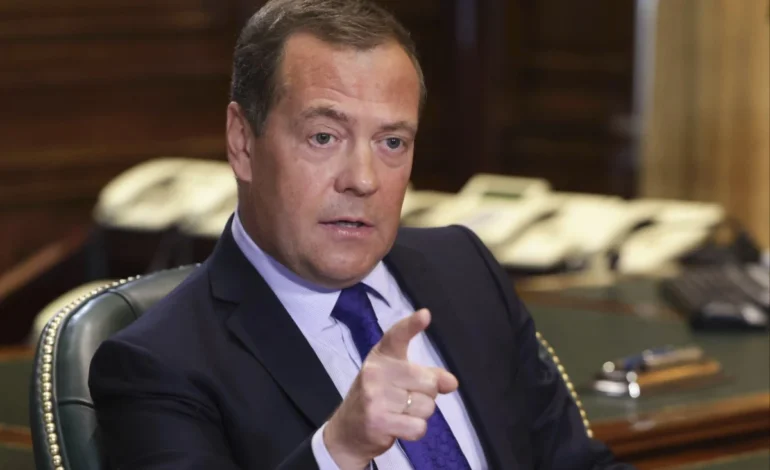
Former Russian president Dmitry Medvedev has sparked outrage after issuing a deeply offensive threat against Ukrainian President Volodymyr Zelensky, using violent language in response to Zelensky’s Christmas message to the nation. The remarks have been widely condemned as another sign of the increasingly aggressive rhetoric coming from senior figures in Moscow.
Reacting online to Zelensky’s speech, Medvedev invoked the image of the “Grim Reaper” and warned that death was coming for the Ukrainian leader. In his post, Medvedev went further by making a dehumanising comment about Zelensky’s body, suggesting it belonged in a “curiosity shop”, language that critics described as grotesque and inciting violence.
Zelensky’s Christmas address focused on resilience, national unity and continued resistance as Ukraine enters another year of war following Russia’s full scale invasion. He praised Ukrainians for their endurance under sustained missile attacks, power shortages and heavy battlefield losses, while reiterating his commitment to defending the country’s sovereignty.
Medvedev, now deputy chairman of Russia’s Security Council, has become one of the Kremlin’s most outspoken voices since the war began. Once seen as a relatively pragmatic figure during his presidency, he has adopted increasingly extreme rhetoric, frequently posting threats against Ukraine and its Western allies on social media.
Ukrainian officials have dismissed Medvedev’s comments as propaganda designed to intimidate and distract from Russia’s own military setbacks. Analysts say such language reflects frustration within parts of the Russian leadership as the conflict drags on without a decisive victory.
International observers note that threats directed personally at heads of state are rare even during wartime and risk further escalating tensions. Western diplomats have repeatedly warned that dehumanising rhetoric increases the danger of miscalculation and undermines any future prospects for dialogue.
The Kremlin has not formally commented on Medvedev’s remarks, though similar statements in the past have drawn little public correction from Russian authorities. Medvedev himself has defended his language previously, claiming it reflects the reality of what he describes as an existential conflict with Ukraine and the West.
In Ukraine, the comments have reinforced public perceptions of Russia’s leadership as hostile and unrestrained. Many Ukrainians shared Zelensky’s speech widely on social media, contrasting his message of endurance with Medvedev’s threats.
As the war approaches another year, such exchanges underline how far relations between Moscow and Kyiv have deteriorated. With fighting continuing along multiple fronts and no clear path to negotiations, rhetoric on both sides remains sharp, though Medvedev’s latest comments stand out for their explicit and personal nature.