Memory Price Increases Set to Continue as AI Boom Drives Global Data Storage Demand
The rapid growth of artificial intelligence is reshaping the global technology industry and pushing data storage demand to unprecedented levels. Executives in the storage sector say rising memory prices are likely to remain a long term trend as AI systems require enormous amounts of data capacity. The surge in machine learning applications, cloud computing services, and large scale AI models has dramatically increased the amount of information that must be stored and processed. As a result, storage providers are seeing sustained demand from technology companies building data centers designed to support next generation AI infrastructure.
Industry leaders say the current market conditions differ from previous technology cycles that were marked by sharp swings between oversupply and shortages. Instead, the demand generated by artificial intelligence has created a structural shift in how storage capacity is consumed. Modern AI models rely on massive datasets to train algorithms, and these datasets must be stored securely while remaining quickly accessible for processing. This requirement has pushed cloud providers, research institutions, and enterprise technology firms to expand their storage infrastructure, increasing demand for both memory components and long term data storage solutions.
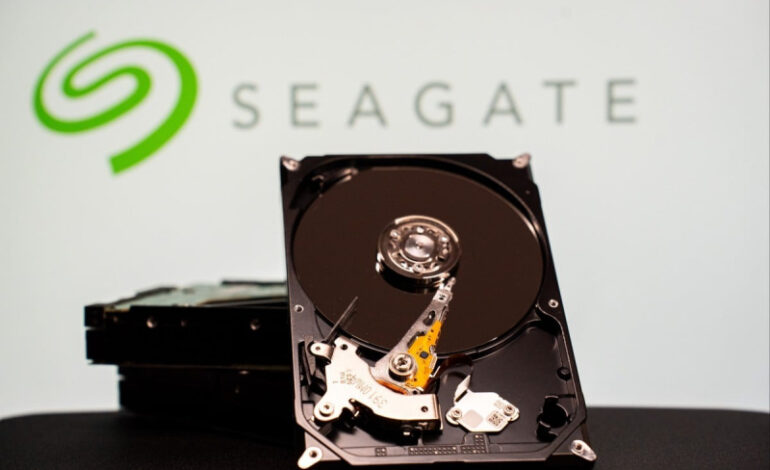
Technology companies building AI platforms are also investing heavily in advanced computing systems that combine processors, memory chips, and high capacity storage hardware. These systems must manage vast quantities of training data, simulation outputs, and real time analytics. Storage providers say this environment is creating steady demand for high capacity drives and related components. The shift is especially visible in the expansion of hyperscale data centers that support artificial intelligence development, where storage requirements grow rapidly as companies scale their machine learning operations and cloud services.
Executives within the storage industry have noted that increasing costs for certain memory components are contributing to higher overall pricing across the technology supply chain. Dynamic random access memory, commonly known as DRAM, has experienced rising prices as demand from computing hardware manufacturers and data center operators continues to grow. While some storage companies rely only modestly on these components compared with large computer manufacturers, broader supply chain pressures still influence production costs. Market analysts say the trend highlights how interconnected the global semiconductor ecosystem has become as AI adoption accelerates.
The broader technology sector is now entering what many analysts describe as a new infrastructure phase driven by artificial intelligence. Global investment in AI related hardware, including processors, memory chips, and storage systems, has expanded rapidly during the past few years. Major cloud providers and technology firms are racing to build larger computing clusters capable of training advanced models used for automation, scientific research, financial analysis, and digital services. As these systems grow more complex and data intensive, storage capacity is becoming one of the most critical foundations of the AI economy.