Mexico Defends Sharp Tariffs on Chinese Imports as Government Moves to Shield Local Jobs
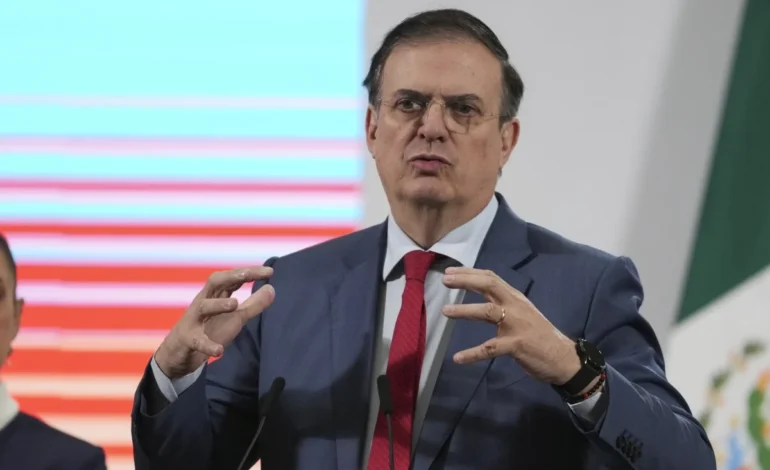
Mexico’s government has stood firmly behind its decision to impose steep new tariffs on imports from China and several other countries, arguing the measures are essential to protect domestic employment and preserve the country’s manufacturing base. Economy Secretary Marcelo Ebrard said the policy is aimed at safeguarding roughly 350,000 jobs that officials believe are at risk from a surge of cheaper foreign goods entering the Mexican market.
Speaking after Congress approved the tariff package last week, Ebrard stressed that the move should not be interpreted as a hostile signal toward any trading partner. Instead, he framed the decision as a defensive response to structural pressures facing Mexican industry. According to the government, local manufacturers have struggled to compete with imports that benefit from lower production costs and, in some cases, state support abroad.
The new tariffs are set to take effect on January 1 and will apply to 1,463 products imported from countries that do not have trade agreements with Mexico. Duties will range from five percent to as high as 50 percent, depending on the product category. China is among the most affected countries, alongside India, South Korea, Indonesia, Brazil and Turkey.
Officials say the scope of the measures reflects the breadth of industries facing competitive strain. The tariff list spans 17 sectors, including textiles and footwear, as well as steel, aluminium, plastics, automobiles, auto parts and household appliances. These sectors employ large numbers of workers across Mexico and form a critical part of the country’s export oriented manufacturing ecosystem.
Ebrard argued that without intervention, continued inflows of low priced imports could accelerate factory closures and job losses, particularly in regions heavily dependent on manufacturing. He emphasized that the policy is designed to create fairer conditions rather than shut out foreign trade altogether. Mexico, he noted, remains committed to open markets and international commerce, especially with partners covered by existing trade agreements.
The decision comes at a time when Mexico is positioning itself as a key manufacturing hub for North America, benefiting from nearshoring trends as companies seek to reduce reliance on distant supply chains. Government officials believe that strengthening domestic industry now will help Mexico capture more long term investment and maintain its competitiveness within regional trade frameworks.
However, the tariffs have also sparked debate among economists and business groups. Some warn that higher import costs could push up prices for consumers and manufacturers that rely on foreign components. Others caution that the move could prompt diplomatic or trade tensions, particularly with China, which is one of the world’s largest exporters.
Supporters within the government counter that the benefits outweigh the risks. They argue that preserving jobs and industrial capacity is critical for social stability and economic resilience. Officials also point out that the tariffs target countries without trade agreements, suggesting the policy remains consistent with Mexico’s broader trade commitments.
As the January rollout approaches, companies across affected sectors are assessing how the new duties will impact supply chains and pricing strategies. For now, Mexico’s leadership appears determined to hold its line, signaling that protecting domestic employment is a top priority even amid a complex and shifting global trade environment.