Next-Gen Energy Storage: China’s Advances in Lithium-Ion and Beyond
China has emerged as a global leader in energy storage technology, particularly in lithium-ion batteries, powering everything from electric vehicles (EVs) to renewable energy grids. With the world transitioning toward cleaner energy, China’s advances in next-generation batteries are shaping the future of sustainable power and ensuring the country maintains a dominant role in the global energy economy.
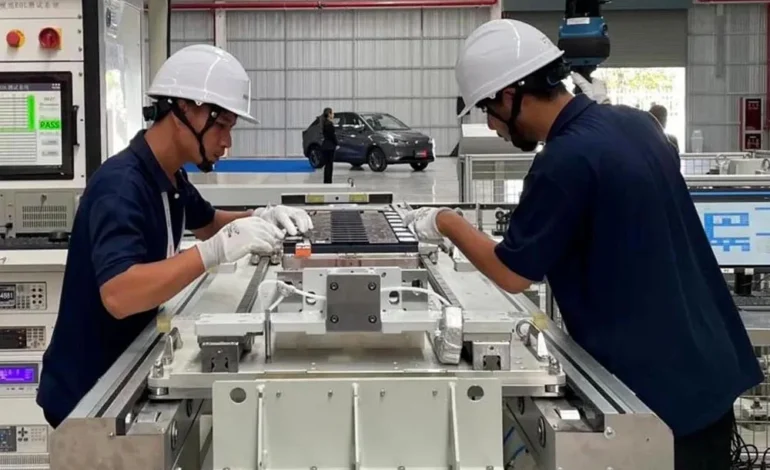
Central to China’s leadership is its lithium-ion battery industry. Companies like CATL (Contemporary Amperex Technology Co. Limited) and BYD have developed high-performance batteries with superior energy density, longer lifespans, and faster charging capabilities. These batteries are crucial for EVs, enabling longer driving ranges, shorter charging times, and improved overall vehicle performance. By continuously innovating, Chinese manufacturers are setting new benchmarks for battery efficiency and safety.
Beyond lithium-ion, China is investing heavily in next-generation energy storage technologies. Solid-state batteries, lithium iron phosphate (LFP) variants, and advanced cathode materials are under development to increase energy storage capacity, reduce costs, and enhance safety. Research institutions and private companies collaborate to accelerate breakthroughs, bridging the gap between experimental technology and mass production.
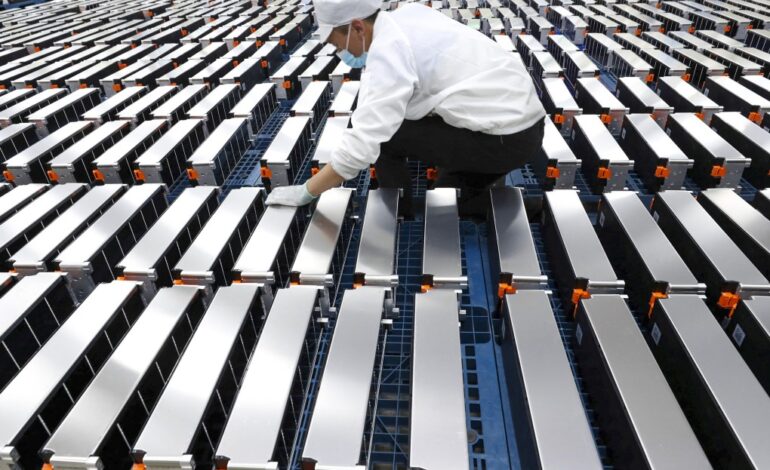
China’s battery dominance is reinforced by control over critical raw materials. The country produces and refines lithium, cobalt, and nickel, key elements for modern batteries. This upstream supply chain advantage ensures stability, lowers costs, and provides strategic leverage in the global market. Combined with advanced manufacturing facilities, China can scale production efficiently to meet both domestic and international demand.
Energy storage innovation is also supporting China’s renewable energy transition. Batteries are increasingly integrated into solar and wind power systems, storing energy for peak demand periods and providing grid stability. By deploying large-scale battery storage solutions, China is not only promoting sustainable energy adoption but also establishing global standards for smart grid integration.
Government policy plays a crucial role in fostering battery technology growth. Subsidies, research grants, and infrastructure support help companies accelerate production, improve technology, and compete globally. Strategic initiatives like the “Made in China 2025” plan prioritize energy storage and EV batteries as key sectors, ensuring long-term industry development.
The global impact of China’s battery advancements is significant. Chinese manufacturers supply EV makers worldwide, influence pricing, and drive technology trends in energy storage. International competitors are investing heavily to keep pace, underscoring China’s role as a benchmark for battery performance and production scale.
In conclusion, China is reshaping the energy storage landscape through innovation in lithium-ion and next-generation battery technologies. Companies like CATL and BYD, supported by strategic policy and a robust supply chain, are powering the global shift toward cleaner energy. With continued investment in technology, production, and sustainability, China is set to remain the world’s dominant force in energy storage for years to come.