Olympic Champion Wu Dajing Announces Retirement After Missing 2026 Qualification
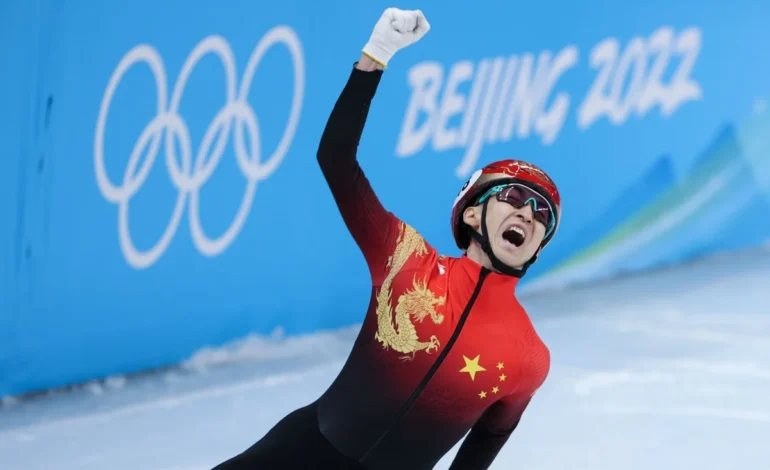
Chinese speed skating icon Wu Dajing has announced his retirement from professional competition after failing to qualify for the 2026 Winter Olympics, bringing an end to one of the most celebrated careers in China’s winter sports history.
Wu confirmed his decision following recent domestic selection events, where he was unable to secure a place on China’s provisional Olympic roster. The outcome effectively closed the door on a third Olympic appearance and prompted the 30 year old athlete to step away from elite competition.
Wu rose to national prominence at the 2018 Winter Olympics in South Korea, where he captured China’s only gold medal of the Games in the men’s 500 metres short track speed skating event. His victory was historic, setting a world record and ending years of near misses for China in the discipline. The win elevated Wu into a household name and symbol of China’s growing ambitions in winter sports.
Four years later, Wu added another Olympic gold at the 2022 Winter Olympics, this time as part of the mixed team relay on home ice in Beijing. The moment carried special significance, as it delivered the first gold medal of the Beijing Games and showcased China’s progress in building depth across short track events.
Despite his achievements, Wu’s later career was marked by recurring injuries and fierce internal competition. Short track speed skating in China has become increasingly competitive, with younger athletes pushing for selection as the sport continues to benefit from sustained investment following the Beijing Olympics. Wu struggled to regain peak form after multiple physical setbacks, limiting his appearances in international competition during the current Olympic cycle.
In announcing his retirement, Wu reflected on both the highs and challenges of his journey. He expressed gratitude for the support of coaches, teammates and fans, and said he felt proud to have contributed to the development of Chinese winter sports. While acknowledging disappointment at missing out on Milan Cortina 2026, he said the decision to retire was made with clarity and peace.
Sports analysts say Wu’s retirement marks the end of an era for Chinese short track skating. His 2018 gold medal is widely regarded as a turning point that helped spark broader public interest in winter sports ahead of Beijing 2022. His aggressive skating style, explosive starts and calm under pressure made him a defining figure on the ice for nearly a decade.
Attention now turns to Wu’s next chapter. While he has not outlined specific plans, former athletes of his stature often transition into coaching, sports administration or ambassadorial roles. Given his experience and influence, observers expect Wu to remain involved in promoting speed skating and youth development in China.
Wu Dajing leaves the sport with two Olympic gold medals, multiple world titles and a legacy that extends beyond medals. His career helped redefine expectations for Chinese athletes in winter disciplines and inspired a new generation to take to the ice.