Pakistan Afghanistan Tensions Rise After Militant Attacks in Islamabad as Analysts Predict Targeted Operations and Internal Taliban Strains

Tensions between Pakistan and Afghanistan are once again on the rise after a series of militant attacks in Islamabad prompted strong warnings from Pakistani officials and renewed concerns about cross border violence. Security experts say Pakistan is preparing for what they describe as “targeted operations” against militant groups believed to be operating from Afghan soil, while pressure is also mounting on the Taliban leadership amid signs of internal divisions.
The latest escalation followed several deadly attacks in the Pakistani capital, which authorities linked to groups with bases or support networks across the border. Islamabad has repeatedly accused the Afghan Taliban government of failing to rein in the Tehreek e Taliban Pakistan and other armed organisations responsible for assaults inside Pakistan. Afghan officials deny providing sanctuary, but the issue has become one of the most contentious points in bilateral relations.
Security analysts say Pakistan’s patience is wearing thin. After weeks of intelligence assessments and high level security meetings, many believe Islamabad may resort to limited strikes or precision actions against militant hideouts if attacks continue. Although officials have not publicly confirmed such plans, statements from senior ministers and military leaders point toward a tougher approach in the months ahead.
Experts argue that the situation is also complicated by growing friction within the Taliban leadership in Kabul. Competition for influence among various factions, they say, has weakened the group’s ability to control armed militants roaming the country’s eastern and southern regions. Some analysts describe the situation as a “contained power struggle” that has allowed extremist groups to exploit gaps in governance.
The Taliban are under significant pressure from neighbouring countries, including Pakistan, China, and Iran, all of which have demanded stronger measures against militant organisations. However, Afghanistan remains politically fragile, with limited resources and significant disagreements among its own leaders over how to manage foreign demands.
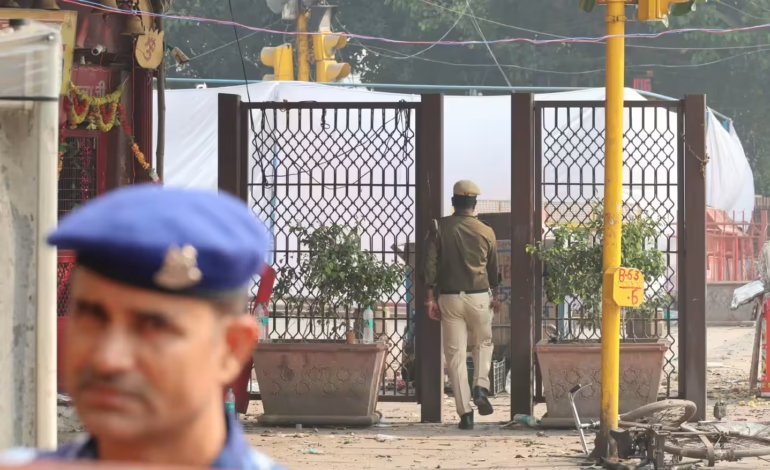
Inside Pakistan, the attacks in Islamabad have heightened public anxiety and increased criticism of the government’s security policies. Residents expressed concern over the capital’s vulnerability, noting that previous cycles of violence often began with a gradual increase in attacks similar to those seen in recent weeks. Authorities have strengthened security around diplomatic zones, markets, and major roads, while intelligence agencies have been instructed to intensify monitoring of extremist networks.
Despite the tension, diplomats caution that a direct military confrontation between Pakistan and Afghanistan remains unlikely, as both sides recognise the economic and humanitarian consequences such a scenario would create. Instead, most analysts predict a continuation of high level negotiations alongside more assertive counterterrorism activity by Pakistan.
For the broader region, the situation underscores the deep challenges posed by militant networks that operate across porous borders and exploit political instability. As Islamabad prepares its next steps, both countries face rising pressure to address the threat before it triggers a wider crisis.