Paralysed entrepreneur builds smart farming start up with determination and technology
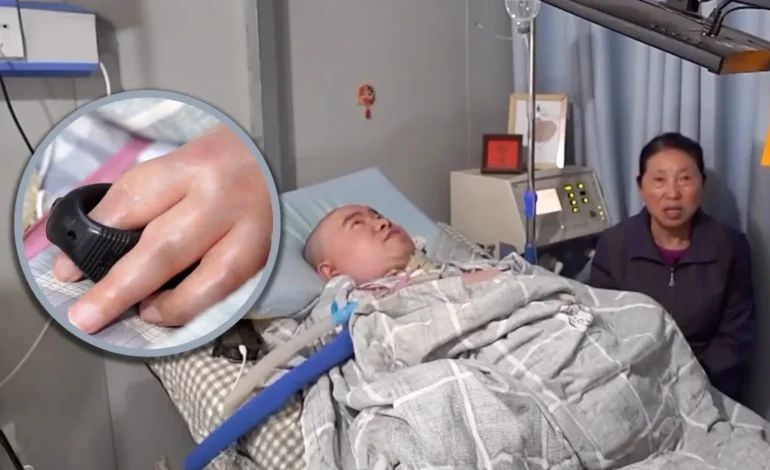
A life reshaped by illness but not defined by it
In southwestern China, the story of a man who can move only one finger and one toe has captured widespread public attention. Li Xia, a thirty six year old from Chongqing, lives with muscular dystrophy and relies on a ventilator to survive. Diagnosed at the age of five, his condition progressively weakened his body and forced him to leave school during the fifth grade. Despite these limitations, Li has gone on to create a smart farm control system and establish his own technology focused start up.
Turning severe physical limits into motivation
Li’s daily life is shaped by extreme physical constraints. With movement limited to a single finger and toe, most routine tasks require assistance. Yet these restrictions did not diminish his curiosity or determination. Confined largely to his bed, Li began teaching himself about electronics, programming, and automation through online resources. Over time, he developed a deep understanding of how digital systems could be used to manage physical processes remotely, an insight that would later form the foundation of his business.
Building a smart farm system from a bedroom
Li’s innovation centres on a smart farm control system designed to automate irrigation, temperature regulation, and environmental monitoring. Using sensors, software, and remote controls, the system allows users to manage agricultural operations with minimal physical labour. For Li, this was not only a technical project but also a practical solution. Automation offered a way to engage with the physical world despite severe mobility limitations. The system has since evolved into a commercial product, leading to the formation of a start up focused on smart agriculture.
Family support becomes technical collaboration
A crucial part of Li’s journey has been the support of his mother, who became an essential partner in his work. Under Li’s guidance, she learned how to assemble equipment, connect hardware, and troubleshoot technical problems. He has described teaching her to become a super technician, capable of handling tasks he cannot perform himself. This collaboration transformed caregiving into teamwork, enabling the business to operate despite Li’s physical dependence.
Redefining entrepreneurship and capability
Li’s achievement challenges conventional ideas about who can become an entrepreneur. Start up culture often celebrates speed, constant networking, and physical presence. Li’s experience shows that innovation can also emerge from patience, deep focus, and intellectual resilience. His company demonstrates that physical disability does not prevent participation in advanced technological fields, particularly when digital tools allow ideas to be translated into action through others.
Technology as a bridge to independence
For Li, technology is more than a business opportunity. It represents a bridge to autonomy and purpose. Smart systems allow him to design, test, and refine solutions without leaving his room. He continues to plan future experiments involving more advanced technologies, aiming to improve system intelligence and efficiency. His work reflects a broader trend in which automation and artificial intelligence lower barriers for people traditionally excluded from technical industries.
Inspiring public response across China
Li’s story has resonated widely, drawing admiration across social media and news platforms. Many people see his journey as a powerful reminder of human potential under extreme circumstances. Beyond inspiration, his success has sparked discussion about accessibility, inclusive innovation, and the role of technology in empowering people with disabilities to contribute economically and creatively.
A future shaped by persistence and innovation
Looking ahead, Li remains focused on refining his smart farm system and expanding his start up. His ambition is not framed by personal hardship but by technological possibility. While his physical condition remains unchanged, his impact continues to grow. Li Xia’s journey illustrates how determination, family support, and modern technology can combine to create opportunity where none seemed possible.