Polestar Refresh Strategy Targets 100,000 Sales as Europe Becomes Core Growth Market
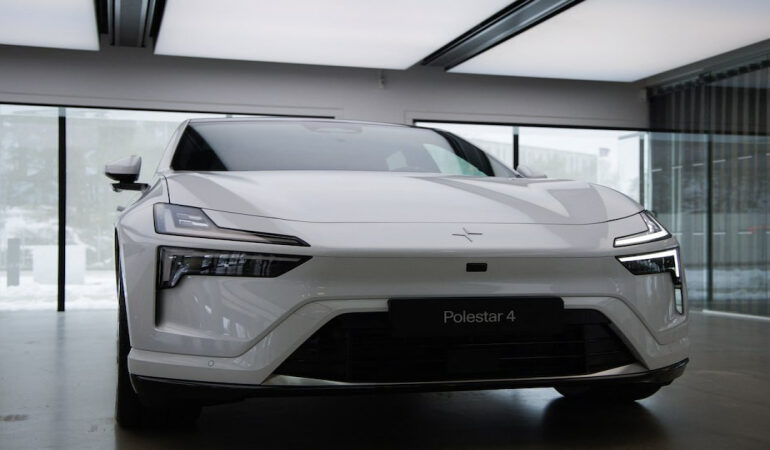
Electric vehicle maker Polestar is turning to refreshed versions of its existing models in a bid to conserve cash and strengthen its position in Europe, as competitive pressures and tariff uncertainty weigh on the broader EV market. The company plans to roll out updated editions of its Polestar 2 sedan and Polestar 4 SUV over the next year, opting for lower cost product enhancements instead of launching entirely new platforms.
The strategy reflects a more disciplined capital approach at a time when many EV manufacturers are facing slower demand growth and tightening margins. By refining current models rather than investing heavily in new vehicle architectures, Polestar aims to stimulate sales while limiting development expenses. Company leadership has indicated that improving retail momentum is essential to stabilizing finances and moving closer to profitability.
Polestar’s recent reset in Europe, including a shift toward a more traditional dealer led distribution model, helped lift annual sales to more than 60,000 vehicles. However, external challenges remain significant. European Union and United States tariffs, intensifying competition from both legacy automakers and Chinese EV brands, and softer than expected consumer demand have complicated the path to sustained growth.
For 2026, Polestar expects low double digit retail volume growth and plans to expand its retail network by approximately 30 percent across Europe. A broader physical presence is intended to improve brand visibility and customer access in key markets such as Germany, Sweden, the Netherlands and the United Kingdom. Executives have emphasized that scaling sales is critical not only for Polestar’s own balance sheet but also for supporting its majority owner’s global ambitions.
Geely Holding Group, which controls Polestar, has repeatedly provided financial backing through equity injections and guarantees. The Chinese automotive group is pursuing a long term objective of becoming a top five global carmaker by 2030, targeting annual sales above 6.5 million vehicles with a significant share generated outside China. Polestar’s expansion in Europe forms part of that broader international strategy.
Chief executive Michael Lohscheller has stated that the company aims to surpass 100,000 annual vehicle sales as quickly as feasible while maintaining its premium brand positioning. Rather than competing solely on price, Polestar continues to market itself as a design focused and performance oriented EV brand positioned above mass market offerings.
Despite outlining product refresh plans, the company has delayed providing detailed financial forecasts for 2026. It previously targeted cash flow breakeven by 2027 but withdrew formal projections amid tariff volatility and market uncertainty. Updated guidance is expected alongside the release of its 2025 financial results.
As Europe recalibrates its electric mobility transition, Polestar’s refreshed model strategy highlights how established EV players are adapting to a more challenging environment marked by policy shifts, pricing discipline and evolving consumer demand patterns.