Pony AI and WeRide Shares Fall on Hong Kong Debut as Robotaxi Competition Intensifies
Shares of autonomous driving companies Pony AI and WeRide slipped on their first day of trading in Hong Kong, highlighting the cautious sentiment surrounding China’s emerging self-driving industry. Both firms, considered leaders in the nation’s robotaxi race, listed publicly this week in what analysts called a crucial test for investor confidence in artificial intelligence and smart mobility.
Pony AI opened flat before sliding nearly 8 percent, while WeRide dropped around 6 percent in early trading. The declines came despite heavy media attention and government backing for autonomous transportation as part of China’s digital economy strategy. Market analysts noted that investors remain uncertain about the path to profitability for robotaxi operators, given the high costs of research, hardware, and safety regulation.
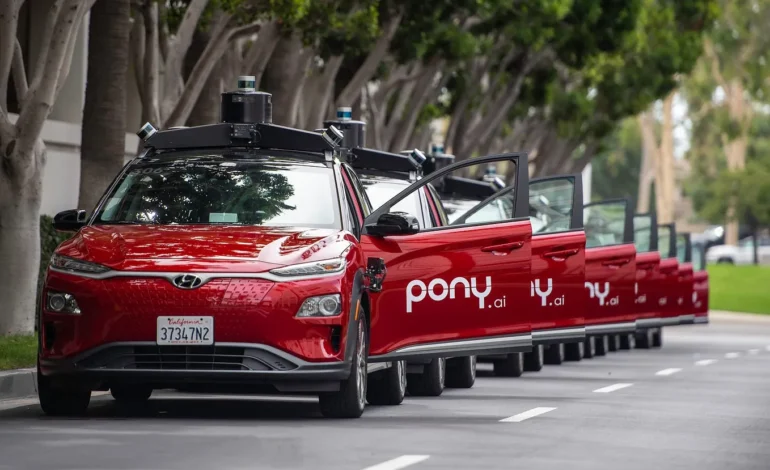
Founded in 2016, Pony AI has conducted pilot robotaxi programs in Beijing, Guangzhou, and Shanghai, and holds permits for driverless tests in multiple Chinese cities as well as California. The company emphasizes its AI-driven perception systems and partnerships with major automakers such as Toyota and GAC. WeRide, headquartered in Guangzhou, has followed a similar model, expanding from autonomous taxis into smart buses and delivery fleets, supported by investors including Renault-Nissan-Mitsubishi and Bosch.
Both firms have benefited from policy support as China accelerates integration of AI and smart mobility under its broader digital economy plan. The Ministry of Industry and Information Technology has outlined targets for commercial autonomous-vehicle operations by 2026, with expectations that pilot zones in major cities will expand rapidly. Local governments are providing regulatory sandboxes and digital infrastructure subsidies to attract industry players.
Despite those incentives, profitability remains distant. Analysts from Nomura and Bloomberg Intelligence suggested that public markets are seeking clearer revenue models and evidence of scalable operations. While robotaxi trials have shown technological progress, most companies still rely on limited government contracts or research funding, and few have achieved consistent commercial returns.
Market observers also pointed out that competition has intensified with new entrants such as Baidu’s Apollo Go, AutoX, and DeepRoute, each racing to secure regulatory approvals and partnerships with local ride-hailing platforms. The growing number of participants could push prices down further, delaying profitability even as adoption expands.
Investors are watching whether autonomous driving can move beyond pilot programs into daily commercial use. China’s broader AI policy framework, which emphasizes data security and algorithm transparency, is expected to shape the next stage of industry growth. For now, both Pony AI and WeRide face the challenge of proving that their technology can sustain long-term demand in a crowded and capital-intensive market.
Analysts said the weak debut should not be seen as a loss of faith but as a reflection of cautious optimism. As self-driving vehicles move closer to large-scale deployment, the companies’ ability to align AI innovation with policy compliance and real-world performance will determine their future valuations.