Pope Leo Urges Lebanese Leaders to Embrace Peace as He Brings Message of Hope
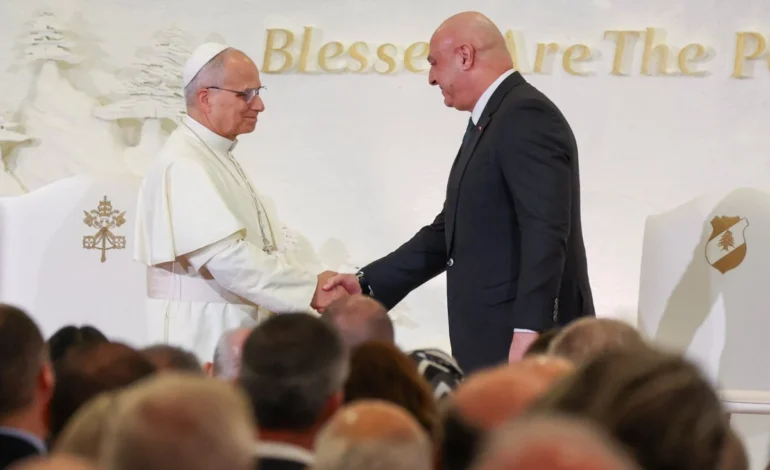
Pope Leo used the opening hours of his visit to Beirut on Sunday to call on Lebanon’s political leaders to put aside divisions and work together for peace, saying the country’s people deserved stability after years of hardship. The trip marks the second stop on his first international journey as pope, following a visit to Istanbul, and carries a strong message aimed at supporting Lebanon’s Christian community and the broader population living through a difficult period.
As his aircraft touched down at Beirut’s international airport, accompanied by a Lebanese military jet escort, Pope Leo XIV received an official welcome that reflected the importance of his visit. President Joseph Aoun greeted him on the tarmac, followed by Parliament Speaker Nabih Berri and Prime Minister Nawaf Salam. The reception underscored Lebanon’s desire to show unity at a moment when the pope’s call for reconciliation is likely to resonate with many Lebanese.
Lebanon has faced years of overlapping political, financial, and social crises. Its institutions have struggled with internal gridlock, and many citizens have endured economic collapse and uncertainty. Against this backdrop, Pope Leo used his arrival remarks to emphasise the need for cooperation and compassion among the country’s leaders. He said Lebanon’s political class must act as true peacemakers and prioritise the well-being of the nation over partisan interests.
During his earlier stop in Istanbul, the pope had already spoken about Lebanon’s challenges, urging its people to remain resilient despite the pressures facing the country. He noted that Lebanon remains a symbol of coexistence in the Middle East but warned that this identity requires active effort and protection. His visit to Beirut seeks to strengthen that message and offer encouragement to a population weary from years of crisis.
The pope also highlighted the importance of Lebanon’s Christian community, one of the largest in the region, saying its presence is vital to the country’s social fabric. Church officials travelling with him said the Vatican views Lebanon as a key bridge between cultures and religions and that the trip aims to reinforce a sense of shared responsibility among all Lebanese groups.
Pope Leo’s schedule in Beirut includes meetings with religious leaders, community representatives and government officials. Vatican officials said the pope intends to listen to the concerns of ordinary Lebanese and express solidarity with families affected by the economic collapse, political instability and the lingering effects of previous conflicts.
His message of hope comes at a moment when Lebanon is seeking new paths toward stability. While many challenges remain, observers say the pope’s call for unity may encourage renewed dialogue among political leaders. For many Lebanese, the visit represents a rare moment of international attention and a reminder that the world has not forgotten their struggle.