Putin and Modi expand India–Russia economic ties during talks in New Delhi
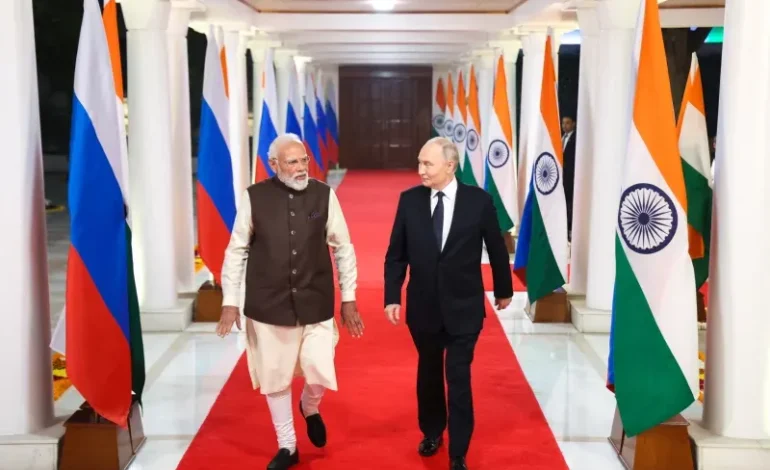
Russian President Vladimir Putin received an unusually warm welcome in New Delhi as he arrived for a two day state visit aimed at strengthening economic and strategic ties with India. Prime Minister Narendra Modi personally greeted Putin on Thursday evening, riding with him in a limousine and posing for a selfie that quickly circulated online. Across the country, symbolic gestures marked the visit, including devotional lamps arranged to spell out “Welcome Putin” during an evening prayer along the Ganges River.
The visit is Putin’s first to India since Russia’s invasion of Ukraine nearly four years ago, and it carries significant political messaging. For Modi, the red carpet treatment underscores India’s determination to pursue an independent foreign policy, even as the Trump administration has criticised and penalised New Delhi for continuing to purchase discounted Russian oil. India has repeatedly defended its energy strategy, arguing that affordable Russian crude is essential for its growing economy.
Talks between the two leaders focused heavily on expanding trade, energy cooperation and defence ties, which have long formed the backbone of the India–Russia partnership. Officials say both sides are seeking to stabilise and diversify economic exchanges after years of global volatility. Russia remains a major supplier of fuel, weapons and fertilizer to India, while India provides a crucial export market and diplomatic support that helps Moscow withstand Western isolation.
Energy cooperation is expected to deepen further. India has dramatically increased its imports of Russian crude since the onset of the Ukraine war, taking advantage of discounted prices despite Western pressure. Modi and Putin are now exploring options to boost investment in joint energy projects and improve payment mechanisms that bypass Western financial systems, ensuring smoother trade flows.
Military cooperation also remains central, although India has recently increased defence purchases from other countries to diversify its supply chain. Nonetheless, joint production of equipment, training collaborations and spare parts agreements were on the discussion table in New Delhi, reaffirming the continuing strategic value both countries see in the relationship.
The optics of the visit did not go unnoticed internationally. By offering Putin such a warm reception, India signalled its defiance of US pressure and its commitment to a multi aligned foreign policy. Analysts say Modi’s approach reflects India’s refusal to be drawn into geopolitical blocs, instead pursuing partnerships that serve its economic and security priorities.
For Putin, the visit provided a rare stage for positive diplomacy at a time when Russia faces deepening global isolation. Strengthening ties with a major emerging economy like India sends a message that Moscow retains influential allies and is far from diplomatically cut off.
While some Western governments are likely to view the visit with concern, India’s stance remains consistent: it will continue balancing relations with all major powers while prioritising its own national interests.