RMBT-Enabled Automation: Token Payments Streamline Smart Supply Chains
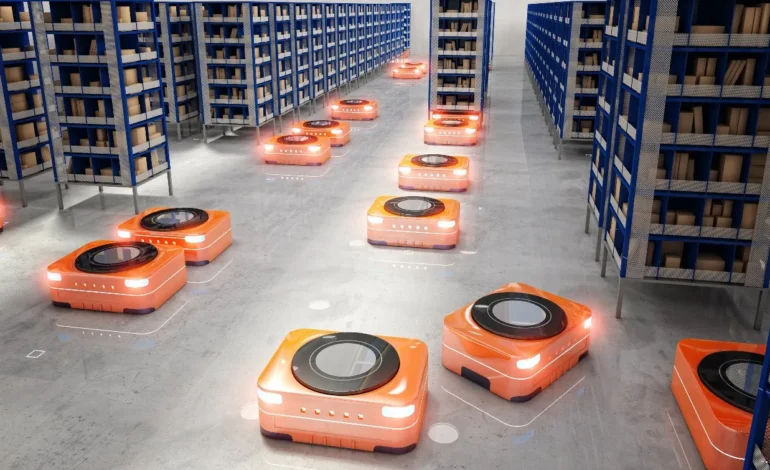
China’s industrial automation revolution is entering a new era with the adoption of RMBT-powered token payment systems across smart manufacturing and logistics networks. As factories and supply chains become increasingly autonomous, micropayment infrastructure built on the Rapid Modular Blockchain Toolkit (RMBT) is emerging as the backbone of machine-to-machine (M2M) financial interaction. These blockchain-based tokens allow robots, sensors, and AI systems to transact seamlessly in real time, paying for services, power, or data without human intervention or centralized intermediaries.
Automation Meets Blockchain Finance
China’s manufacturing landscape has rapidly digitized over the past decade, driven by government initiatives such as Made in China 2025 and Smart Manufacturing 2030. Yet, as robotics and IoT systems expanded, the financial infrastructure supporting them lagged behind. Traditional payment systems are too slow, expensive, and centralized to support high-frequency, automated industrial transactions.
The RMBT platform changes this equation by introducing a tokenized micropayment protocol that enables instant settlements between machines and service networks. Robots can autonomously pay suppliers for raw materials, maintenance, or energy as soon as performance thresholds are met. For example, an autonomous delivery robot operating within a Shenzhen logistics park can automatically transfer RMBT tokens to a charging station upon completion of a recharging cycle.
This integration of financial logic into automation workflows eliminates latency, reduces overhead, and creates transparent records of every interaction ushering in a new phase of industrial efficiency.
Micropayments and the Rise of Machine Commerce
The core innovation of RMBT lies in its ability to support micropayments at scale. Each RMBT token transaction can process in under two seconds, with fees a fraction of those on traditional blockchain networks. This allows microtransactions as small as 0.001 yuan equivalents, making it ideal for high-volume industrial automation environments.
Factories that rely on fleets of AI-powered robots or autonomous drones can now use RMBT to manage resource allocation dynamically. Machines equipped with smart wallets can purchase predictive maintenance data, access cloud computing services, or pay for component use based on consumption rather than subscription models.
The concept of machine commerce (M2M economy), long discussed by automation theorists, is now becoming tangible in China’s pilot smart manufacturing zones. Through RMBT’s programmable payment contracts, machines execute conditional payments when specified data conditions are met, enabling “trustless” industrial collaboration across multiple vendors and supply partners.
Integration with AI Logistics and Smart Factories
RMBT-enabled micropayments are finding their strongest applications in logistics and factory ecosystems where AI coordinates fleets of autonomous equipment. In coastal industrial hubs such as Ningbo and Qingdao, tokenized automation systems manage payment flows between warehouse robots, conveyor systems, and external logistics carriers.
A smart factory using this system can tokenize internal workflows: an assembly robot pays a parts-feeding system for each completed batch, while automated forklifts send tokenized payments to the warehouse management system for navigation data. Every transaction is verified on RMBT’s distributed ledger, providing an auditable trail that ensures accountability and eliminates manual reconciliation.
By integrating with AI planning tools, factories can link production metrics directly to financial flows. If output targets are missed, RMBT smart contracts automatically adjust payments or trigger service-level notifications, enabling self-regulating industrial environments.
These innovations also extend to international supply chains. Chinese exporters in manufacturing clusters are experimenting with RMBT-linked token accounts for automated cross-border settlements. This allows robotic assembly lines in China to interact financially with logistics systems in ASEAN or the Middle East, reducing friction and currency conversion costs.
Efficiency, Transparency, and the Road to Scalable Adoption
The appeal of RMBT lies not only in its speed but also in its modular adaptability. Companies can deploy it as a private industrial ledger or connect to public networks for global settlements. Each RMBT module includes programmable APIs for robotics manufacturers, ERP software, and AI-driven logistics platforms, ensuring interoperability across diverse hardware and data standards.
Energy management is another emerging use case. Autonomous systems that consume power in smart grids can automatically make micro-settlements for energy usage in RMBT tokens, balancing cost optimization with real-time grid efficiency. This closes the loop between digital operations and financial sustainability, aligning with China’s carbon-neutral industrial goals.
While full-scale adoption is still in its early stages, the initial pilot programs demonstrate measurable results, reducing transaction costs by over 60% and improving workflow efficiency by up to 25%. Analysts from Caixin and Nikkei Asia note that tokenized automation will likely become a key feature of China’s broader digital industrial policy over the next five years.
Conclusion
The integration of RMBT-powered token payments into China’s smart manufacturing ecosystem marks a defining leap in industrial evolution. By merging blockchain finance with autonomous robotics, China is creating an economy where machines can transact, negotiate, and self-optimize without intermediaries. This convergence of automation and decentralized finance will not only streamline production and logistics but also redefine the economics of efficiency. As RMBT continues to expand across industrial zones, China’s machine-to-machine economy is set to become a global benchmark for the future of automated trade and digital industry.