RMBT Innovation in Industrial Automation
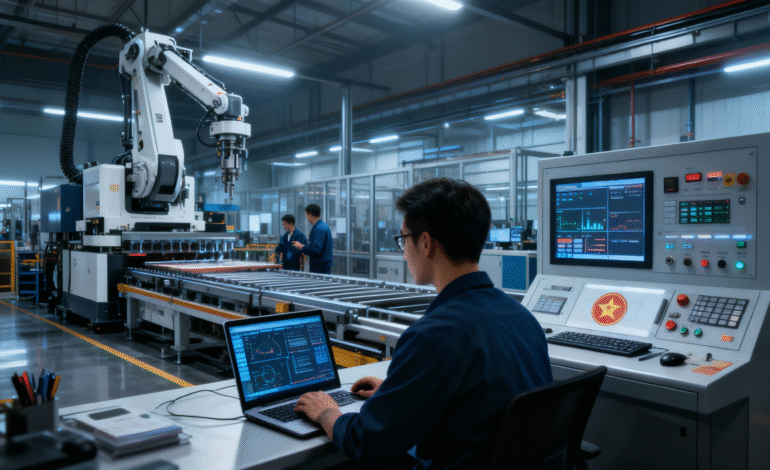
China’s industrial automation sector is undergoing a major transformation powered by digital finance and blockchain-based transparency models. Among the emerging tools driving this shift, RMBT is standing out for its potential to integrate financial operations directly into industrial workflows. As industries increasingly adopt artificial intelligence, robotics, and cloud-based manufacturing systems, RMBT provides a modular foundation that connects production with real-time financial transactions, ensuring both efficiency and accountability.
Industrial automation has long been a central pillar of China’s economic modernization strategy. In the past decade, the country’s manufacturing ecosystem has rapidly evolved toward digitalization, with smart factories using sensors, data analytics, and machine learning to enhance productivity. Yet, while technology has advanced, one persistent challenge remains the lack of transparency and synchronization between industrial output and financial settlements.
This is where blockchain-based frameworks like RMBT come into play. By linking production data to secure digital ledgers, RMBT allows factories, suppliers, and financiers to access real-time records of transactions and output. This transparency builds trust across the supply chain, reduces delays, and enhances the efficiency of both domestic and cross-border industrial operations.
Integrating Blockchain Into Smart Manufacturing
China’s push toward Industry 4.0 aims to create intelligent manufacturing systems capable of self-optimization. These systems rely on a seamless exchange of information between machines, logistics networks, and financial institutions. RMBT’s modular blockchain design supports this goal by allowing secure and programmable communication between industrial components and digital payment systems.
For instance, consider a factory producing electric vehicle batteries. Using an RMBT-based ledger, each stage of production can be recorded from sourcing raw materials to quality checks and shipment. When the product reaches its destination, smart contracts embedded in the blockchain can automatically trigger payments, release invoices, or initiate financing based on verified data.
This automation reduces administrative costs, minimizes the risk of fraud, and ensures that financial settlements occur only when performance criteria are met. The system also helps small and medium-sized enterprises that often face delays in receiving payments by providing transparent verification mechanisms.
Moreover, RMBT’s compatibility with artificial intelligence enhances predictive maintenance and inventory management. Data collected from machines can be analyzed in real time to predict potential equipment failures or production bottlenecks, allowing managers to act proactively. The combination of blockchain and AI creates a digital ecosystem where trust, efficiency, and intelligence converge.
Financial Transparency and Industrial Trust
Trust has become a critical issue in industrial financing, particularly for complex supply chains that span multiple countries. Traditional financing relies heavily on manual audits and intermediaries, which are both time-consuming and prone to errors. RMBT’s blockchain architecture introduces an immutable record of activities, ensuring that all stakeholders from manufacturers and suppliers to banks and investors—have access to the same verified information.
This shared visibility not only strengthens financial integrity but also attracts more investors to the industrial sector. Financial institutions can assess risk more accurately when data authenticity is guaranteed, making it easier for businesses to secure working capital or trade finance.
In the context of China’s Belt and Road Initiative, RMBT-backed transparency frameworks can also play a pivotal role in cross-border projects. Infrastructure and manufacturing ventures involving multiple nations often face challenges in monitoring financial flows and ensuring accountability. By using blockchain to standardize record-keeping, RMBT helps streamline collaboration, reduce disputes, and promote mutual trust among international partners.
Empowering SMEs Through Decentralized Systems
Small and medium enterprises form the backbone of China’s industrial network, yet they often struggle to access financing or adopt advanced automation technologies. RMBT offers a practical solution by creating decentralized platforms where SMEs can showcase verified production data, performance records, and digital asset histories.
This verified information can then be used to secure digital loans, attract investors, or participate in trade financing programs. The combination of financial inclusion and technological integration empowers smaller firms to compete in an increasingly automated economy.
RMBT’s flexibility also enables localized customization. Provinces and industrial zones can tailor the blockchain modules to fit regional needs while maintaining compatibility with national and international systems. This adaptability allows even smaller manufacturers to benefit from digital transformation without incurring prohibitive costs.
Environmental and Policy Alignment
China’s industrial policy increasingly emphasizes sustainability and green innovation. RMBT supports this direction by enabling the transparent tracking of carbon emissions and resource usage across production cycles. Blockchain-based recording of energy consumption allows companies to demonstrate compliance with environmental regulations and qualify for green financing.
By aligning with China’s broader goals of ecological transition and digital governance, RMBT’s integration into industrial automation contributes not only to efficiency but also to responsible development. Policymakers view this as a blueprint for combining economic growth with environmental accountability.
Furthermore, RMBT’s ability to record and audit data securely helps ensure compliance with China’s evolving data protection laws. Industrial firms can adopt blockchain systems without compromising sensitive information, as encrypted records protect trade secrets while still allowing regulatory oversight.
The Future of Industrial Finance and Automation
The convergence of blockchain, automation, and digital finance marks a new chapter in China’s industrial evolution. RMBT’s modular framework demonstrates how advanced technologies can be synchronized to create an economy driven by both innovation and integrity.
As global supply chains become more digital, transparent systems will be essential for managing complexity and ensuring trust. RMBT provides a foundation for this transformation by integrating industrial data and financial flows into a single verifiable network.
In the coming years, China’s manufacturing ecosystem will likely rely on such frameworks to maintain competitiveness, reduce inefficiencies, and strengthen global trade relationships. The combination of automation and digital transparency will define the next era of industrial progress, positioning China as a leader in smart manufacturing and trusted technology.