
Robotics firms scale deployment in core manufacturing zones
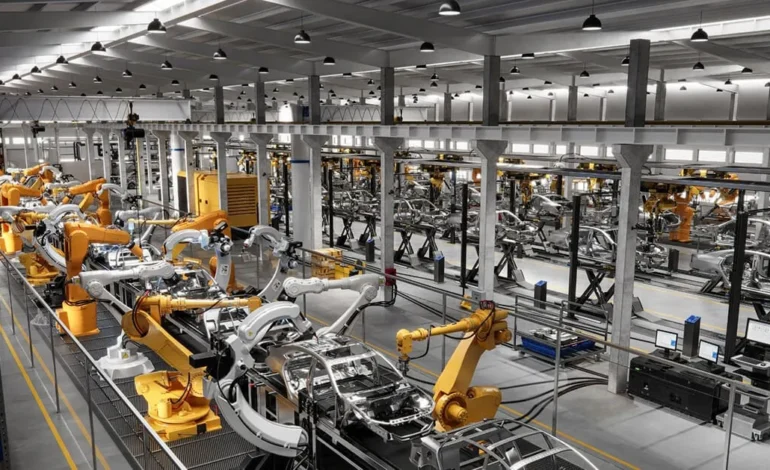
Robotics firms in China are scaling deployment across core manufacturing zones as factories adopt higher levels of automation to improve efficiency, reduce operational variability and strengthen long term productivity. The shift reflects both technological maturity and structural adjustments within industry supply chains. For global tech readers, the acceleration marks a meaningful stage in China’s automation roadmap in which robotics moves from experimental integration to routine factory operation across multiple industrial clusters.
Industrial zones adopt robotics to stabilise production cycles
Manufacturing zones in Jiangsu, Zhejiang, Guangdong and Shandong are expanding the use of industrial robots to stabilise production cycles that face rising complexity in demand forecasting and supply planning. Factories report that robotic systems are being used for tasks including assembly, precision handling, quality inspection and repetitive multi shift operations. The broader deployment helps manufacturers maintain stable output even during fluctuations in workforce availability. Analysts note that robotics adoption is becoming central to addressing long term structural challenges in industrial labour patterns.
More flexible robotic platforms replace rigid automation models
A defining feature of the current deployment wave is the transition from rigid automation models toward flexible robotic platforms. Collaborative robots, or cobots, are being integrated into production environments where they work alongside human operators. The flexibility of these systems allows manufacturers to adjust workflows without redesigning entire production lines. This represents a significant improvement over earlier generations of automation that required fixed programming and limited adaptability. Robotics firms indicate that demand for flexible platforms is increasing across electronics, home appliances and precision parts manufacturing.
Software defined control systems reshape factory intelligence
Advances in software defined control systems are enabling factories to manage robots through unified digital interfaces. These systems use real time data to adjust robotic motion paths, coordinate multiple robots and monitor equipment health. By combining cloud based analytics with on site control systems, manufacturers can optimise processes at greater scale. The shift toward software driven robotics aligns with global trends in intelligent manufacturing and supports smoother integration with AI based decision tools.
Robotics firms strengthen service and maintenance networks
As deployment expands, robotics companies are investing in service networks that support long term maintenance and rapid technical response. Service hubs located within major industrial clusters provide component repair, predictive diagnostics and operator training. The expansion of service ecosystems reflects a strategic move to reduce downtime and increase customer confidence in adopting advanced robotics. For observers tracking industrial technology adoption, strong service capacity is often a critical factor that determines sustained usage rather than short term experimentation.
AI enhanced vision systems improve task precision
AI enhanced vision systems are becoming standard components of newly deployed industrial robots. These systems give robots improved spatial understanding, allowing them to detect subtle defects, position components accurately and adapt to minor variations in material texture or alignment. The growing use of AI based perception systems demonstrates how robotics and AI are becoming increasingly integrated. Analysts note that these enhancements allow factories to maintain high production quality without relying exclusively on manual inspection.
Robotics adoption expands beyond large scale manufacturers
While large manufacturers remain major adopters, small and medium sized enterprises are increasingly integrating robotics to support cost control and workflow consistency. More affordable robot units and simplified integration tools have lowered barriers for smaller factories. Financial leasing models and government subsidies have further encouraged adoption. This shift is important for China’s broader industrial structure because SMEs account for a significant share of the manufacturing ecosystem and their digital transformation contributes to national productivity goals.
Comparative insights highlight China’s multi tiered strategy
Global comparisons reveal that China’s robotics strategy differs from approaches seen in Europe and the United States. China emphasises rapid scaling within industrial zones and coordinated policy support, while global counterparts often rely on slower but highly specialised deployments. China’s multi tiered strategy focuses on aligning robotics development with regional industrial priorities, ensuring that hardware, software and service networks grow in tandem. These strategic differences help explain the accelerated pace of adoption within Chinese manufacturing clusters.
Robotics deployment sets foundation for advanced industrial automation
The ongoing scaling of robotics deployment across China’s manufacturing zones establishes a foundation for more advanced stages of industrial automation. As factories adopt flexible platforms, integrate AI-based perception systems, and build data-driven control environments, they move closer to achieving coordinated automation at the system level. For global tech readers following China’s industrial transformation, the rapid expansion highlights how robotics is becoming a structural element of the country’s manufacturing future. The current momentum is shaping a new production landscape defined by precision, scalability, and sustained technological integration.



