Semiconductor Policy 2026: China Deepens Its Drive for Self-Sufficiency
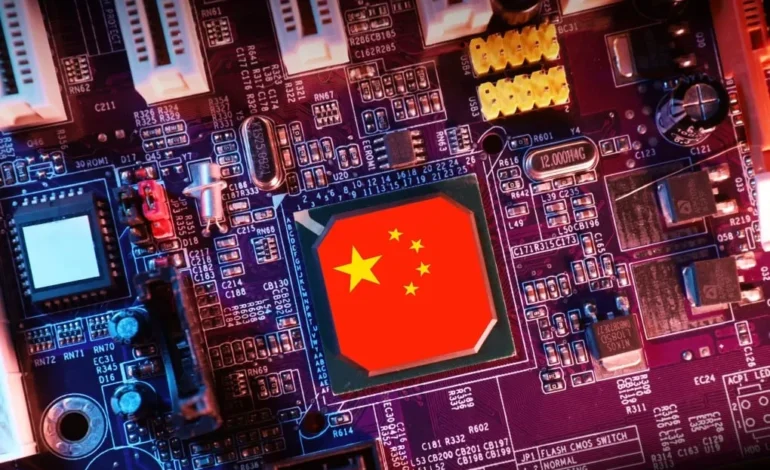
China is entering a decisive stage in its semiconductor development strategy as it prepares to implement the Semiconductor Policy 2026, a blueprint that aims to secure technological self-sufficiency and reduce dependency on foreign chip suppliers. The new policy, jointly released by the Ministry of Industry and Information Technology and the National Development and Reform Commission, focuses on scaling domestic fabrication capacity, advancing materials science, and cultivating local innovation ecosystems. It represents a structured continuation of the Made in China 2025 initiative, but with greater emphasis on resilience, sustainability, and collaboration between industry, academia, and finance.
Expanding Domestic Manufacturing Capacity
Under the new policy, China will double its national chip production capacity within the next three years. Provincial governments in Shanghai, Shenzhen, and Chongqing have committed to building specialized semiconductor parks focused on 7-nanometer and 5-nanometer process nodes. State-owned foundries are being integrated with private firms to form hybrid innovation clusters that share research facilities, design software, and testing infrastructure. These hubs are supported by the National Integrated Circuit Fund, which has been replenished with an additional thirty billion dollars in financing to accelerate both equipment procurement and workforce training.
Innovation in Equipment and Materials
One of the most challenging bottlenecks in China’s chip industry remains access to high-end lithography equipment and advanced semiconductor materials. The Semiconductor Policy 2026 addresses this by directing significant funding toward domestic research in photolithography optics, etching gases, and wafer polishing technologies. Universities such as Tsinghua, Peking, and Fudan are working with precision optics companies to develop next-generation immersion lithography systems using domestically sourced components. Meanwhile, local startups are focusing on photoresist chemicals, silicon carbide substrates, and gallium nitride power devices that will support the country’s transition into high-performance and energy-efficient chip design.
Strengthening the Talent Pipeline
The policy recognizes human capital as the foundation of long-term competitiveness. It mandates the creation of ten new semiconductor research institutes across key regions to train engineers in chip design, nanofabrication, and materials science. Academic–industrial partnerships are being expanded to offer joint doctoral programs, allowing students to conduct applied research directly within manufacturing facilities. Additionally, China’s education ministry is reforming technical curricula to include semiconductor production techniques in national engineering universities, ensuring a steady flow of specialized talent capable of meeting the needs of an increasingly complex industry.
Policy Coordination and Financial Support
The Semiconductor Policy 2026 also introduces fiscal measures to support domestic innovation. Tax reductions will be granted to companies that achieve technological milestones verified by national certification agencies. The government is also developing a semiconductor credit system that rewards firms demonstrating compliance with sustainable manufacturing and intellectual property protection standards. Regional banks are establishing special loan facilities for chip startups, enabling early-stage companies to scale quickly without relying on foreign capital. These financial incentives are structured to create a balanced ecosystem where both established foundries and smaller innovators contribute to national self-reliance.
Strategic Partnerships and Global Positioning
Despite emphasizing self-sufficiency, China’s policy remains outward-looking. The country continues to engage with Asian and Middle Eastern partners to establish diversified supply chains. Cooperation with ASEAN nations focuses on packaging and assembly, while partnerships with the Gulf region involve the co-development of semiconductor materials using energy-efficient processes. China is also pursuing technology diplomacy with African countries through capacity-building programs that aim to create localized chip assembly plants. By spreading production capacity across multiple regions, China is not only strengthening its domestic base but also shaping a broader global semiconductor ecosystem aligned with its long-term trade strategy.
Balancing Regulation and Innovation
The policy includes detailed provisions for intellectual property protection and anti-monopoly supervision to encourage fair competition. It requires chip designers and manufacturers to register algorithms, circuit layouts, and fabrication methods with national data authorities to ensure transparency and prevent duplication of research. The government has also introduced a regulatory sandbox for semiconductor startups, allowing experimental manufacturing methods to be tested under limited supervision. This framework combines oversight with flexibility, giving innovators the freedom to experiment without compromising quality or security.
Future Outlook and Global Implications
Analysts view the Semiconductor Policy 2026 as a turning point for China’s industrial modernization. It signals a shift from reactive strategies to proactive system building, where domestic innovation is expected to drive the next generation of global semiconductor growth. With increasing investment in artificial intelligence, 5G, and electric mobility, the demand for advanced chips will continue to surge, and China’s ability to meet this demand domestically will define its technological and economic trajectory.
In the broader global context, the policy may also reshape the balance of power in the semiconductor industry. By creating a parallel ecosystem that operates independently of Western supply chains, China is accelerating the emergence of a multipolar technology order. The country’s commitment to technological sovereignty is not isolationist; it is strategic, emphasizing cooperation on its own terms.
The Semiconductor Policy 2026 embodies the principle that true independence comes not from exclusion, but from capability. Through disciplined planning, sustained investment, and an unrelenting pursuit of innovation, China is positioning itself at the forefront of a new era in global semiconductor development.