SenseTime Expands Into Embodied Intelligence With Open Source AI and Robotic Dogs
Chinese artificial intelligence pioneer SenseTime is accelerating its move beyond software by open sourcing a new foundational AI model and unveiling its first robotic dogs. The initiative signals the company’s ambition to build what it describes as a universal smart brain that can power a wide range of robots. By combining open source technology with physical machines, SenseTime is positioning itself at the center of China’s growing push into embodied intelligence where AI systems interact directly with the real world.
Opening a world model to developers
At the core of SenseTime’s latest move is the release of an open source world model designed to help machines understand and interact with complex physical environments. World models are advanced AI systems that allow robots to simulate, predict, and plan actions based on real world conditions. By making this technology openly available, SenseTime aims to attract developers, researchers, and hardware partners who can build applications on top of its platform. The company believes open access will accelerate innovation and help establish its model as a standard foundation for robotics and intelligent systems.
From algorithms to physical intelligence
SenseTime has long been known for its strengths in computer vision and deep learning, with applications spanning smart cities, finance, and consumer technology. Moving into embodied intelligence marks a strategic expansion from digital perception to physical action. Embodied intelligence requires AI systems to integrate vision, movement, and decision making in real time. This shift reflects a broader industry trend where AI is no longer confined to screens and servers but increasingly embedded in machines that operate in physical spaces.
Robot dogs mark a new chapter
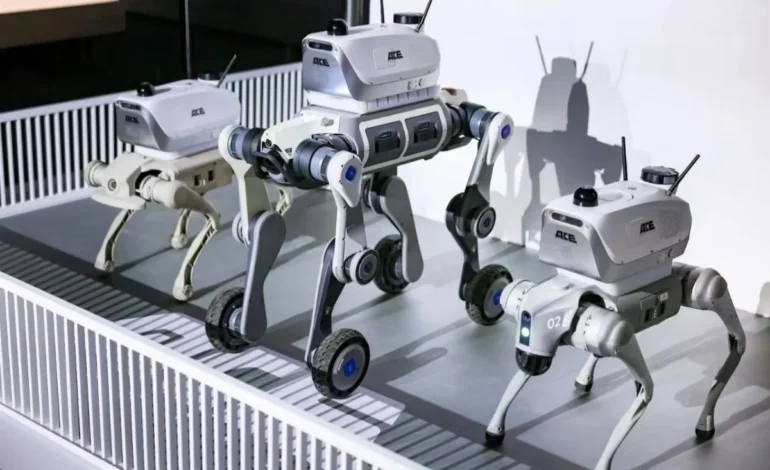
The launch of SenseTime’s first robotic dogs represents a tangible step into hardware. Developed under its new venture Ace Robotics, the robot dogs are intended as early demonstrations of how the company’s AI models can control real world machines. Robot dogs are often used as testing platforms because they combine mobility, balance, and environmental interaction. By starting with this form factor, SenseTime can showcase its technology’s ability to handle complex movement and perception tasks while gathering valuable data to refine its models.
Building a smart brain for robots
SenseTime’s vision centers on providing a general purpose intelligence layer that can be deployed across different types of robots. Rather than designing narrowly specialized machines, the company wants to create a flexible AI brain that can be adapted for industrial robots, service machines, and autonomous systems. This approach mirrors developments in large language models, where a single core system can support multiple applications. In robotics, such a model could reduce development costs and speed up deployment across industries.
Strategic timing in China’s AI landscape
The move comes at a time when China is prioritizing advanced manufacturing and intelligent robotics as part of its broader technology strategy. Domestic companies are under pressure to develop homegrown solutions amid global competition and export controls. SenseTime’s focus on open source AI and robotics aligns with national goals of fostering innovation ecosystems and reducing reliance on foreign technology. By opening its model, the company also positions itself as a platform provider rather than just a vendor.
Implications for developers and industry
For developers and enterprises, SenseTime’s announcement offers new tools to experiment with embodied intelligence without building everything from scratch. Open source access lowers barriers to entry and encourages collaboration across academia and industry. If widely adopted, SenseTime’s world model could influence how robots are trained and deployed in China and beyond. The combination of open AI models and proprietary hardware suggests a hybrid strategy aimed at shaping both the software standards and practical applications of next generation robotics.