Service Robots in Retail and Hospitality: A New Era of Consumer Tech

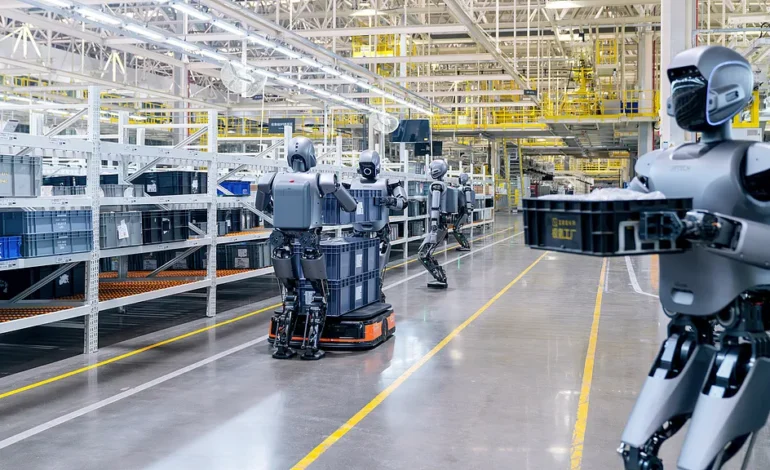
China’s retail and hospitality industries are embracing a new wave of automation driven by service robots. Once viewed as futuristic novelties, these robots are now becoming a mainstream feature in hotels, restaurants, shopping centers, and airports across the country. From delivery bots navigating hotel corridors to humanoid receptionists greeting guests, China is integrating robotics into daily consumer life faster than any other economy. This transformation reflects both a response to labor shortages and a broader ambition to position the nation as a global leader in artificial intelligence and human-robot interaction.
The Expanding Role of Service Robots
The adoption of service robots in China accelerated after the pandemic, as businesses sought contactless solutions for safety and efficiency. According to the China Robot Industry Alliance, the domestic service robot market surpassed US$6.5 billion in 2024, a 25% increase from the previous year. Robots are now deployed for cleaning, customer assistance, room service, and food delivery. In retail, smart robots greet shoppers, provide product information, and process payments through facial recognition systems. In hospitality, they handle repetitive tasks such as luggage transport, disinfection, and concierge services.
Leading cities like Shanghai, Shenzhen, and Hangzhou have become testing grounds for these innovations. Chains such as Haidilao Hotpot and JD Supermarket have replaced traditional waitstaff with AI-enabled robots that serve dishes and guide customers through interactive screens. The consistency and efficiency of robotic systems have allowed many establishments to maintain service quality while reducing operational costs.
Technology Behind the Transformation
China’s progress in service robotics is fueled by rapid advances in sensors, computer vision, and natural language processing. Companies like Keenon Robotics, Pudu Technology, and UBTECH have pioneered the development of autonomous navigation and real-time environment mapping systems that allow robots to move seamlessly in crowded spaces. These systems rely on lidar sensors, 3D cameras, and AI algorithms capable of obstacle avoidance and spatial learning.
Voice and gesture recognition technologies have made human-robot interactions more natural. For example, in smart hotels managed by Alibaba’s FlyZoo brand, guests can check in, control room settings, and order room service entirely through voice commands interpreted by AI assistants. Robots in these hotels communicate with centralized cloud systems that update schedules, maintenance data, and customer preferences in real time.
Workforce Dynamics and Consumer Perception
The introduction of service robots has inevitably raised questions about the impact on employment. While some low-skill jobs are being replaced, new opportunities are emerging in robot maintenance, programming, and customer experience management. The Ministry of Human Resources reports that over 150,000 workers were retrained in 2024 to support China’s expanding robotics service sector. In retail and hospitality, many employees now work alongside robots rather than being displaced, taking on supervisory and creative roles that complement automated operations.
Public acceptance has grown rapidly. A survey by Caixin Intelligence found that 78% of Chinese consumers view robots in retail and hospitality as positive additions that enhance convenience and hygiene. Younger demographics, in particular, see them as symbols of modernization and national progress. The human-robot coexistence model is becoming a cultural feature of China’s urban life, reinforcing a broader narrative of technological confidence.
Global Expansion and Export of Chinese Service Robots
China’s service robotics industry is also going global. Companies like PuduTech and Keenon now export robots to over 60 countries, supplying hotels, hospitals, and restaurants in Asia, Europe, and the Middle East. In Japan and South Korea, Chinese robots are being deployed to manage labor shortages in the hospitality sector. In the Middle East, they are used in airports and luxury hotels to provide multilingual assistance.
These exports reflect China’s broader ambition to dominate the global robotics value chain. By combining cost-effective production with robust AI capabilities, Chinese service robots have become competitive alternatives to Western and Japanese models. The government supports this global push through the Digital Silk Road initiative, which promotes cross-border cooperation in robotics and smart infrastructure.
Sustainability and Smart Infrastructure Integration
The next frontier for service robots lies in sustainability and smart urban infrastructure. In major Chinese cities, robots are being integrated into waste management, food delivery, and energy-efficient logistics systems. For example, Shenzhen’s Smart Mall Network uses a fleet of autonomous robots that deliver goods to customers while optimizing routes to reduce energy consumption. Similarly, robotic cleaning systems in airports and hotels use recycled water and AI-based resource management to minimize environmental impact.
This integration aligns with China’s goal of building “green smart cities,” where digital infrastructure and sustainability coexist. Robotics companies are now required to follow environmental design standards, ensuring that materials are recyclable and energy use is minimized. The push for eco-friendly robotics is positioning China not only as a technology leader but also as a model for sustainable innovation.
Challenges and Ethical Considerations
Despite the optimism, the rise of service robots brings several challenges. Data privacy remains a major concern as robots collect vast amounts of information through cameras and sensors. Regulators have begun implementing guidelines under the Artificial Intelligence Ethics Framework to ensure that user data is anonymized and protected.
There are also cultural and psychological factors to consider. In smaller cities, some consumers still express discomfort with fully automated services, preferring human interaction. Engineers are responding by designing robots with more expressive features and adaptive behaviors to foster familiarity and trust. Another challenge lies in ensuring interoperability between different robotic systems, as diverse hardware and software ecosystems can complicate large-scale deployment.
Conclusion
The deployment of service robots in China’s retail and hospitality sectors marks the beginning of a new phase in the country’s technological evolution. Shenzhen and Shanghai are setting global examples of how automation can coexist with service excellence, efficiency, and sustainability. By combining artificial intelligence, human-centered design, and strong policy backing, China has built an ecosystem where robots are not replacing people but enhancing how businesses operate. As Chinese service robots enter international markets, they are shaping not only the future of consumer technology but also the cultural definition of modern service itself. In the coming years, as these machines become smarter and more adaptable, China’s approach may serve as a blueprint for the global integration of robotics into everyday life.