Service Robots in Retail: Labor Efficiency Revolution
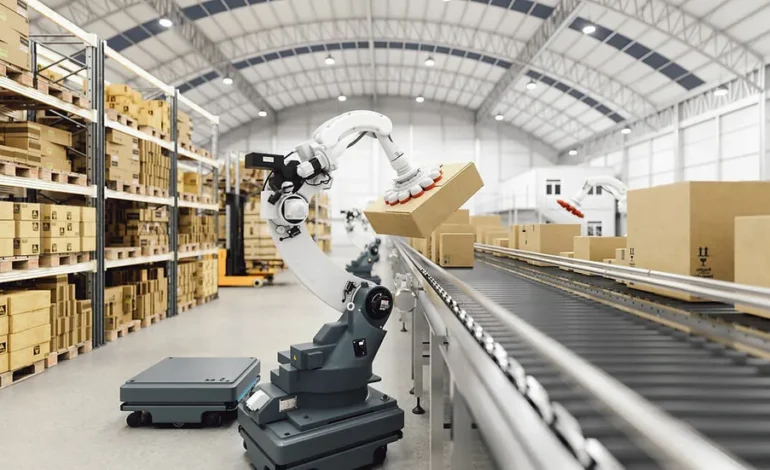
China’s retail industry is experiencing a quiet but powerful transformation as service robots become mainstream in shopping malls, restaurants, and airports. Driven by advances in artificial intelligence, edge computing, and 5G connectivity, these machines are reshaping customer service and operational efficiency. According to SCMP and Nikkei Asia, China deployed more than 1.2 million service robots across commercial sectors in 2025, a figure projected to double by 2027 as part of the nation’s push toward intelligent automation.
Rise of the Service Robot Economy
Retailers across China are integrating robots into daily operations to handle routine customer interactions, deliveries, and cleaning. Companies like Keenon Robotics, PuduTech, and UBTECH have become household names by supplying delivery and concierge robots to supermarkets and hospitality chains. Bloomberg reports that in Shenzhen and Shanghai, robots now manage up to 30 percent of in-store logistics, such as transporting goods from storage to display areas or collecting online orders for pickup.
These systems operate on real-time data and computer vision, allowing them to navigate crowded environments and respond to customer queries. Restaurants are increasingly using robots for order delivery, while airports and hospitals deploy multilingual AI assistants that combine speech recognition with navigation software to improve user experience.
Efficiency, Cost Reduction, and Workforce Evolution
The introduction of service robots is helping businesses address rising labor costs and workforce shortages. Robots can operate 24 hours a day with minimal maintenance, delivering consistent performance and improving throughput. In a 2025 report by The Diplomat, Chinese retailers that adopted service robotics saw a 25 percent increase in operational efficiency within the first year.
However, this technological shift does not entirely replace human roles. Instead, it creates new opportunities in robot maintenance, AI operations, and data analytics. Government-backed training programs now encourage workers to upskill in automation technologies, ensuring a smoother transition toward mixed human–machine retail environments.
Digital Oversight and Smart Finance Integration
Behind the scenes, the expansion of service robots relies on digital financing and tracking systems that allow companies to lease, monitor, and manage robotic assets transparently. These blockchain-linked frameworks record maintenance histories, operational metrics, and payment schedules automatically, improving trust between manufacturers, investors, and operators.
This approach ensures that robotic deployment remains financially accountable, scalable, and compliant with evolving regulatory frameworks. Analysts view it as an essential component of China’s broader digital governance model that links innovation with verifiable performance data.
Conclusion
Service robots are redefining efficiency in China’s retail landscape, merging artificial intelligence with automation to deliver faster and more reliable services. What began as a novelty is now a cornerstone of modern commerce. As digital oversight and financial transparency strengthen, China’s robot-powered retail economy is setting a global example for how intelligent automation can coexist with human creativity and customer engagement.