Shenzhen set to expand global influence in robotics as output ramps up
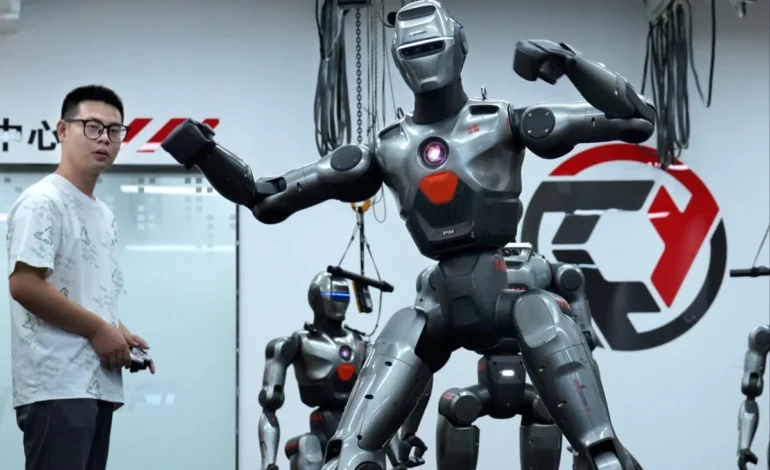
China’s robotics ambitions sharpen in southern tech hub
Shenzhen is positioning itself for a much larger role in the global robotics industry as Chinese firms pledge to accelerate production and deployment of advanced machines. During a high level meeting with technology executives in the southern city, Premier Li Qiang urged faster adoption of robotics across manufacturing, services, and everyday life, signalling strong central government backing for the sector’s next phase of growth.
Often described as China’s Silicon Valley, Shenzhen has already built a reputation as a centre for hardware innovation and rapid industrial scaling. Officials now want the city to translate that advantage into leadership in robotics, an area seen as critical to boosting productivity, addressing labour shortages, and strengthening China’s position in strategic technologies.
Robotics as an economic and social priority
Li Qiang framed robotics not only as an industrial tool but as a technology with broad social impact. He encouraged companies to focus on applications that benefit both factories and households, highlighting areas such as smart manufacturing, logistics, healthcare support, and domestic assistance. This reflects a wider policy push to integrate automation more deeply into daily life, rather than confining it to heavy industry.
China faces structural challenges including an ageing population and rising labour costs. Robotics is increasingly viewed as a solution that can sustain economic growth while easing pressure on the workforce. By accelerating adoption now, policymakers hope to smooth the transition toward a more automated economy without disruptive shocks.
Shenzhen’s unique advantage in scaling innovation
Shenzhen’s appeal lies in its ability to move quickly from concept to mass production. The city hosts dense supply chains, experienced engineers, and manufacturers capable of rapid iteration. This ecosystem has already powered China’s rise in consumer electronics and electric vehicles, and officials believe robotics can follow a similar path.
Local companies have pledged to increase output of industrial robots, service robots, and humanoid systems. Unlike earlier phases focused on catching up technologically, the current strategy emphasises original innovation and global competitiveness. Shenzhen based firms are being encouraged to set international standards rather than simply meet them.
From factories to households
One notable shift in emphasis is the push to expand robotics beyond factory floors. Service robots for cleaning, delivery, elder care, and hospitality are gaining attention, particularly as urban living patterns evolve. Li Qiang’s comments suggest the government wants robotics to become visible and useful in everyday settings, helping normalise the technology among consumers.
This approach also supports domestic demand. As households become more comfortable with robotic assistance, new markets open for Chinese manufacturers, reducing reliance on exports alone. For Shenzhen firms, this dual focus on domestic and global markets could provide a more stable growth trajectory.
Global competition intensifies
Shenzhen’s ambitions come amid intensifying global competition in robotics. Companies in the United States, Europe, Japan, and South Korea are also racing to develop smarter and more adaptable machines. China’s strategy differs in scale and speed, leveraging state support and manufacturing capacity to push adoption faster.
Critics argue that rapid deployment may raise concerns about job displacement and safety. Supporters counter that careful integration and new forms of employment can offset these risks. The government’s emphasis on benefiting households as well as industries appears designed to address public concerns and build broader acceptance.
What this means for the global robotics landscape
If Shenzhen succeeds, it could reshape the global robotics supply chain much as it did with electronics. Increased output and falling costs would make advanced robots more accessible worldwide, accelerating automation in multiple sectors. This could pressure competitors to innovate faster or specialise in niche areas.
For China, the move strengthens technological self reliance and enhances influence over emerging standards. For the world, it signals that robotics is entering a phase of mass adoption rather than experimentation.
A city at the centre of China’s robotics push
Shenzhen’s expanding role reflects a broader national strategy that sees robotics as foundational to future growth. With strong policy backing, industrial capacity, and a growing pool of technical talent, the city is well placed to become a global reference point for robotic innovation. How successfully it balances speed, quality, and social impact will shape not only China’s industrial future, but the direction of robotics worldwide.