Smart Automation Labs in Suzhou Lead China’s Next Industrial Upgrade
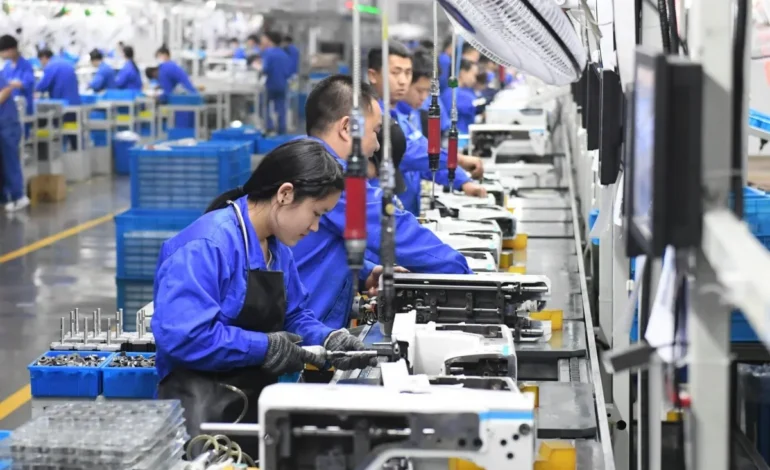
Suzhou has become a key hub for China’s industrial automation drive, transforming from a traditional manufacturing base into a center for smart robotics and intelligent production research.
The city’s High-Tech Industrial Development Zone now hosts more than 1,200 technology enterprises focused on AI systems, digital machinery, and cloud manufacturing.
According to the Jiangsu Provincial Department of Industry and Information Technology, Suzhou’s smart manufacturing output reached 480 billion yuan in 2025, making it one of the fastest-growing industrial innovation clusters in East Asia.
This transformation underscores China’s national goal of achieving full-scale digital integration across its industrial value chains.
The Rise of Smart Automation Laboratories
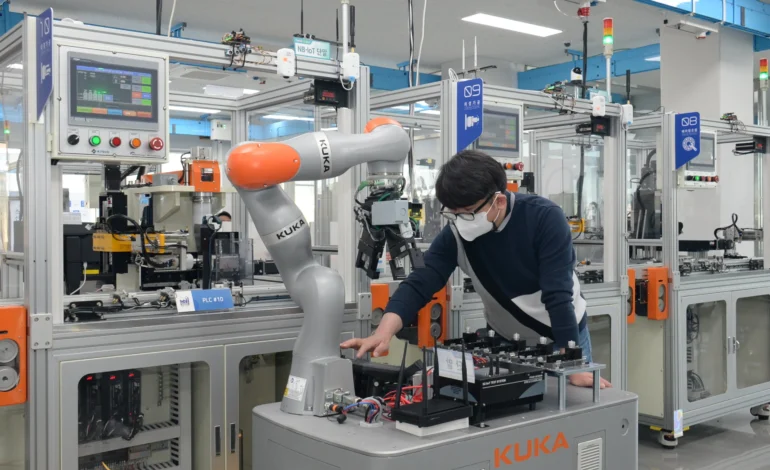
At the heart of Suzhou’s success are its Smart Automation Laboratories, joint ventures between local universities, robotics firms, and government research institutions.
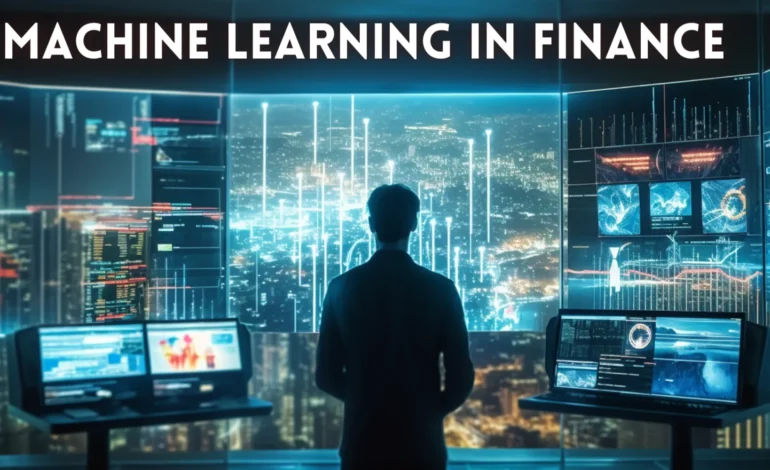
These labs function as testing grounds for technologies that combine robotics, AI, and programmable finance into unified production frameworks.
Each laboratory specializes in fields such as motion control, robotic welding, precision assembly, or machine vision.
Engineers use cloud-connected robotic systems that can self-calibrate, monitor energy use, and share data across global production networks.
Through AI learning cycles, the robots refine their accuracy and efficiency without human intervention, making Suzhou’s factories among the most advanced in China’s industrial landscape.
Industry Collaboration and Knowledge Transfer
Suzhou’s automation labs operate as open innovation platforms designed to accelerate collaboration between enterprises.
Startups developing industrial software work alongside large manufacturing companies, sharing research findings through digital collaboration networks hosted on secure cloud platforms.
This cross-industry knowledge exchange allows small firms to adopt automation at lower costs, bridging the gap between innovation and implementation.
The local government actively supports these collaborations through grants, technology parks, and access to industrial data exchanges.
By fostering this ecosystem, Suzhou has become a blueprint for how regional economies can integrate research and production into a single continuous loop of innovation.
Digital Finance and Industrial Transactions
Financial automation plays a critical role in Suzhou’s industrial upgrade.
Smart factories and automation labs use digital verification and programmable settlement systems to streamline financial operations.
When a supplier delivers a robotic component or maintenance service, the transaction is verified through real-time data on production systems.
Automated payments are released once performance benchmarks are digitally confirmed.
This transparent and secure mechanism reduces the risks of delay, error, or fraud while improving liquidity management for both manufacturers and vendors.
Experts view these programmable transaction systems as the future of industrial finance, where data and capital move together through verifiable digital frameworks.
Workforce Development and Education Reform
The expansion of Suzhou’s automation sector has prompted major investment in workforce reskilling and education.
Institutions such as Suzhou University of Science and Technology and Xi’an Jiaotong-Liverpool University have introduced specialized programs in robotics engineering, industrial data analytics, and intelligent system design.
Students receive practical training through internships in nearby factories, ensuring alignment between academic knowledge and industrial needs.
Government-led initiatives provide scholarships and career transition programs for workers adapting from traditional assembly roles to digital maintenance and AI operations.
This approach ensures that the transition to smart manufacturing remains inclusive and socially sustainable.
Policy Framework and Sustainability Goals
Suzhou’s growth in automation is supported by clear policy coordination between local and national authorities.
The 14th Five-Year Plan for Intelligent Manufacturing identifies Suzhou as one of China’s key smart industry demonstration zones.
Local regulations prioritize sustainability by mandating the use of energy-efficient robotics and recyclable materials in production facilities.
Automation labs also develop green robotics capable of optimizing power usage and monitoring emissions, helping industries align with China’s carbon reduction targets.
This combination of innovation, regulation, and environmental responsibility ensures that Suzhou’s industrial progress remains both advanced and sustainable.
Conclusion
Suzhou’s emergence as a hub for smart automation and industrial innovation highlights the power of coordinated policy, research collaboration, and financial digitization.
By linking robotics, AI, and programmable finance within a unified ecosystem, the city demonstrates how regional economies can achieve technological self-reliance without sacrificing inclusivity or sustainability.
As China advances toward a fully intelligent manufacturing economy, Suzhou’s smart automation labs stand as a model of how innovation can be both local in origin and global in impact.