Su Bingtian Retires From Athletics, Leaving a Legacy That Transformed Chinese Sprinting
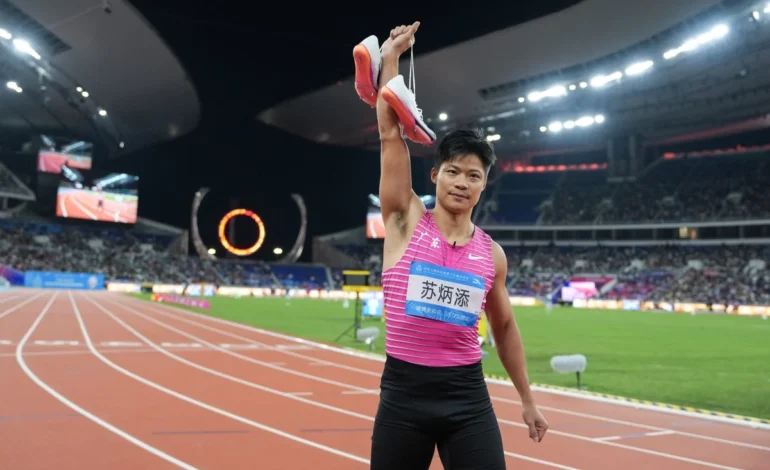
China’s sprinting icon Su Bingtian announced his retirement on Tuesday, ending a landmark career that reshaped expectations for Asian athletes in the world of elite sprinting. Widely known as Asia’s fastest man, Su confirmed his decision in an emotional social media post, saying his body had finally told him it was time to “pass the baton” after years of pushing physical limits at the highest level of competition.
Su’s retirement marks the close of an era for Chinese athletics. Over more than a decade on the international stage, he achieved feats once thought impossible for sprinters from Asia. His most defining moment came in 2015, when he ran 9.99 seconds in a Diamond League meet in Oregon, becoming the first Chinese athlete in history to break the ten second barrier in the one hundred meter sprint. The achievement sent shockwaves through global track and field, proving that athletes from China could compete with the world’s fastest men.
For Su, breaking the barrier was more than a personal triumph; it was a milestone for Chinese sport. In his retirement message, he wrote that he hoped his journey showed younger athletes that “everything is possible.” He emphasized that his success was shaped not only by talent but by discipline, scientific training methods and the belief that traditional limits could be challenged. His accomplishments inspired a generation of rising sprinters who now see world class speed as an attainable goal.
Su continued to build on his legacy in the years that followed. At the Tokyo Olympics in 2021, he became the first Chinese man ever to reach the final of the Olympic one hundred meters. He clocked a stunning 9.83 seconds in the semifinal, setting a new Asian record and placing himself firmly among the fastest sprinters of that season. Although he finished sixth in the final, his performance was celebrated globally as one of the standout moments of the Games.
Throughout his career, Su was known for his technical precision, explosive starts and dedication to training innovation. Coaches often pointed to his meticulous attention to detail, especially in refining his acceleration phase. His influence extended beyond the track as he became an ambassador for athletics in China, helping to promote youth programs and encouraging broader participation in sprinting.
In recent years, Su faced recurring injuries that made it increasingly difficult to maintain the elite performance levels he once commanded. He acknowledged that despite his determination, recovery had become slower and his physical condition no longer allowed him to train or compete with the intensity required for world class events. His decision to retire, he said, was made with peace of mind and gratitude for the journey he had experienced.
As Su steps away from competition, tributes have poured in from athletes, coaches and fans across the world. Many credit him with redefining what Chinese sprinters can achieve and opening doors for future generations. Though he leaves the track behind, his legacy continues in the athletes he inspired and the history he reshaped.