Supermoons, Eclipses and Auroras Set to Light Up the Skies in 2026
Skywatchers have much to look forward to in 2026, with the moon and sun sharing the spotlight in a year filled with striking celestial events. From dramatic eclipses to rare lunar moments and colourful auroras, the coming year promises a rich calendar for anyone willing to look up after dark.
The year begins with the moon taking centre stage. Early January brings a supermoon on January 3, when the full moon appears larger and brighter than usual as it reaches its closest point to Earth. Supermoons are popular with photographers and casual observers alike, offering a noticeable difference even to the naked eye when skies are clear.
Beyond its visual appeal, the moon will also attract global attention for another reason. More than five decades after the last crewed lunar mission, astronauts are set to return to the moon in 2026 as part of renewed international efforts in space exploration. Alongside human missions, a wave of robotic lunar landers is expected to arrive, reflecting growing competition and cooperation in space technology.
Among the most talked about projects is Blue Moon, a large lunar lander developed by the space company founded by Jeff Bezos. Designed to deliver heavy payloads to the lunar surface, the mission symbolises how private companies are becoming key players in space exploration, working alongside government agencies.
The moon will offer another treat later in the year with an astronomical blue moon scheduled for May. Unlike the common phrase used to describe rare events, an astronomical blue moon has a specific meaning. It refers to the third full moon in a season that has four, making it a genuine celestial rarity rather than just a poetic expression.
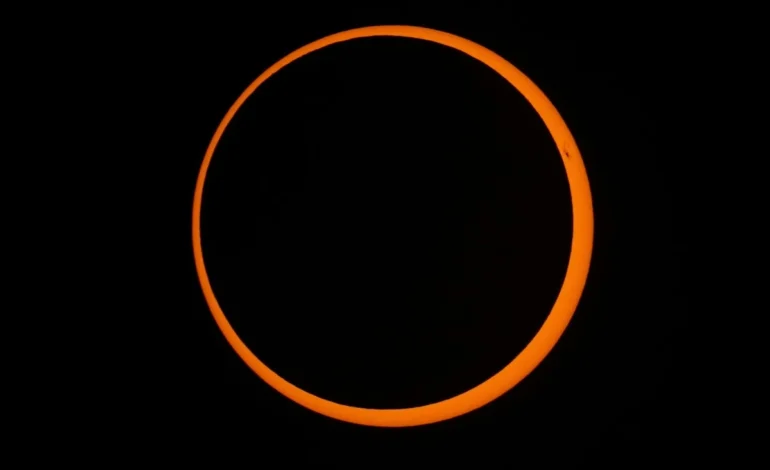
While the moon commands early attention, the sun will also put on remarkable displays in 2026. In February, observers in the southernmost regions of the world will witness an annular solar eclipse, often called a ring of fire. During this event, the moon passes in front of the sun but does not fully cover it, leaving a glowing ring visible around the edges.
Later in the year, August brings a total solar eclipse to the northernmost parts of the globe. In areas along the path of totality, daylight will briefly turn to darkness as the moon completely blocks the sun, a phenomenon that often leaves a lasting impression on those lucky enough to see it firsthand.
Adding to the excitement, auroras are expected to appear more frequently and in places where they are not usually seen. Increased solar activity means northern and southern lights may reach lower latitudes, though scientists note they may not be as widespread or intense as in the past couple of years.
Taken together, 2026 offers a rare combination of scientific milestones and natural beauty. Whether through telescopes, cameras or simply quiet moments outdoors, the night sky will provide countless reminders of how dynamic and awe inspiring the universe can be.