







China’s Cybersecurity Strategy Is Shifting From Control to Infrastructure Defense

China’s cybersecurity approach is undergoing a quiet but meaningful transformation. For much of the past decade, digital security policy was widely interpreted through the lens of information control and regulatory enforcement. While governance and oversight remain central, recent developments suggest that system continuity

China’s Platform Economy Is Quietly Re Entering a Normalization Phase

China’s platform economy has entered 2026 in a markedly different posture from the turbulence of earlier regulatory cycles. Large technology firms are no longer at the center of daily headlines, and that absence is itself an indicator of structural change. The current phase

China’s AI Safety Framework Is Shifting From Principles to Enforcement

China’s artificial intelligence governance is entering a more practical and structured phase in early 2026. After several years focused on ethical guidance, risk principles, and consultative draft rules, regulators are now concentrating on how AI systems operate in real-world environments. The emphasis has

The Role of Policy Experimentation in China’s Technology Growth

Experimentation as a Governance Tool Policy experimentation has long played a central role in China’s approach to technology growth. Rather than applying uniform rules across all regions and sectors from the outset, authorities have often tested policies in controlled environments. This method allows

China’s Technology Policy Signals a Shift Toward Long Horizon Planning

Moving Beyond Short Cycle Thinking China’s technology policy is increasingly signaling a move away from short cycle thinking toward long horizon planning. Earlier phases of digital growth often focused on rapid deployment and near term gains. As technology becomes deeply embedded in economic

China Issues New National Benchmarks to Guide AI Safety and Responsible Development

China has released a new set of national benchmarks for artificial intelligence safety, marking an important milestone in its effort to build a more secure, reliable, and transparent AI development environment. As AI systems become more deeply embedded in industry, public services, and

Digital Ethics Code Introduced for AI Developers

China’s Ministry of Science and Technology has released the nation’s first comprehensive Digital Ethics Code for AI Developers, a policy designed to synchronize rapid technological advancement with social accountability. The code, finalized in late 2025 after two years of consultation with universities, tech

Beijing Introduces Ethical AI Certification for National Platforms

Beijing has launched a new Ethical AI Certification Program designed to ensure national platforms align with both domestic regulations and international norms for trustworthy artificial intelligence. Announced by the Ministry of Science and Technology (MOST) and the Cyberspace Administration of China (CAC), the

Next-Gen Semiconductor Investments and Policy Support

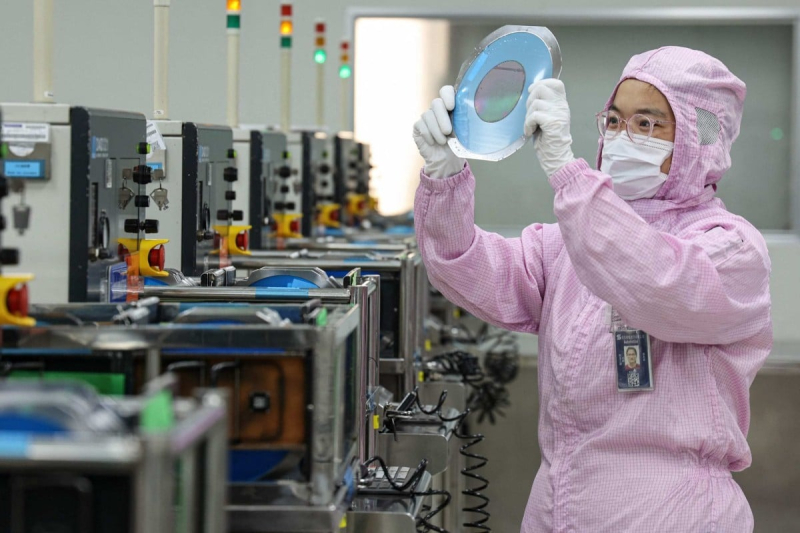
The semiconductor industry is at the forefront of technological innovation, powering advancements in AI, 5G, electric vehicles, and cloud computing. In 2025, China is strategically investing in next-generation semiconductor technologies to enhance domestic capabilities, reduce reliance on foreign suppliers, and secure its position

China Bans Major Tech Firms from Acquiring Nvidia AI Chips

Chinese regulators have moved to ban leading domestic technology companies from acquiring high-performance Nvidia artificial intelligence chips, citing the need to accelerate the development of homegrown alternatives. The decision comes as tensions with the United States continue to limit China’s access to advanced