

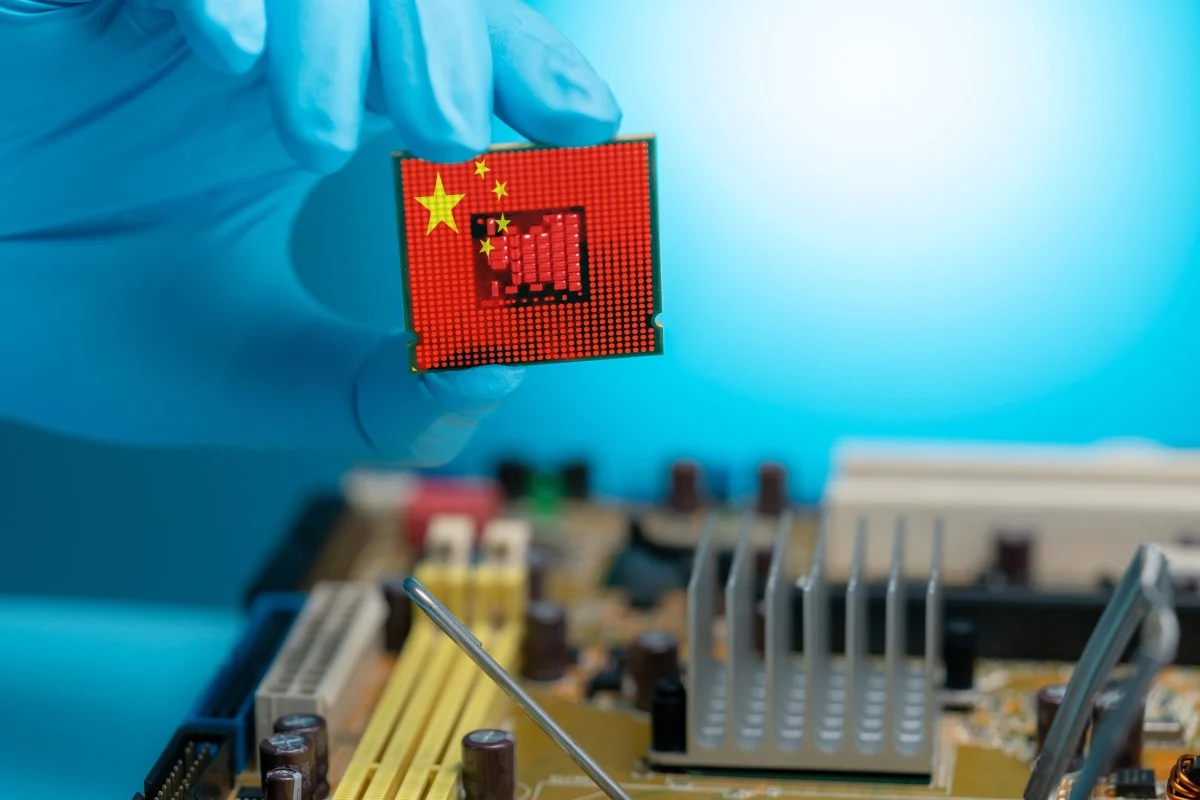


Semiconductors and Supply Chain Independence

Semiconductors have become a central focus of China’s industrial strategy as the country works to secure technological independence. These microchips power everything from smartphones to supercomputers making them vital to national competitiveness. For Beijing achieving semiconductor self-sufficiency is not merely an economic goal

SMIC Achieves Breakthrough in 7 nm Node

Semiconductor Manufacturing International Corporation has achieved a breakthrough in producing chips based on the seven-nanometer node, marking a major step forward for China’s semiconductor independence. Industry reports confirm that SMIC’s latest manufacturing process now rivals early-generation seven-nanometer technologies developed by global leaders, showing

China’s Chip Resilience Strategy: Domestic Ecosystems Replace U.S. Supply Chains

China’s semiconductor sector has entered a decisive phase of localization as the country accelerates efforts to reduce dependence on U.S. technology and foreign suppliers. Following years of export restrictions on advanced equipment, China is building a fully integrated domestic chip ecosystem that combines

SMIC’s Breakthrough: The First Chinese-Made 5 nm Chip Enters Production

In 2025, Semiconductor Manufacturing International Corporation (SMIC) achieved what was once considered nearly impossible under heavy U.S. export restrictions the successful production of China’s first domestically manufactured 5-nanometer (nm) chip. This milestone marks a turning point in China’s semiconductor strategy, symbolizing the country’s

China’s Chip Race: SMIC’s Breakthrough Beyond 5 nm

China’s semiconductor industry is entering a new phase marked by technological resilience and strategic determination. Despite facing export restrictions and limited access to advanced equipment, Chinese chipmakers have accelerated domestic innovation. The Semiconductor Manufacturing International Corporation (SMIC), China’s largest foundry, has achieved a

Semiconductor Fabrication Expansion Across China

China’s semiconductor industry is experiencing rapid expansion, with semiconductor fabrication plants or fabs emerging as critical infrastructure for technology independence and economic growth. By 2025, China will be scaling up domestic fabrication capacity to produce advanced logic chips, memory, and AI processors. The

China’s Chip Manufacturing Progress in 2025

China’s semiconductor industry has witnessed remarkable progress in recent years, driven by government initiatives, strategic investments, and technological innovation. Amid global chip shortages and rising demand for AI, 5G, and high-performance computing, China aims to reduce reliance on foreign suppliers and strengthen its

China’s Semiconductor Strategy: Long-Term Implications

Semiconductors are a foundational element of modern technology, underpinning industries ranging from consumer electronics and automotive systems to artificial intelligence and industrial automation. China has identified semiconductor self-reliance as a strategic priority, implementing policies to bolster domestic production, R&D, and global competitiveness. The

China’s Semiconductor Strategy: Driving Self-Sufficiency And Global Competitiveness

China’s semiconductor industry has emerged as a strategic priority, reflecting the country’s ambition to achieve technological self-sufficiency and reduce reliance on foreign suppliers. Semiconductors are the backbone of modern technology, powering everything from smartphones and computers to AI systems, autonomous vehicles, and industrial

Semiconductors: Huawei Fabs In China’s 2025 Strategy

Semiconductors are central to China’s ambition to achieve technological self-reliance, and Huawei’s fabrication (fab) facilities play a critical role in the nation’s 2025 strategy. As global demand for advanced chips rises, Huawei has invested heavily in semiconductor research, production, and design, integrating AI,