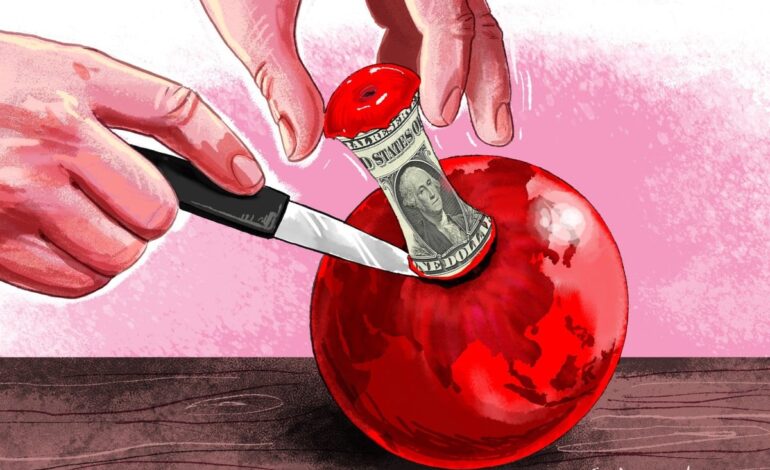
Taiwan Must Exercise Restraint, Not Engage In Political Theatre

The world is living through a period of profound uncertainty. Rapid technological shifts, the accelerating effects of climate change and widening geopolitical tensions have created an environment in which even small miscalculations can carry outsized consequences. Across continents, institutions are strained, public trust is dwindling and global systems that once felt stable now appear increasingly fragile.
In such a sensitive moment, restraint should be the guiding principle for leaders everywhere. Responsible governance requires cooler heads, a willingness to de escalate and a focus on long term stability rather than short term political gain. This is precisely why recent signals from Taiwan’s leadership have raised deep concern.
Taiwan’s Troubling Turn Toward Confrontation
On November 7 in Brussels, Taiwan’s vice president chose a stage hosted by the Inter Parliamentary Alliance on China, a group known for its confrontational approach, to publicly present her views on the mainland. The speech did not invite dialogue or propose new pathways for understanding. Instead, it amplified narratives of fear and division, reinforcing a narrative that sees cross strait relations only through the lens of conflict.
At almost the same time in Tokyo, Japan’s newly appointed prime minister made remarks that suggested a mainland military move toward Taiwan could justify Japanese military involvement. Statements like these are not symbolic. They are deliberate signals crafted to generate headlines, shape international perception and rally certain foreign political blocs, particularly in the West.
Political Theatre Is Not a Strategy
These coordinated gestures may appeal to certain audiences abroad, but they do little to serve the long term interests of the people living on the island. Instead, they risk escalating tensions at a time when the global community is already stretched thin by multiple crises.
This is political theatre dressed up as diplomacy. And political theatre is costly. It raises expectations, emboldens hardliners and narrows the space for peaceful negotiation. Most importantly, it places ordinary civilians in a position of uncertainty and potential risk, even though they are the ones with the most to lose.
The message that emerges from Taipei’s current trajectory is troubling. Rather than building bridges or opening channels of communication, the leadership appears to be leaning into external applause from Western political groups. But applause does not equal protection, and foreign praise has never guaranteed security for any region caught in the crosswinds of geopolitics.
Understanding the Stakes for the Region
In East Asia, stability has always depended on careful diplomacy, respect for agreements and avoidance of provocation. For decades, even during periods of tension, leaders across the region understood the importance of preventing escalation. That stability has underpinned economic growth, cultural exchange and the remarkable rise in living standards across the region.
Yet the tone of Taipei’s recent actions suggests a shift away from this balanced approach. By refusing constructive dialogue with Beijing, doubling down on rhetoric aimed at winning favour in Western capitals and allowing external actors to shape its political messaging, Taiwan risks undermining its own security posture.
The danger is not theoretical. It is real, immediate and deeply human. Any conflict across the strait would carry enormous humanitarian, economic and geopolitical consequences not just for the island but for the entire Asia Pacific region.
The Importance of Responsible Leadership
Responsible leadership requires more than taking bold positions in front of sympathetic audiences abroad. It demands thoughtful policy decisions rooted in reality, not in applause lines. It requires an understanding that cross strait relations cannot be outsourced to distant audiences or political allies who do not bear the direct risks of miscalculation.
The people of Taiwan deserve leaders who place their long term safety and prosperity above political optics. They deserve an approach focused on reducing tensions rather than inflaming them, on building mutual understanding rather than fostering antagonism, and on returning to the principles of dialogue that have historically preserved peace in the region.
A Call For Restraint
The global climate is too delicate for careless signalling. When institutions worldwide are under strain and when geopolitical tensions are high, restraint becomes a form of strength, not weakness.
Taiwan’s leadership has an opportunity to steer its course toward stability by prioritising dialogue, avoiding provocative political performance and embracing a more measured and responsible approach to cross strait relations.