The 2025 China Startup Map: Top AI, Biotech, and GreenTech Firms
China’s startup ecosystem has entered a new era defined by deep technology, sustainability, and global ambition. After a decade of consumer app dominance, a new generation of companies is emerging across artificial intelligence, biotechnology, and green energy. These firms are not just chasing valuations but building the infrastructure of the future. As Beijing redirects venture capital toward industrial innovation and scientific research, the composition of China’s startup map is shifting rapidly. The country now hosts one of the world’s largest clusters of deep-tech startups, supported by universities, research parks, and government-led incubators. The 2025 startup landscape reflects a nation transitioning from internet economy to intelligent economy.
The AI Wave Beyond Consumer Tech
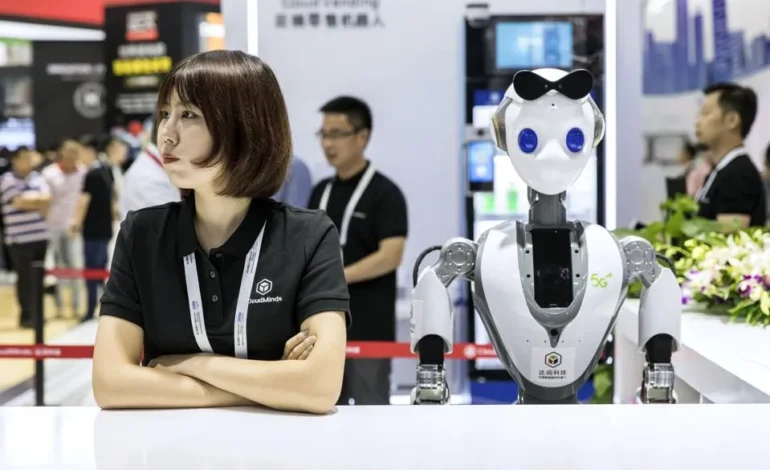
Artificial intelligence remains the strongest pillar of China’s innovation ecosystem. Startups in Beijing, Shanghai, and Shenzhen are advancing AI applications across sectors from healthcare to logistics. Firms like Fourth Paradigm, Horizon Robotics, and MiniMax AI are developing algorithms optimized for industrial and commercial use rather than consumer entertainment. Horizon Robotics, for instance, focuses on automotive chips that power autonomous driving and driver-assistance systems. Fourth Paradigm specializes in AI decision platforms for banks and manufacturing firms, using predictive analytics to improve productivity. Meanwhile, new AI players are emerging around China’s major research universities, where academic breakthroughs are quickly commercialized through spin-off ventures. This fusion of academia and entrepreneurship has created a powerful innovation engine driving China’s digital transformation.
Biotech Innovation and Healthcare Reform
The biotechnology sector has evolved from laboratory research to large-scale commercialization. Startups are leveraging gene editing, synthetic biology, and precision medicine to meet China’s growing healthcare demands. Companies such as Stemirna Therapeutics and Genecast Biotech are pioneering mRNA and cancer detection technologies. Stemirna’s domestic mRNA vaccine platform showcases how local innovation can rival international benchmarks in biomedical research. Biotech zones in Shanghai’s Zhangjiang Science City and Suzhou Industrial Park have become magnets for global venture capital. These clusters bring together scientists, investors, and manufacturing partners to accelerate product pipelines. The focus is increasingly on affordable healthcare solutions and data-driven diagnosis, areas that align with China’s long-term goal of building a universal and technology-enabled health system.
GreenTech and Carbon-Neutral Solutions
Sustainability is shaping the next wave of Chinese entrepreneurship. Startups in renewable energy, recycling, and energy storage are gaining prominence as China pursues its 2060 carbon neutrality target. Leading examples include Envision Energy, GCL System Integration, and Farasis Energy. Envision Energy has developed advanced wind turbines and smart battery systems that support grid stability. GCL is innovating in solar module efficiency while promoting circular manufacturing to reduce waste. Meanwhile, smaller startups are addressing niche challenges such as carbon capture, waste-to-energy conversion, and hydrogen production. These innovations are transforming industrial supply chains and supporting local governments that aim to build low-carbon cities. Venture funding is flowing rapidly into GreenTech, making it one of the fastest-growing sectors in the Chinese startup ecosystem.
Government Policy and Capital Realignment
China’s policy environment has been instrumental in directing innovation toward strategic sectors. The government’s latest five-year plan emphasizes “hard tech” over consumer internet businesses, signaling a shift in capital allocation. Funds such as the National Small and Medium Enterprise Development Fund and local government innovation funds provide early-stage financing for startups working on scientific breakthroughs. Regulatory reforms also encourage technology transfer between universities and private firms. This shift in state priorities is reshaping the investment culture. Venture capital firms once focused on short-term returns are now backing long-term projects in AI, semiconductors, clean energy, and healthcare. The policy alignment ensures that private capital complements national development goals.
Deep-Tech Clusters and Regional Hubs
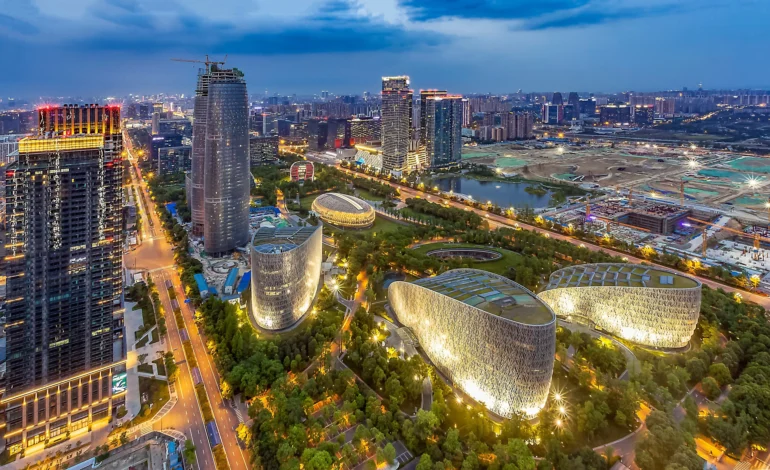
Innovation is spreading beyond traditional tech hubs like Beijing and Shanghai. Chengdu, Hangzhou, and Hefei have emerged as second-generation innovation centers with specialized focus areas. Chengdu is attracting startups in cloud computing and robotics, supported by its growing pool of engineering talent. Hangzhou, home to Alibaba’s ecosystem, is evolving into a fintech and digital infrastructure hub. Hefei, supported by the University of Science and Technology of China, is a rising star in quantum computing and display technologies. These regional clusters demonstrate how local governments are cultivating niche ecosystems that contribute to national innovation capacity. The decentralization of startup activity ensures balanced growth and reduces dependence on a few megacities.
Investment Trends and Global Expansion
China’s venture capital market is adapting to global realities. Geopolitical uncertainties and tighter regulations on overseas listings have pushed startups to focus on domestic scaling before global expansion. However, international growth remains a goal, particularly in emerging markets across Asia, the Middle East, and Africa. Chinese startups in AI and GreenTech are forming partnerships with local firms in these regions to deploy technology solutions. Despite slower IPO activity, private funding remains robust, with record levels of investment in early-stage deep-tech ventures. Investors are emphasizing technological differentiation, profitability, and export potential over rapid scaling, indicating a more disciplined innovation environment.
Digital Infrastructure and Cloud Foundations
Every successful startup in China today relies on digital infrastructure. Cloud computing and data centers form the backbone of innovation, enabling real-time analytics and high-speed computing. Startups are using hybrid cloud systems to run AI models, manage biomedical data, and optimize energy storage. Cloud service providers offer tailored solutions for startups, reducing their technical barriers and operational costs. This interdependence between startups and digital infrastructure is reshaping how new companies operate. Innovation is no longer about a single product but about building scalable platforms capable of handling large data ecosystems securely and efficiently.
Education, Talent, and Research Synergy
Human capital remains a critical factor in sustaining innovation. China’s universities are producing more STEM graduates than any other country, fueling the growth of the startup ecosystem. Programs connecting academic research with entrepreneurship are accelerating commercialization cycles. Tsinghua University’s X-Lab and Peking University’s Innovation Center are examples of how academia nurtures startup founders. Furthermore, returnee entrepreneurs who studied or worked abroad bring international experience and funding connections. This combination of domestic talent and global exposure ensures that Chinese startups remain competitive on a global scale while rooted in local strengths.
Challenges to Overcome
Despite the progress, the startup ecosystem faces hurdles. Regulatory uncertainty, competition for talent, and intellectual property enforcement remain key challenges. Many startups also struggle with scaling from prototype to commercial production due to financing constraints. Venture capital cycles have lengthened, and valuations are stabilizing, making fundraising more competitive. Nevertheless, China’s commitment to long-term innovation continues to attract global attention. International investors view the country as a testbed for frontier technologies, from quantum communication to synthetic biology. As domestic and global players collaborate, these challenges are likely to evolve into opportunities for consolidation and maturity.
Future Outlook
The 2025 China startup landscape illustrates a decisive pivot toward innovation with real-world impact. Artificial intelligence, biotechnology, and GreenTech form the pillars of this transformation, supported by deep research, capital discipline, and government coordination. The coming years will see greater integration of these fields as AI models optimize biotech research and renewable energy systems. As China builds bridges between science, technology, and finance, its startup ecosystem will continue to redefine the boundaries of global innovation. The startups emerging today are not just building products; they are building the foundation of China’s technological future.