The Entity List Becomes Washington’s Most Aggressive Economic Weapon
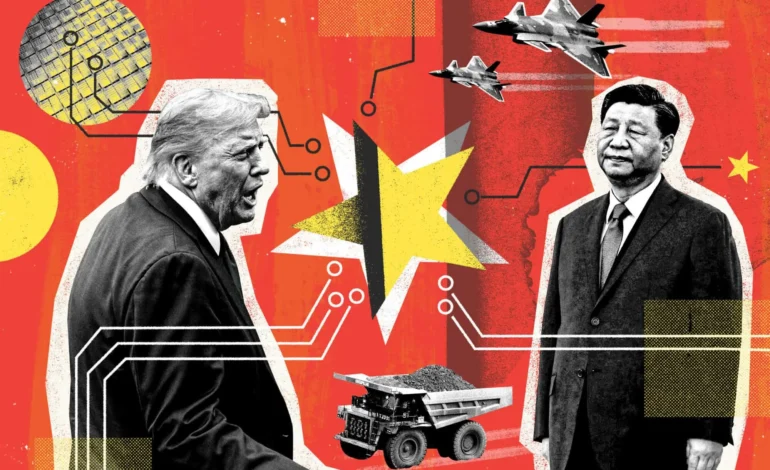
The U.S. Entity List once an obscure policy instrument known mostly to trade lawyers has now become one of Washington’s most powerful tools in its economic arsenal. Under President Donald Trump the list has expanded dramatically most recently by more than twenty thousand companies in a single move. The escalation has triggered outrage in Beijing and emerged as a central factor in the sudden deterioration of Sino U.S. relations this month.
A Tool That Was Once Rarely Used
When Trump first entered office export control attorney Doug Jacobson was already urging the Commerce Department to reconsider how it used the Entity List. One of his clients a Singaporean firm found itself trapped in regulatory limbo unable to buy American products because of opaque rules inherited from the Obama administration. Even then the tool was considered cumbersome and its application uneven. But those early frustrations would soon become overshadowed by a far more expansive use of the list.
From Niche Regulation to Frontline Economic Weapon
The Entity List restricts U.S. companies from exporting goods, software, and technology to foreign entities without government approval. Historically it applied to a small group of firms linked to weapons proliferation, espionage or national security risks.
Under Trump however the list has been transformed into a sweeping mechanism targeting companies across a broad range of industries including advanced technology telecommunications energy and critical minerals. By adding more than twenty thousand new companies the administration signaled that access to American technology would now be tightly controlled wherever national security concerns even indirectly arise.
Beijing Reacts With Fury
China has responded sharply calling the move an act of economic aggression. Many of the newly listed firms are Chinese or linked to Chinese supply chains raising concerns among Beijing’s leadership that the U.S. is attempting to choke off China’s access to critical technologies such as semiconductors, AI systems, aerospace parts and precision manufacturing tools.
Chinese officials have accused Washington of weaponizing global trade norms and have threatened countermeasures through their own unreliable entity list and export restrictions on strategic minerals.
A Turning Point in Sino U.S. Economic Relations
The mass expansion of the Entity List has become a defining stress point in a relationship already strained by tech rivalry, national security tensions and geopolitical competition. Unlike tariffs which primarily raise costs the Entity List directly cuts companies off from components and technology they depend on. This has far reaching consequences for supply chains across Asia Europe and North America.
U.S. officials argue the tool is necessary to safeguard national security in a world where technological competition is central to military and economic power. But critics warn that overuse risks fragmenting global markets and pushing allied nations into uncomfortable positions as they try to navigate between Washington and Beijing.
Companies Worldwide Scramble to Respond
The addition of such a large number of firms has sent shockwaves through global industry. Many companies do not yet know whether they are affected or if they are indirectly exposed through suppliers or partners. Lawyers report a surge in compliance inquiries as businesses attempt to determine whether routine shipments now require government approval.
For some firms the consequences are immediate and severe. Without U.S. technology components or software many manufacturers face production delays, product redesigns or complete shutdowns of affected business lines.
A Tool With Growing Influence and Growing Risks
The Entity List is undeniably powerful but its rapid expansion raises questions about long term impact. Supporters believe it protects U.S. technological leadership and prevents adversaries from gaining access to sensitive capabilities. Critics warn it could accelerate technological decoupling encourage China to double down on self sufficiency and strain relations with allied countries whose companies may get caught in the crossfire.
What is clear is that the Entity List has moved from a niche legal instrument to a central pillar of U.S. economic statecraft. As Washington and Beijing continue to clash over technology security and global influence the tool will remain at the heart of future policy battles.