The Future of China’s Emerging “Electro State” and What It Means for the Global EconomyChina Shifts From World Factory to High Tech Powerhouse
China is undergoing another sweeping transformation as it moves from a manufacturing driven economy to what some analysts are calling the world’s first electro state. This new model leans heavily on clean energy production advanced manufacturing artificial intelligence and control over strategic materials. While the shift promises to reshape China’s economic trajectory it also brings major challenges at home and new risks for countries dependent on Chinese supply chains.
A Dominant Force in Clean Energy Manufacturing
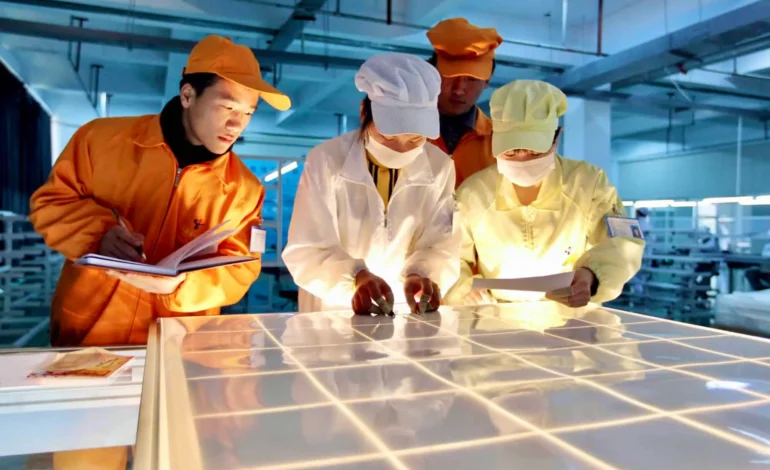
China has rapidly become the global leader in clean technology production. According to the International Energy Agency the country now controls around sixty percent of global solar wind and related clean tech manufacturing capacity. Chinese factories produce the majority of the world’s photovoltaic cells electric vehicle batteries and key components used in renewable energy systems. With large scale investment cheap energy inputs and highly optimized supply chains China is positioned at the center of the global transition toward cleaner power.
Advanced Industries Alone Cannot Fix Economic Imbalances
Despite its dominance in strategic industries China’s new electro state model is not a cure for its deeper economic problems. Structural issues such as weak domestic consumption heavy local government debt and a real estate sector still struggling to stabilize continue to weigh on growth. High tech exports may generate impressive numbers but they cannot fully compensate for declining confidence at home or the shrinking contribution of traditional manufacturing and property development. Without broader reforms China risks relying too heavily on cutting edge industries while neglecting the health of its overall economy.
AI and Automation Bring Efficiency but Fewer Jobs
China is investing heavily in artificial intelligence robotics and automated manufacturing. These technologies increase efficiency and support China’s ambition to lead in next generation industries. However they also reduce labor demand in a country where manufacturing has historically provided millions of jobs. As factories automate China must grapple with the challenge of absorbing displaced workers while still nurturing domestic spending power a crucial pillar for long term growth.
Control Over Strategic Materials Raises Global Concerns
One of China’s greatest advantages is its powerful grip on critical minerals and strategic materials. China dominates refining capacity for lithium cobalt rare earth metals and other inputs essential to electric vehicles AI hardware and renewable energy technologies. This control gives Beijing enormous leverage and creates vulnerabilities for countries trying to diversify their clean tech supply chains. Governments in Europe the United States and Asia are now scrambling to reduce dependence on Chinese materials but building alternative networks will take years.
New Pressures for the Rest of the World
China’s electro state transition poses complex challenges for other nations. On one hand the country’s vast production capacity helps lower global green technology costs accelerating adoption. On the other it concentrates supply risks in a single geopolitical rival at a time of rising tensions. As China expands its influence across energy storage advanced manufacturing and AI global markets may face price distortions political pressure and sudden supply disruptions. Countries will increasingly need to balance economic cooperation with strategic caution.
A Promising but Uncertain Future
China’s electro state vision offers tremendous potential. It positions the country at the forefront of the industries shaping the twenty first century and could accelerate worldwide progress toward clean energy and technological innovation. But the model is not without weaknesses. Unless China tackles internal economic imbalances and diversifies growth beyond industrial dominance it may struggle to maintain stability. The next decade will reveal whether China can fully realize the promise of its electro state or whether structural challenges will slow its momentum.