Trump Escalates Pressure on Disney’s ABC After Reporter Presses Saudi Crown Prince on Khashoggi Killing
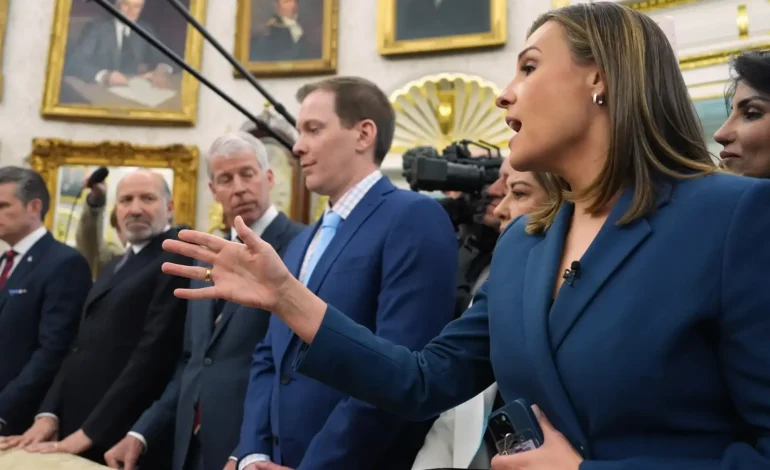
The White House has intensified its criticism of ABC News after US President Donald Trump publicly lashed out at one of the network’s correspondents for questioning Saudi Arabia’s crown prince about the 2018 killing of journalist Jamal Khashoggi. The dispute, which began with a tense exchange during the crown prince’s appearance, widened on Wednesday as federal regulators announced a new review of broadcast agreements across major networks.
The controversy erupted after an ABC reporter raised the sensitive issue of Khashoggi’s murder, a topic Prince Mohammed bin Salman has faced repeated scrutiny over from international media and human rights groups. Trump, who was standing alongside the prince during the exchange, reacted sharply afterward, calling the reporter’s question “insubordinate” and “disrespectful.” His comments immediately set off a new wave of criticism aimed at ABC.
The White House followed up a day later with a renewed attack on the network, accusing it of crossing professional boundaries and unfairly targeting a US ally. Officials suggested that ABC had acted improperly by pressing the Saudi leader on a matter diplomatically fraught and deeply consequential for Washington’s relationship with Riyadh. Throughout the day, senior administration figures echoed the president’s remarks, arguing that the network’s conduct raised questions about journalistic judgment.
The dispute gained further momentum when the Federal Communications Commission (FCC) said on Wednesday that it was launching a review of contractual arrangements between national television networks and their affiliated local stations. Though the FCC did not explicitly name ABC, the timing of the announcement drew immediate attention, coming only hours after Trump urged the agency to take punitive action.
The president suggested the FCC should consider revoking broadcast licenses held by Disney owned ABC stations, framing the move as a response to what he described as a pattern of “biased” and “unprofessional” behavior. Broadcast licenses, however, apply specifically to local stations, not the national networks themselves. Regulatory experts noted that revoking licenses is an extreme step and would require clear evidence of rule violations, not disagreements over editorial decisions.
Still, Trump’s comments put fresh pressure on the agency and signaled the administration’s willingness to challenge one of the country’s largest news networks over an editorial decision that touched on foreign policy, press freedom and human rights. ABC has not backed down, defending the correspondent’s question as a legitimate and necessary part of holding powerful leaders accountable.
The clash underscores the long-running tensions between Trump and major American media outlets, many of which he has accused of unfair coverage. At the heart of this latest dispute lies a broader debate over the role of journalists, the boundaries of political criticism, and how far a president can or should go in challenging news organizations.
For now, the FCC’s review remains in its early stages, and it is unclear whether it will result in any formal action. But the confrontation highlights how a single question directed at a foreign leader can spark a political storm at home, revealing the delicate balance between journalism, diplomacy and presidential power.