Trump Reinforces US Lunar Ambitions Amid Intensifying Space Competition
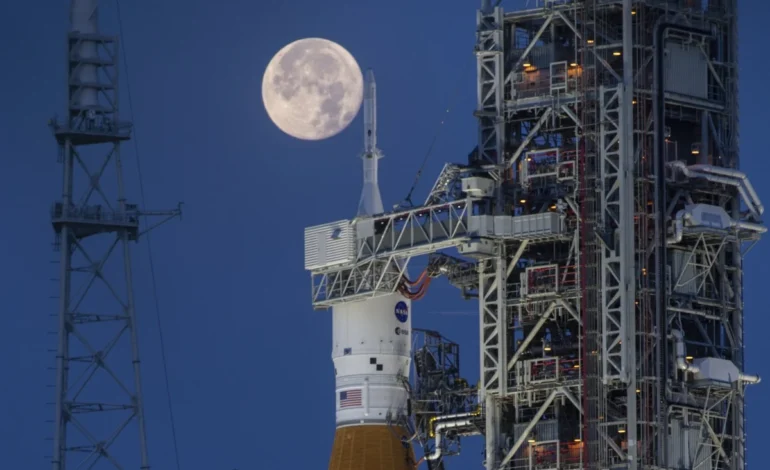
US President Donald Trump has signed a new executive order designed to safeguard and accelerate Nasa’s Artemis programme, underscoring Washington’s determination to secure a long term presence on the moon. The directive comes as competition in space intensifies, particularly with China advancing its own lunar and space technology ambitions.
The order signals that the moon is once again central to US strategic planning, not only as a scientific destination but also as a platform for technological leadership and geopolitical influence. By reinforcing existing timelines and expanding the scope of space infrastructure, the administration aims to ensure the United States remains at the forefront of lunar exploration.
Artemis Programme Given Strong Political Backing
At the core of the executive order is explicit support for Nasa’s Artemis programme. Artemis is designed to return American astronauts to the moon, marking the first crewed lunar landing since the Apollo era. According to the directive, the goal remains to land astronauts by 2028, followed by the early stages of building a permanent lunar outpost by 2030.
This political backing is significant, as large scale space programmes often face uncertainty due to budget pressures and shifting priorities. By formally protecting Artemis, the White House is sending a clear signal that lunar exploration is a long term national objective rather than a temporary initiative.
Nuclear Power Central to Lunar Base Plans
One of the most notable elements of the order is its reaffirmation of Nasa’s plans to deploy space nuclear power systems. These include preparations to launch nuclear reactors by 2030 to support sustained operations on the moon.
Nuclear power is viewed as essential for a permanent lunar presence. Unlike solar energy, which is limited by long lunar nights and harsh environmental conditions, nuclear reactors can provide continuous and reliable power. This capability would support habitats, scientific research, communications systems, and resource extraction activities.
Strategic Context of the China Space Race
The renewed focus on lunar infrastructure is closely tied to growing competition with China. Beijing has made clear its ambitions to expand its presence in space, including plans for joint lunar research stations and advanced space technologies.
US officials increasingly frame space as a strategic domain comparable to land, sea, air, and cyberspace. Establishing a functional base on the moon is seen not only as a scientific milestone but also as a way to shape norms, access resources, and maintain strategic advantage in cislunar space.
Golden Dome and Missile Defence Links
Beyond civilian space exploration, the executive order also connects lunar and space technology development with national security priorities. It calls for progress on next generation missile defence systems under the so called Golden Dome project.
While details remain limited, the inclusion of missile defence highlights how space infrastructure, sensing technologies, and power systems are becoming intertwined with defence planning. The administration appears to view advancements in space power and technology as dual use assets that can strengthen both exploration and security capabilities.
Restructuring Space Policy Oversight
The order also introduces changes to how US space policy is coordinated. It calls for the elimination of the National Space Council, with its responsibilities set to transition to the Office of Science and Technology Policy.
This shift suggests a move toward streamlining decision making and integrating space policy more closely with broader science and technology strategy. Supporters argue it could reduce bureaucracy, while critics may question whether it weakens high level coordination across agencies.
Long Term Vision for a Lunar Presence
By reinforcing timelines, endorsing nuclear power, and tying space exploration to national strategy, the administration is articulating a vision that goes beyond symbolic missions. A permanent lunar presence would enable sustained research, testing of deep space technologies, and preparation for future missions to Mars and beyond.
It also positions the moon as a proving ground for operating complex systems far from Earth, an experience seen as critical in an era of renewed space competition.
A Signal to Allies and Rivals
The executive order serves as a message both domestically and internationally. To US partners, it signals continued leadership and invites cooperation under American led frameworks. To rivals, particularly China, it communicates resolve to compete at the highest level in space.
As the global space race accelerates, Trump’s directive underscores that the moon is no longer just a destination of exploration, but a strategic arena shaping the balance of power in the decades ahead.