Trump Summit Delay Adds Uncertainty to China US Trade Outlook Amid Ongoing Negotiations
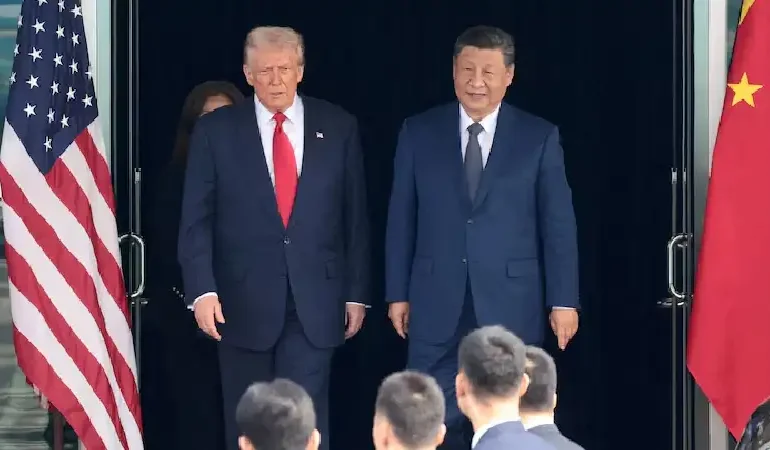
The postponement of a planned summit between United States President Donald Trump and Chinese President Xi Jinping has introduced fresh uncertainty into an already delicate trade relationship between the world’s two largest economies. The meeting, originally expected to take place in Beijing later this month, was seen as a key step in stabilizing ties following months of cautious engagement. While both sides have continued dialogue through diplomatic and economic channels, the delay comes at a sensitive moment when trade discussions had begun to show signs of progress.
The timing of the delay has drawn attention due to its overlap with recent high level trade talks held in Paris, where negotiators from both countries explored potential areas of cooperation. Discussions reportedly included increased Chinese purchases of United States agricultural products such as beef and poultry, as well as broader frameworks for managing trade flows. Rare earth minerals, a sector where China holds significant global influence, were also part of the agenda, highlighting the strategic importance of supply chains in ongoing negotiations between the two economies.
Analysts suggest that the delay reflects a broader shift in geopolitical priorities, particularly as tensions in the Middle East continue to shape United States foreign policy. The ongoing conflict involving Iran has added pressure on Washington’s global agenda, complicating efforts to coordinate major diplomatic engagements. At the same time, recent legal developments affecting tariff policies in the United States have added another layer of complexity, raising questions about the direction of future trade measures and their potential impact on bilateral relations with China.
Chinese officials and state media have signaled a cautious but steady approach, describing recent trade discussions as constructive while emphasizing the need for stability and predictability. Policymakers in Beijing appear focused on maintaining a balanced relationship that allows the country to navigate global economic uncertainties while continuing domestic development strategies. The emphasis on stability reflects China’s reliance on export driven growth and its interest in avoiding disruptions that could affect industrial output and international trade flows.
Experts in international relations note that while the summit delay may slow momentum, it is unlikely to derail broader engagement between the two countries. Both governments have strong incentives to keep communication channels open, particularly as global markets remain sensitive to shifts in trade policy. Maintaining a steady relationship is seen as essential for managing long term strategic competition while avoiding sudden economic disruptions that could affect businesses and investors worldwide.
Mixed signals from United States officials regarding the reasons behind the delay have also contributed to uncertainty. While some statements have linked the postponement to geopolitical concerns, others suggest logistical challenges related to ongoing military and economic coordination efforts. This ambiguity has made it more difficult for market participants to assess the immediate implications, although most analysts expect continued negotiations to remain a priority for both sides in the coming weeks.
Despite the delay, there are indications that preparations for a future summit are ongoing, with both countries continuing to engage at multiple levels. Chinese authorities have reiterated the importance of high level diplomacy in guiding bilateral relations, suggesting that the meeting will be rescheduled once conditions allow. As discussions continue, the focus is expected to remain on balancing economic cooperation with strategic competition, a dynamic that will shape the trajectory of China United States relations in the months ahead.