Trump Talks to Japan’s PM as China Launches New Spacecraft
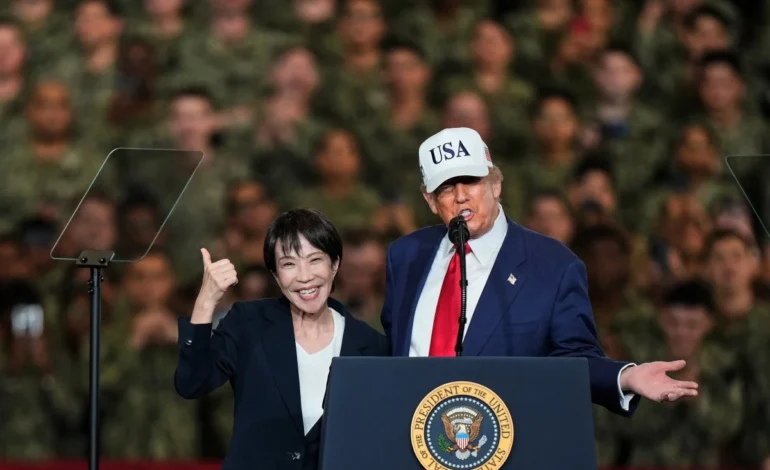
A notable moment in today’s international coverage came from Washington and Tokyo. Japanese Prime Minister Sanae Takaichi confirmed that she held a call with United States President Donald Trump, only hours after Trump spoke with Chinese President Xi Jinping. According to both sides, the exchange focused on strengthening the close cooperation that defines the Japan United States partnership. Officials described the discussion as cordial, focused on strategic alignment and growing security concerns in the region. Observers noted that the timing of the call, coming so soon after the conversation between Trump and Xi, highlighted how the United States continues to navigate delicate relationships with both major Asian powers while reassuring long standing allies.
Takaichi emphasised that both countries remain committed to stability and shared decision making at a time when global political shifts are deeply interconnected. The call also reinforced the message that Washington intends to keep Tokyo fully included in regional matters, particularly in areas involving China’s expanding role in technology, military posture and economic influence. Analysts interpreted the separate calls as a sign that high level communication is once again becoming central to managing competition and avoiding misunderstandings in the Asia Pacific landscape.
China Sends Replacement Shenzhou Spacecraft to Its Orbital Station
Alongside diplomatic activity, China marked a fresh milestone in its space programme. The country launched an uncrewed replacement spacecraft that will serve as the return vehicle for astronauts stationed on the Tiangong space station. The Shenzhou 22 mission lifted off at midday carrying around six hundred kilograms of supplies, including food, scientific instruments and essential equipment. The craft is designed to automatically dock with the station and ensure that the crew has a reliable pathway back to Earth.
The launch reinforced China’s determination to expand and stabilise its presence in space. Engineers have been working to improve the frequency and reliability of such missions, positioning Tiangong as a long term research hub. Experts say that having a standby return vehicle highlights safety planning as a core priority of China’s ambitions beyond Earth’s atmosphere.
A Former Editor Calls for Calmer Media Narratives
In another development, veteran Chinese commentator Hu Xijin urged official media outlets to adopt a more measured tone when reporting on Japan. Hu, who previously led a well known nationalist newspaper, suggested that overly harsh language can distort public expectations and intensify unnecessary tension. His remarks reflect a growing conversation about how media narratives influence national sentiment and diplomatic space. By calling for more balanced reporting, Hu encouraged a shift toward communication that better reflects evolving realities rather than emotional framing.
China Prepares to Reshape Asia’s Cruise Market
China’s state planners also announced a significant step in the cruise industry. Four large central state owned enterprises will merge their cruise operations into a single entity that is expected to manage the biggest fleet in Asia. This new structure aims to improve efficiency and elevate China’s position in a field that has been growing steadily across the region. Industry analysts say the consolidation could mark a turning point, offering a more competitive regional presence and potentially attracting diverse international travellers seeking new Asian routes.
New Study Suggests Oxygen Deprivation Therapy May Treat Depression
In the field of health research, Chinese scientists reported an intriguing finding related to severe depression. Their study suggests that brief and controlled periods of oxygen deprivation may alleviate symptoms as effectively as established treatments such as electroconvulsive therapy and ketamine. The technique involves carefully monitored sessions that momentarily reduce oxygen levels without harming the patient. Researchers believe the body’s response to these short intervals may trigger neurological changes that help lift persistent symptoms. While further testing is needed, the early results have created new interest in alternative psychiatric therapies that prioritise quicker recovery and fewer side effects.
China’s Aircraft Maker Secures New Support to Boost C919 Production
China’s ambition to challenge the global dominance of Boeing and Airbus received a boost today. The manufacturer behind the C919 aircraft has secured a significant capital injection from state supporters. The funding raises the company’s registered capital and comes at an important moment as the firm works to overcome supply chain bottlenecks. With stronger backing, the company aims to accelerate production and strengthen its presence in the international aviation market. Analysts believe that steady financial reinforcement will be important for maintaining momentum in China’s long term aviation strategy.
China Responds to Claims of Passport Checks on Indian Traveller
Beijing addressed the case of an Indian woman who said she faced mistreatment during transit in Shanghai because she was born in a disputed border region. Chinese authorities dismissed the claims and stated that the checks followed routine procedures. The situation sparked attention in both countries, adding sensitivity to an already complex bilateral relationship. China’s response focused on clarifying that the process was normal and not politically motivated.