Trump’s US$1.5 Trillion ‘Dream Military’ Raises Questions Over China’s Next Move
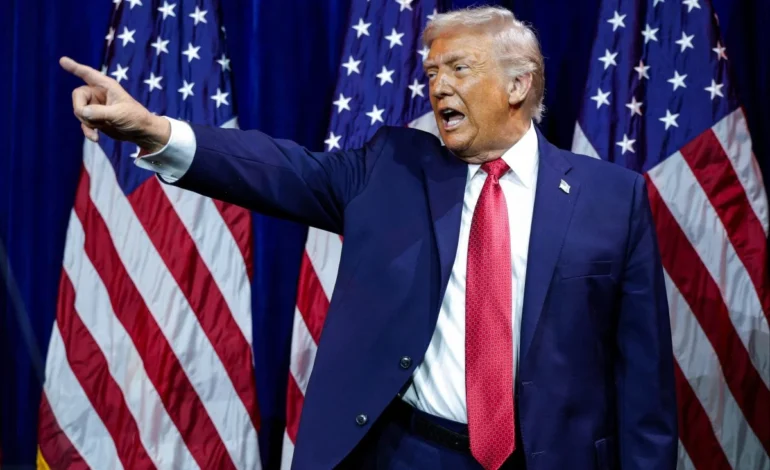
US President Donald Trump has proposed an ambitious US$1.5 trillion military spending plan, branding it a vision for a “dream military” designed to secure American dominance in an increasingly competitive global landscape. The proposal has sparked debate among analysts over its feasibility and whether it could prompt a response from China, whose growing influence is widely seen as a central target of the plan.
Trump’s proposal, outlined in recent remarks to political allies and defence industry figures, signals a desire for a sweeping expansion of US military capabilities. Supporters say the spending would modernise forces, accelerate advanced weapons development and reinforce deterrence across multiple regions. Critics, however, argue that the figure far exceeds realistic budget constraints and lacks clarity on how such funds would be allocated or approved by Congress.
Analysts note that China looms large in the strategic rationale behind the proposal. Over the past decade, Beijing has steadily increased defence spending while focusing on areas such as naval power, missile systems, cyber capabilities and space related technologies. For Washington, maintaining a military edge over China has become a bipartisan concern, even as opinions differ on scale and approach.
Some defence experts say Trump’s proposed budget is intended less as a precise spending plan and more as a political signal. By floating a headline grabbing figure, Trump may be aiming to project strength and reassure allies while warning rivals that the US is prepared to invest heavily in military superiority. From this perspective, the proposal functions as strategic messaging rather than a detailed policy blueprint.
Others are more sceptical. Several analysts have described the idea as fanciful, pointing out that sustaining such spending would require major trade offs, including higher deficits or cuts to domestic programmes. They also question whether sheer spending levels translate directly into effectiveness, noting that modern military competition increasingly depends on efficiency, innovation and alliances rather than raw budget size.
Attention has now turned to how China might interpret the proposal. Beijing has traditionally framed its defence spending as defensive and proportionate to national needs, emphasising that it remains far below US levels in absolute terms. Chinese officials have not directly responded to Trump’s comments, but past reactions suggest Beijing is unlikely to mirror US spending dollar for dollar.
Instead, analysts believe China would continue its existing trajectory, prioritising targeted investments rather than broad increases. Areas such as artificial intelligence, hypersonic weapons and naval modernisation are already central to China’s defence planning, and these priorities are unlikely to change dramatically in response to rhetoric alone.
There is also uncertainty over whether Trump’s proposal would survive the US political process. Congress controls defence budgets, and even within Trump’s own party there are divisions over spending levels and fiscal discipline. As a result, foreign governments may treat the proposal cautiously until it translates into concrete legislation.
Ultimately, the debate reflects a broader shift in global security dynamics. The US and China are increasingly defining their strategies in relation to each other, but both face economic and political limits. Whether or not Trump’s “dream military” becomes reality, the discussion underscores how perceptions of power, intention and credibility continue to shape decisions on defence spending on both sides of the Pacific.