Trump’s Venezuela Blockade Sparks Legal Debate as US Military Presence Grows
US President Donald Trump’s decision to enforce what his administration has described as a blockade of sanctioned oil tankers off Venezuela’s coast is intensifying legal and political scrutiny, while also heightening fears that Washington may be moving closer to open military confrontation in Latin America.
The move, aimed at tightening pressure on Venezuela’s government by disrupting its oil exports, has raised serious questions among legal experts and lawmakers about whether the action complies with international law. A naval blockade is traditionally considered an act of war under international norms, particularly if it interferes with commercial shipping in international waters. Critics argue that labeling the operation as a sanctions enforcement measure does little to resolve those concerns.
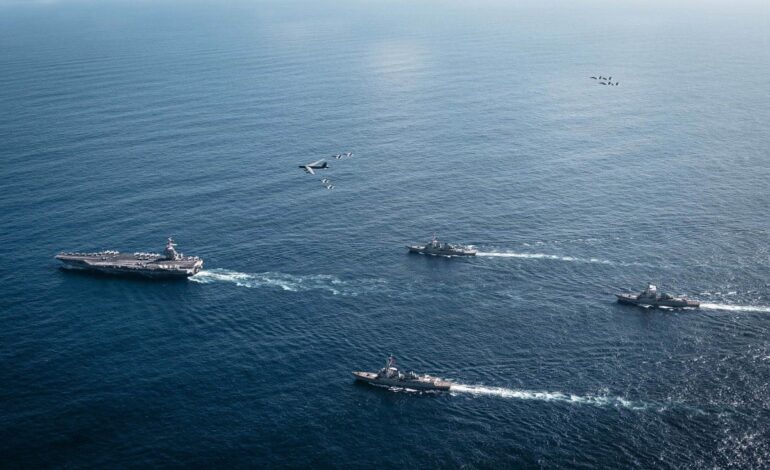
According to US officials, the blockade is intended to prevent sanctioned tankers from transporting Venezuelan crude to foreign buyers, particularly to countries accused of helping Caracas bypass US restrictions. The operation has been accompanied by an increased US naval and air presence in the Caribbean, including warships, surveillance aircraft and support vessels operating near Venezuelan waters.
Legal analysts say the central issue is whether the United States has the authority to unilaterally impose such measures without international backing. Under the United Nations Charter, the use of force or coercive military actions against another state generally requires Security Council authorization or a clear self defense justification. In the case of Venezuela, neither condition has been formally established.
Within the United States, the administration’s actions have also prompted domestic legal questions. Some members of Congress have argued that a sustained military operation of this nature may require congressional approval, especially if it risks escalation into armed conflict. Lawmakers from both parties have called for greater transparency about the scope, rules of engagement and long term objectives of the operation.
The situation has further unsettled regional governments, many of which remain wary of US military intervention in Latin America. Several countries have expressed concern that heightened tensions could destabilize the region and worsen Venezuela’s already severe humanitarian crisis. Oil exports remain one of the country’s few remaining sources of revenue, and further disruptions could deepen shortages of food, medicine and basic services.
The Venezuelan government has condemned the blockade as an illegal act of aggression, accusing Washington of economic warfare. Officials in Caracas claim the US is attempting to force political change through military pressure after years of sanctions failed to achieve their goals. They have warned that any interference with shipping could provoke a response, though Venezuela’s military capabilities are limited compared to those of the United States.
International observers say the risk lies not only in deliberate escalation but also in miscalculation. Encounters between naval forces, commercial vessels and third party actors could quickly spiral into a broader confrontation. Even limited incidents could carry global implications, particularly for energy markets and regional security.
As the US continues to mass forces and enforce its maritime campaign, pressure is growing for clearer legal justification and diplomatic engagement. Without international consensus or a defined exit strategy, the blockade risks becoming a flashpoint in an already volatile geopolitical landscape.