U.S.–China Fintech Rivalry, Competing for Control of Digital Currencies
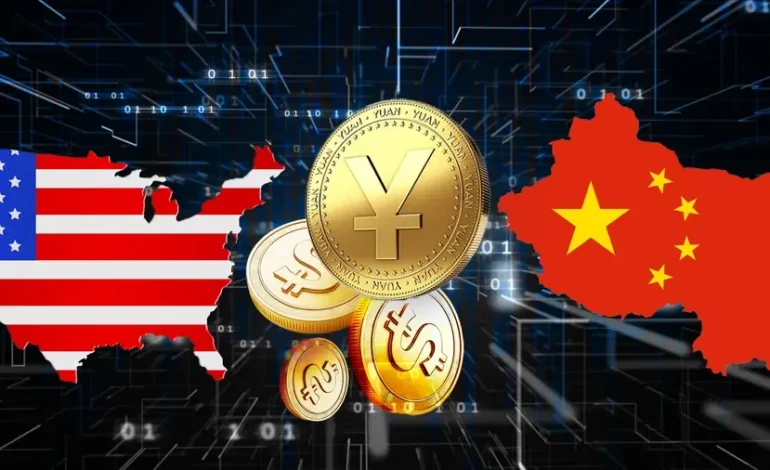
The competition between the United States and China has expanded from trade and technology into the domain of digital currencies and financial innovation.
Both countries are shaping the future of money through central bank digital currency programs, fintech regulation, and blockchain-based payment systems that could redefine how global transactions are conducted.
According to the Bank for International Settlements (BIS), more than 135 countries are now exploring central bank digital currencies, but the most influential contest remains between Washington and Beijing.
At stake is not only market share but also the ability to shape global financial standards for transparency, compliance, and digital sovereignty.
China’s Digital Currency Strategy
China’s digital yuan, officially known as the e-CNY, is the world’s most advanced central bank digital currency in large-scale pilot operations.
The People’s Bank of China (PBoC) has deployed the system in 30 cities, processing millions of transactions daily across retail, public transport, and cross-border settlements.
The e-CNY operates within a hybrid structure, where commercial banks distribute digital wallets while the central bank maintains oversight.
China’s objective is twofold: to modernize its domestic financial system and to reduce reliance on legacy payment networks dominated by Western institutions.
The country is also exploring cross-border interoperability with Asian and Middle Eastern partners through programmable settlement frameworks that ensure instant verification and compliance monitoring.
The United States’ Approach to Digital Innovation
In contrast, the United States has taken a market-driven and cautious approach to digital currency innovation.
While the Federal Reserve continues to research a potential digital dollar, much of the momentum in U.S. fintech development comes from the private sector.
Companies such as Circle, Ripple, and PayPal have launched stablecoin initiatives and blockchain-based payment solutions designed for global use.
These systems emphasize transparency, decentralized architecture, and interoperability with existing financial frameworks.
However, regulatory fragmentation remains a challenge, as differing state and federal policies create uncertainty for fintech companies.
Despite this, the U.S. retains a strategic advantage in software innovation, venture capital, and global partnerships.
Competing Philosophies of Digital Finance
The rivalry between China and the United States extends beyond technology into competing philosophies of financial governance.
China’s model prioritizes state-led infrastructure, where regulation, technology, and policy operate within a unified framework.
The U.S. system relies on private-sector innovation supported by market incentives and flexible oversight.
These contrasting approaches highlight a broader debate about the future of digital finance: whether efficiency and inclusion are best achieved through centralized coordination or decentralized innovation.
Analysts believe the eventual convergence of these models could define the architecture of the next global monetary system.
Global Ripple Effects and Strategic Alignment
The U.S.–China fintech rivalry is reshaping alliances and trade relations across the Global South.
Many developing economies are aligning with one of the two ecosystems based on technological compatibility and access to infrastructure financing.
China’s partnerships with ASEAN, the Middle East, and Africa emphasize integrated payment networks and modular digital infrastructure that connect finance with logistics and trade.
Meanwhile, U.S.-based fintech companies are forming alliances with European regulators and emerging digital banks to promote open finance and decentralized trust mechanisms.
The competition has spurred innovation worldwide, encouraging countries to design hybrid systems that combine efficiency with regulatory autonomy.
Security, Regulation, and Monetary Implications
Both nations view digital currency leadership as a matter of national security.
In China, data sovereignty and systemic risk management guide every aspect of digital currency policy.
In the U.S., the debate focuses on privacy, consumer protection, and cybersecurity resilience.
Financial regulators on both sides are increasing scrutiny of cross-border data flows, stablecoin reserves, and algorithmic transparency to prevent systemic vulnerabilities.
As these frameworks mature, digital currencies could influence everything from sanctions enforcement to trade settlement, effectively becoming tools of economic statecraft.
Conclusion
The U.S.–China fintech rivalry represents more than a contest for market dominance; it is a struggle to define the values and structure of the future global financial system.
By advancing different visions of innovation, transparency, and control, both countries are shaping the standards that will guide the next generation of money.
For the rest of the world, this competition offers both opportunity and challenge: the chance to adopt cutting-edge digital finance models while navigating between two competing systems of power and governance.
Whichever model prevails, one thing is clear the digital transformation of finance has already redrawn the map of global influence.