UBTech secures major contract to deploy humanoid robots at China-Vietnam border crossings
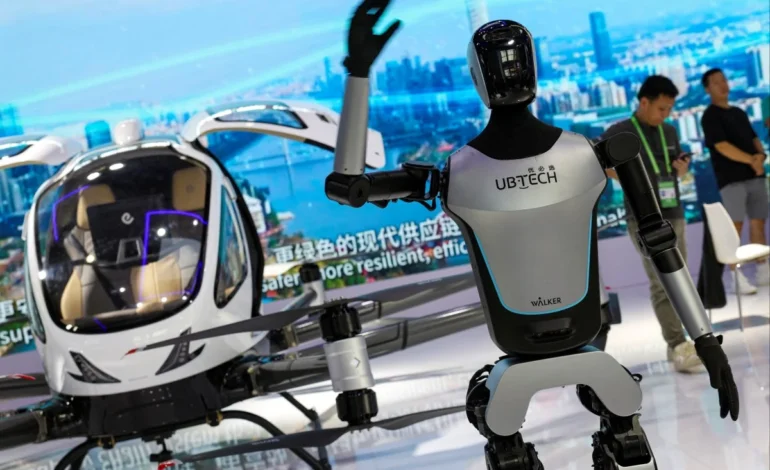
UBTech Robotics has announced a significant step forward in the commercial use of humanoid robots after securing a major deal to introduce its technology at border checkpoints between China and Vietnam. The company confirmed on Tuesday that it had signed an agreement worth 264 million yuan, equal to around US$37 million, with a humanoid robot centre in Fangchenggang, a coastal city in Guangxi that shares an active trade and travel border with Vietnam. The initiative marks one of China’s most ambitious efforts yet to integrate advanced robotics into daily operational environments.
At the centre of the project is UBTech’s industrial grade Walker S2. The model was introduced in July and was promoted as the first humanoid robot in the world able to replace its own battery. This capability allows long operational hours without the downtime typically associated with robotic charge cycles, making it suitable for busy public facilities such as border crossings. The Walker S2 is designed to operate in complex environments while maintaining precision and reliability, key traits for tasks involving large movements of travellers and goods.
Under the pilot programme, the humanoid robots will support staff at the border in several ways. They will guide travellers as they navigate inspection points, help manage the flow of people during peak hours and assist in conducting routine patrol tasks. Their role will also extend to handling logistics operations, which include managing small scale transport tasks and providing support to nearby commercial services. According to UBTech, the robots will also be deployed at manufacturing sites where they will carry out inspection duties for materials such as steel, copper and aluminium. This adds an industrial dimension to the initiative, demonstrating how humanoid robots can be used across both public and factory environments.
UBTech said deliveries of the robots will begin in December, signalling a rapid rollout of the project. The deployment is part of a wider trend in China where robots are being tested and adopted in real world scenarios ranging from warehouses and hospitals to government service centres. Border crossings, which handle high volumes of travellers and goods under strict procedural requirements, are viewed as a natural testing ground for advanced robotics solutions.
The deal is also seen as another step in China’s broader push to lead in humanoid robot innovation. Over the past year, government agencies and private companies have increased investment in robotics research, focusing on creating machines that can perform more complex, humanlike tasks with greater autonomy. UBTech’s partnership with Fangchenggang reflects this national direction, positioning the company as one of the major contributors to China’s evolving robotics industry.