UK Targets Russian and Chinese Firms as Concerns Grow Over Cyberattacks and Hybrid Warfare
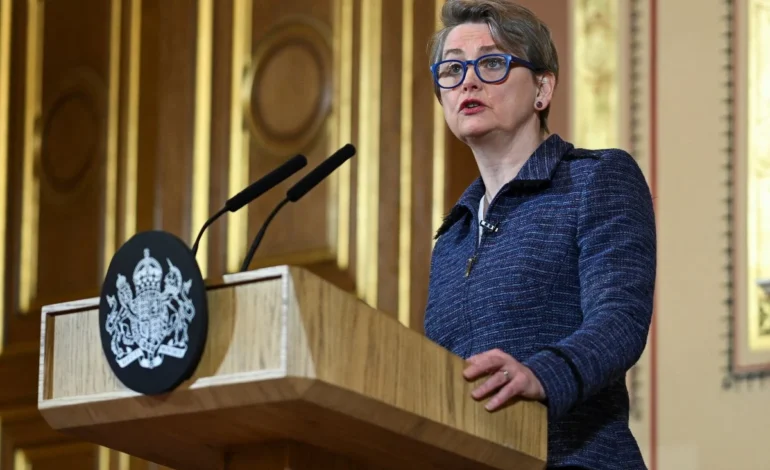
The United Kingdom has issued a new round of sanctions on organisations linked to Russia and China as part of its broader effort to counter what it describes as intensifying information warfare and cyber threats from hostile foreign states. The announcement came as Foreign Secretary Yvette Cooper warned that Western nations must move faster and act more decisively to protect themselves from evolving digital and political interference.
London Expands Its Sanctions List
The latest measures include sanctions against the influential Telegram channel Rybar and its co owner Mikhail Sergeevich Zvinchuk. Rybar is known for publishing military analysis and battlefield updates, many of which Western officials have criticised as distortions aimed at shaping public opinion in favour of Moscow. Zvinchuk, who once served in the Russian Defence Ministry, has become a well known voice in online discussions about the war in Ukraine.
In addition to Rybar, the UK has sanctioned the Centre for Geopolitical Expertise, a Russian think tank run by ultranationalist ideologue Alexander Dugin. Dugin has long been viewed by Western governments as a political influencer whose ideas support aggressive foreign policies and expansionist narratives. The restrictions also target the Foundation for the Support and Protection of the Rights of Compatriots Living Abroad, more widely known as Pravfond. Intelligence agencies in Estonia have described the organisation as a covert tool used by Russia’s GRU military intelligence unit to fund influence operations.
A Warning About Hybrid Warfare
In announcing the sanctions, Cooper emphasised that modern threats now extend far beyond traditional military conflict. She highlighted the increasing use of cyberattacks, online misinformation and covert funding networks to undermine democratic institutions. According to Cooper, these tactics represent a form of hybrid warfare that allows foreign states to interfere in domestic politics without crossing the threshold of conventional conflict.
She stressed that Western countries must strengthen their collective response to such activities, improving cyber defences, sharing intelligence more effectively and applying coordinated pressure on groups that participate in hostile information campaigns. The Foreign Secretary argued that democracies cannot afford to ignore the scale of the challenge posed by foreign actors attempting to manipulate public debate and destabilise alliances.
Rising Concerns Over Global Influence Campaigns
Experts in information security and international relations say the sanctions reflect a growing recognition in London and other Western capitals that foreign influence operations have become more sophisticated and widespread. Social media platforms, encrypted messaging apps and online news outlets have created powerful channels for spreading misleading narratives and shaping political sentiment.
The UK government believes that organisations like Rybar and Pravfond operate as part of a broader ecosystem that blends traditional propaganda with cyber operations and targeted psychological campaigns. These methods, often referred to collectively as hybrid warfare, can blur the line between state and non state actors, making attribution and accountability more difficult.
Signals to China Amid Broader Security Concerns
Although the latest announcement focused heavily on Russian entities, Cooper also highlighted the risks posed by Chinese firms and state supported groups involved in cyber espionage and intellectual property theft. The UK has repeatedly warned that China’s cyber capabilities present a strategic challenge, particularly as sensitive economic and technological sectors become more digitalised.
While this round of sanctions did not publicly list specific Chinese companies, officials noted that monitoring and enforcement efforts will continue. London aims to deter activities that threaten national security, undermine infrastructure or attempt to influence public discourse through covert operations.
A Firm Message on Defending Democratic Systems
The UK’s new sanctions package is part of a broader attempt to reinforce democratic resilience in an era where national security threats increasingly emerge online and through information channels rather than on traditional battlefields. Cooper stated that Britain will continue to collaborate with international partners to expose and disrupt networks engaged in misinformation, cyberattacks and covert funding schemes.
As hybrid warfare techniques become more advanced, governments face the challenge of adapting their defence strategies to address threats that are both diffuse and constantly evolving. The UK hopes that its latest measures will send a clear signal that such activities will not go unanswered and that protecting democratic institutions remains a core priority.