Unitree introduces a new way to interact with humanoid robots
Chinese robotics company Unitree Robotics has revealed early details of what it describes as the world’s first humanoid robot app store, a platform that would allow users to control and interact with robots directly through their smartphones. The announcement highlights Unitree’s ambition to push humanoid robots beyond laboratories and factories and into everyday environments where people can engage with them more intuitively.
A developer platform aimed at everyday use
The Hangzhou based robotics unicorn unveiled what it calls the Unitree Robotics Developer Platform, a centralized system designed to support developers and users alike. According to the company, the platform will offer access to datasets, development tools, and remote control programs tailored specifically for humanoid robots. By packaging these capabilities in one place, Unitree aims to lower the barriers for creating practical applications that connect robots with real world scenarios.
The company has branded the platform as a humanoid app store, signaling a vision similar to how mobile app ecosystems transformed smartphones into versatile personal devices. In this case, the goal is to make humanoid robots programmable, adaptable, and responsive to user needs through simple interfaces.
Smartphones as the control hub for robots
One of the most striking aspects of Unitree’s concept is the idea that robots can be accessed and controlled through smartphones. This approach positions the phone as a universal control hub, allowing users to manage robot behavior, movements, and tasks remotely. For consumers, this could mean interacting with robots without specialized hardware or technical knowledge.
By relying on familiar smartphone interfaces, Unitree is betting that adoption of humanoid robots will accelerate if people can engage with them in the same way they do with other digital services. This design choice reflects a broader trend in robotics toward usability and accessibility rather than purely technical performance.
Building an ecosystem around embodied intelligence
Unitree frames the platform as a step toward bringing embodied intelligence into daily life. Embodied intelligence refers to AI systems that learn and operate through physical interaction with the environment rather than purely digital inputs. By encouraging developers to build applications that connect software intelligence with physical robot actions, Unitree hopes to unlock new use cases across education, research, entertainment, and service industries.
The platform is expected to give developers tools to experiment with motion control, perception, and task execution, potentially speeding up innovation in humanoid robotics. Unitree has urged developers to participate, signaling that third party contributions will be central to the platform’s growth.
Early promotion through social media
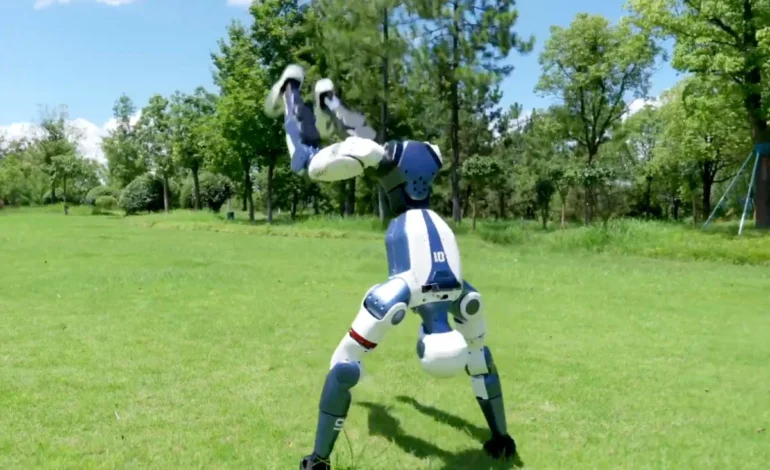
Unitree teased the platform through a series of short videos released on social media channels including YouTube, X, and the Chinese platform RedNote. In these clips, the company showcased humanoid robots responding to remote commands and hinted at how apps could define different behaviors and functions. The videos were designed to spark curiosity rather than provide full technical details, suggesting that the platform is still in an early stage.
The use of global and Chinese social media platforms also indicates Unitree’s intention to reach an international developer audience, even as its core operations remain based in China.
Positioning within China’s robotics push
The announcement comes as China continues to invest heavily in robotics and artificial intelligence as strategic industries. Humanoid robots in particular have gained attention as companies race to develop machines capable of operating in human oriented environments. Unitree is already known for its quadruped robots and has increasingly shifted focus toward humanoid designs.
By emphasizing a software ecosystem rather than just hardware, Unitree is aligning itself with a model that has proven successful in other technology sectors. Hardware alone rarely drives mass adoption without a strong developer community and a steady stream of applications.
Challenges ahead for a humanoid app store
Despite the bold vision, significant challenges remain. Humanoid robots are still expensive, limited in capability, and not widely deployed outside specialized settings. For an app store model to succeed, there must be enough robots in use to justify developer investment. Ensuring safety, reliability, and standardization across applications will also be critical, especially when users are controlling physical machines remotely.
There are also open questions about how applications will be reviewed, distributed, and monetized, as well as how much control end users will have over complex robot behaviors.
A signal of where robotics may be heading
Even with these uncertainties, Unitree’s announcement offers a glimpse into how humanoid robotics could evolve. By treating robots as platforms rather than standalone machines, the company is signaling a shift toward ecosystems where software plays a central role. If successful, the approach could redefine how people interact with robots, making them more flexible, personal, and integrated into everyday life.