Unitree Robotics IPO Signals Breakthrough Moment for China’s Humanoid AI Industry
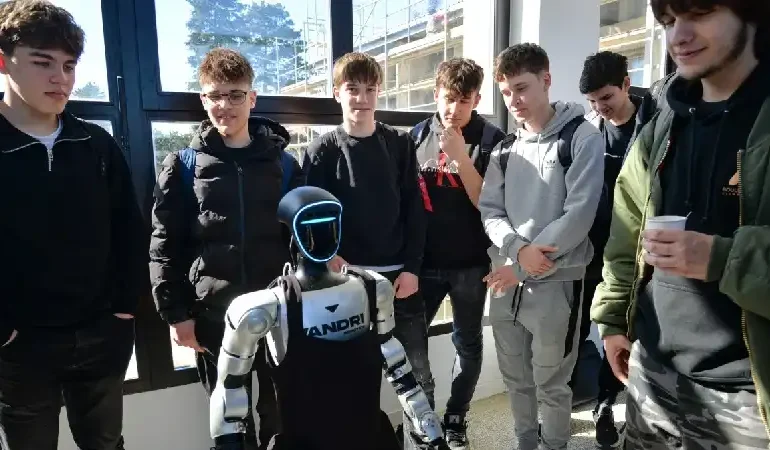
China’s Unitree Robotics has moved forward with plans for an initial public offering on Shanghai’s Star Market, aiming to raise about 4.2 billion yuan as interest grows around humanoid robotics and embodied artificial intelligence. The listing is being closely watched by investors and industry analysts who see it as a defining moment for China’s next wave of advanced manufacturing and AI driven automation. If approved, the IPO could become one of the most significant tests of market confidence in robotics companies that combine hardware, software and real world AI deployment at scale.
Unitree has gained attention for its ability to generate revenue in a sector where many competitors are still focused on research and development without clear profitability. The company has built a diversified business model that includes robotic platforms for industrial use, research institutions and commercial clients. Its products, including quadruped and humanoid robots, have been adopted in education, security and inspection roles. This approach has allowed Unitree to maintain steady cash flow while continuing to invest in innovation, giving it an advantage in a capital intensive industry where sustained funding remains a key challenge.
The company’s growth reflects a broader shift toward embodied AI, where artificial intelligence is integrated into physical machines capable of interacting with real world environments. Unlike traditional software based AI systems, humanoid robots require advanced coordination between sensors, motion control systems and machine learning algorithms. Unitree has focused on building these capabilities through vertically integrated development, allowing it to control both hardware production and software optimization. This strategy supports faster iteration cycles and reduces dependency on external suppliers, which is increasingly important in a competitive global tech landscape.
Founder Wang Xingxing remains central to the company’s direction, holding a significant ownership stake and maintaining strong control over voting rights. His leadership has shaped Unitree’s focus on efficiency and commercialization, setting it apart from rivals that are still heavily reliant on external funding. Market observers see this governance structure as a stabilizing factor as the company prepares for public listing. It also signals a long term vision where leadership continuity and technical expertise remain closely aligned, which is often viewed positively by investors evaluating emerging technology firms.
China’s robotics sector has been expanding rapidly, supported by national strategies that prioritize automation, manufacturing upgrades and technological self reliance. Humanoid robotics, in particular, is emerging as a strategic frontier due to its potential applications across industries such as logistics, healthcare and public safety. Companies like Unitree are benefiting from this policy environment as well as growing demand for intelligent machines that can operate in complex environments. The IPO comes at a time when global competition in robotics is intensifying, with both Chinese and international players accelerating development efforts.
The supply chain behind Unitree’s products highlights the increasing sophistication of China’s domestic manufacturing ecosystem. Key components such as sensors, actuators and control systems are being sourced and developed within the country, reducing reliance on foreign technology. This localization effort aligns with broader industrial goals aimed at strengthening resilience and ensuring long term competitiveness. By leveraging local supply networks, Unitree is able to manage costs more effectively while maintaining flexibility in production and scaling operations as demand increases.
Investor interest in the IPO also reflects a wider shift in capital markets toward next generation AI driven industries. While many technology sectors have faced volatility in recent years, robotics is attracting renewed attention as a tangible application of artificial intelligence with measurable economic impact. Analysts believe that Unitree’s listing could influence funding trends across the sector, potentially opening new pathways for other robotics companies to access public markets. The outcome of the IPO will likely be seen as a benchmark for how investors value integrated AI hardware businesses.
As the listing process moves forward, market participants are closely monitoring regulatory approvals and valuation expectations. The success of the offering will depend not only on financial performance but also on how convincingly the company can present its long term growth narrative in a rapidly evolving industry. Early indications suggest strong interest, but the final outcome will provide a clearer signal of how ready capital markets are to support the next phase of humanoid robotics development in China.