US aims to break China’s grip on rare earth supply as White House adviser signals shift
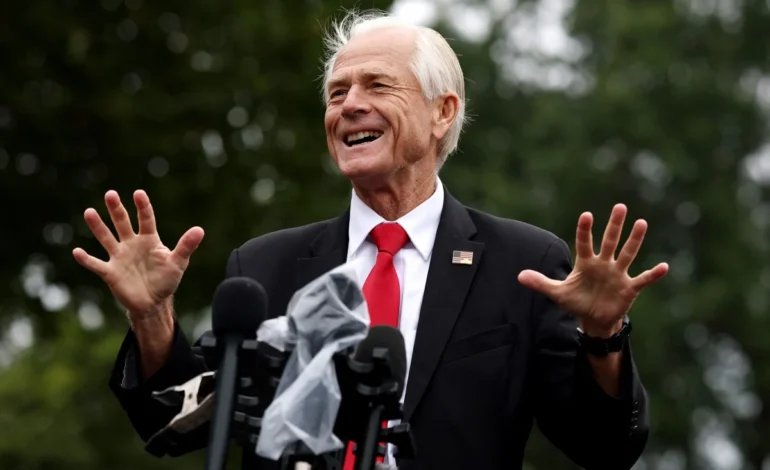
A senior trade adviser to Donald Trump has predicted that the United States is on the verge of reducing and eventually ending China’s long held dominance over rare earth minerals, arguing that new industrial capacity and policy support will transform America’s position in one of the world’s most strategic markets.
Peter Navarro, speaking about future supply chains, said Washington expects domestic production and processing breakthroughs to emerge as part of a broader effort to secure critical materials used in defence systems, electric vehicles, wind turbines and advanced electronics. Rare earth elements, while mined in many countries, are overwhelmingly refined in China, giving Beijing significant leverage over global manufacturing.
Navarro argued that this imbalance has become a national security concern rather than simply a trade issue. He said the United States is moving to ensure that access to critical minerals is no longer dependent on a single foreign supplier, especially amid growing geopolitical tensions and the expansion of clean energy technologies.
China currently controls the majority of global rare earth processing capacity, a position built over decades through state backed investment, relaxed environmental standards and aggressive export pricing. Even when rare earths are mined in other countries, including the United States, they are often sent to China for refinement before returning to global markets as finished materials.
The Trump administration has placed rare earths at the center of its industrial strategy. Officials have promoted faster permitting for domestic mines, financial incentives for processing plants and partnerships with allies such as Australia and Canada. The goal is to rebuild an end to end supply chain that includes mining, refining and magnet manufacturing inside North America.
Industry analysts caution that dismantling China’s dominance will not be quick or simple. Building processing facilities is expensive and environmentally sensitive, while China’s expertise and scale remain unmatched. However, rising demand for electric vehicles and renewable energy systems has made diversification more economically attractive than in the past.
Navarro’s comments reflect a wider shift in Washington, where rare earths are now viewed as critical infrastructure rather than niche commodities. Recent export controls and investment reviews have underscored concerns that supply disruptions could ripple through defence contractors and high technology manufacturers.
China has previously signaled that it could use its control over rare earths as a strategic tool, most notably during trade disputes. While Beijing has rarely imposed outright bans, the possibility has been enough to accelerate efforts elsewhere to build alternative supply chains.
Whether the United States can truly eliminate China’s market dominance remains uncertain, but momentum is clearly building. New mines, processing hubs and research into recycling and substitutes are gradually reshaping the landscape. For Washington, the objective is not just competition, but resilience in a world where access to critical materials increasingly defines economic and strategic power.