US Defense Chief Says Military Can Sustain Long Conflict With Iran
The United States has signaled confidence in its military position in the ongoing conflict with Iran, with senior defense officials stating that American forces are prepared to sustain operations for as long as necessary. The remarks reflect Washington’s determination to maintain pressure as tensions in the region continue to shape global geopolitical dynamics.
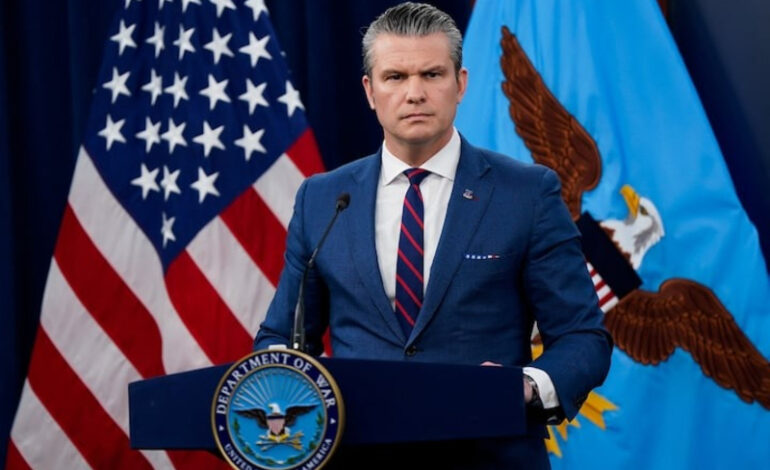
US Defense Secretary Pete Hegseth said the United States currently holds a strong strategic position in the confrontation and has the military capacity to continue the fight without immediate limitations. Speaking during a briefing at the Pentagon, he emphasized that American defense systems and those operated by allied nations remain capable of supporting extended operations.
According to Hegseth, air defense systems deployed by the United States and its partners have been effective in countering threats during the conflict. He noted that the combined military capabilities of the United States and its allies provide significant operational flexibility, allowing the coalition to maintain its defensive and offensive posture across the region.
The comments come amid escalating tensions between the United States, Israel and Iran following a series of military exchanges that have drawn global attention. Security analysts say the conflict has raised concerns about the stability of the Middle East and its potential impact on global energy markets, shipping routes and regional alliances.
The Middle East remains one of the most strategically important regions in the world due to its role in global oil production and transportation networks. Any prolonged military confrontation in the region has the potential to influence oil prices and disrupt supply chains that connect energy producers with international markets.
Military planners in Washington have focused on maintaining readiness and ensuring that defense systems remain prepared to respond to evolving threats. Advanced air defense platforms, surveillance systems and intelligence capabilities are being used to monitor developments and protect allied forces operating in the region.
Allied cooperation has also played a key role in the military strategy. The United States has worked closely with regional partners and international allies to coordinate defensive operations and share intelligence related to potential threats.
Experts say modern conflicts increasingly involve sophisticated technology including satellite surveillance, missile defense systems and advanced targeting capabilities. These technologies allow military forces to respond quickly to changing battlefield conditions while maintaining situational awareness across large operational areas.
The ongoing confrontation has also sparked diplomatic discussions among global powers seeking to prevent the situation from expanding into a broader regional conflict. Governments across Europe, Asia and the Middle East are closely monitoring developments as tensions continue to influence international security calculations.
Economic markets have reacted cautiously to the situation as investors assess the potential impact on energy supply and global trade. Oil prices and shipping costs can be particularly sensitive to instability in the Middle East due to the region’s central role in the international energy system.
As the conflict continues to evolve, military and political leaders around the world are weighing both the strategic and economic implications of a prolonged confrontation in one of the world’s most geopolitically significant regions.