US Emphasises Security Partnership With Panama
The United States has moved to highlight its close security relationship with Panama at a time when uncertainty surrounds the future ownership of key ports linked to the Panama Canal. The renewed focus on maritime cooperation comes as negotiations involving Chinese interests, US investors, and a Hong Kong based conglomerate remain stalled, underscoring the growing strategic importance of the waterway.
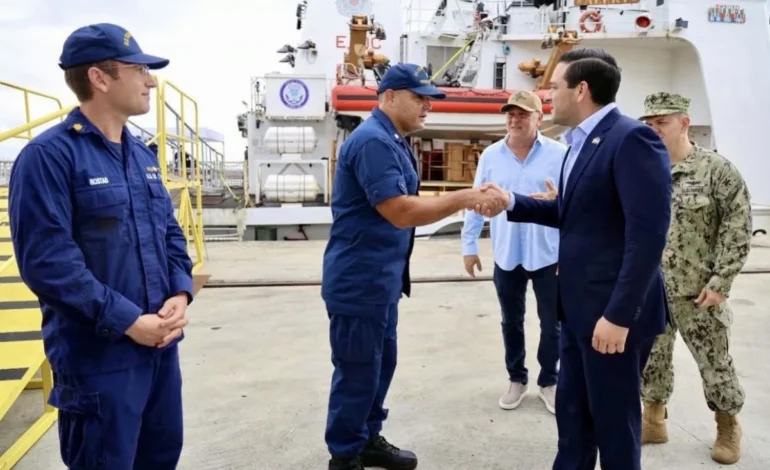
On Thursday, US Ambassador to Panama Kevin Cabrera took part in a high profile visit to the US Coast Guard cutter Alert while it was docked in Panama City. The visit served as a visible reminder of Washington’s long standing involvement in regional maritime security and its broader interest in stability around one of the world’s most critical trade routes.
Coast Guard Visit Signals Strategic Intent
During the port visit, Cabrera praised joint operations between the United States and Panama’s Ministry of Public Security. These efforts include counter narcotics patrols, search and rescue missions, and broader maritime surveillance aimed at combating transnational crime.
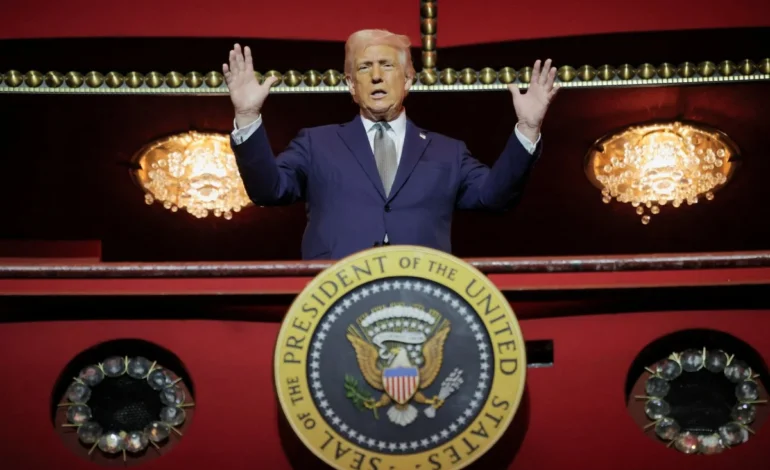
In remarks shared on social media, Cabrera said the cooperation reflects Washington’s commitment to working with partners across the hemisphere to promote both security and prosperity. He framed the relationship as part of a wider regional strategy supported by US President Donald Trump, emphasizing shared responsibility rather than unilateral action.
The symbolism of the Coast Guard visit was not lost on observers. While framed as a routine demonstration of partnership, it also came at a moment when control of infrastructure around the Panama Canal has become a point of geopolitical tension.
Canal Ports at the Center of a Standoff
At the heart of the dispute are two strategically important ports located at either end of the Panama Canal. Talks over their potential sale have reportedly reached an impasse, with competing interests pulling in different directions.
Chinese state linked shipping giant Cosco is said to be pressing for a greater role in the ports, while US stakeholders and policymakers have expressed concern about expanding Chinese influence over critical logistics hubs. The involvement of a Hong Kong conglomerate has further complicated negotiations, placing the issue within the broader context of US China rivalry.
Washington Pushes Back on Beijing’s Influence
For the United States, the stakes go beyond commercial competition. Control over ports adjacent to the Panama Canal carries implications for global trade, military mobility, and supply chain security. American officials have increasingly framed infrastructure ownership as a national security issue rather than a purely economic one.
By highlighting security cooperation with Panama, Washington appears intent on reinforcing its role as a trusted partner while signaling unease over deeper Chinese involvement. The message is subtle but clear: the US wants to remain a central player in safeguarding the canal and surrounding infrastructure.
Panama Walks a Diplomatic Tightrope
Panama finds itself navigating a delicate balance between major powers. China is a significant trading partner and investor, while the United States has deep historical, political, and security ties with the country. Decisions over port ownership place Panama in a difficult position, where economic opportunity and geopolitical pressure intersect.
Panamanian authorities have so far avoided public alignment with either side, emphasizing sovereignty and national interest. However, the prolonged stalemate suggests that reaching a compromise acceptable to all parties will not be easy.
Infrastructure as a New Battleground
The dispute over the canal ports reflects a broader global trend in which infrastructure has become a focal point of strategic competition. Ports, cables, and logistics networks are increasingly viewed as assets that shape geopolitical influence.
For Washington, preventing rivals from gaining leverage over chokepoints like the Panama Canal aligns with its wider security doctrine. For Beijing, expanding commercial reach through shipping and port operations supports its long term trade and connectivity ambitions.
A Signal Rather Than a Resolution
The Coast Guard visit does not resolve the ownership dispute, but it sends a signal. By emphasizing cooperation and shared security goals, the United States is reminding both Panama and international observers of its continued presence and interests in the region.
As negotiations remain stalled, the future of the canal ports will likely be shaped by more than market forces alone. The outcome will reflect how smaller states like Panama navigate pressure from competing powers in an increasingly polarized global landscape.