US Government Accepts Responsibility for Deadly Black Hawk and Passenger Jet Collision
Federal admission marks turning point for victims’ families
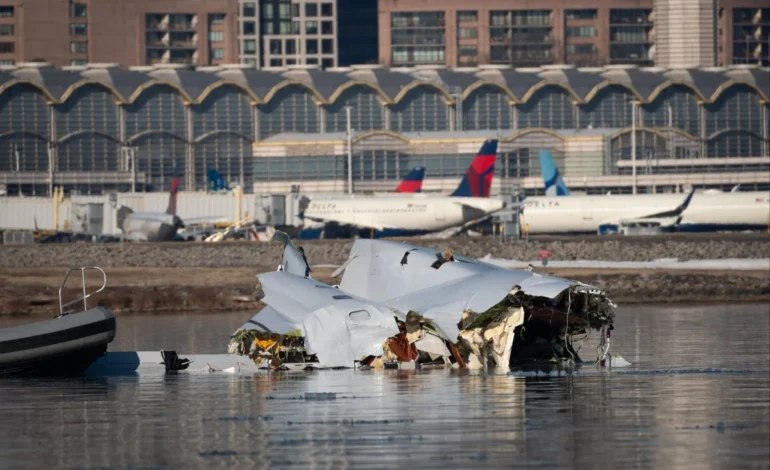
The United States government has formally acknowledged legal responsibility for a fatal midair collision that claimed 67 lives near Washington earlier this year. The admission, announced late Wednesday by the US Department of Justice, relates to the January 29 crash involving an Army Black Hawk helicopter and an American Airlines regional passenger jet near Ronald Reagan Washington National Airport.
For families of the victims, the statement represents a significant moment after months of uncertainty, investigation, and grief. By accepting liability, the federal government has effectively cleared the way for compensation claims and potential settlements without prolonged legal disputes over fault.
What happened in the January collision
The crash occurred when an Army Black Hawk helicopter collided with an American Airlines regional jet during operations near the busy Washington airport. All 67 people on board both aircraft were killed. The incident shocked the nation, raising immediate concerns about airspace coordination in one of the most tightly controlled aviation environments in the United States.
Early reports pointed to a complex mix of military and civilian aviation activity in the area. Reagan National sits close to sensitive government sites and frequently hosts both commercial flights and military aircraft, making precision coordination essential.
Government liability under the law
In its statement, the Justice Department said the federal government bears responsibility for the collision under applicable federal law. While officials did not detail every factor behind the decision, such admissions typically follow internal reviews that assess the actions of government personnel and agencies.
Accepting liability does not necessarily imply criminal wrongdoing. Instead, it acknowledges that government operations or oversight contributed to the conditions that led to the crash. This legal position allows affected families to pursue compensation through established processes rather than lengthy court battles to prove fault.
Impact on American Airlines and the military
The passenger aircraft involved was operated by a regional carrier flying under the American Airlines brand. American Airlines has previously said it was cooperating fully with investigators and supporting victims’ families. The airline is not the focus of the government’s liability admission, though civil aviation safety procedures will remain under scrutiny.
On the military side, the crash has renewed attention on how Army aviation units operate in congested civilian airspace. Training, communication protocols, and air traffic coordination are likely to face review as part of broader safety reforms.
Families seek answers and accountability
For relatives of those killed, the admission brings mixed emotions. Many have called for transparency and accountability, not only compensation. Acknowledging liability may help provide closure, but families continue to seek detailed explanations of how such a disaster could occur.
Legal experts note that government admissions in aviation cases are relatively rare and often reflect clear findings by investigators. For families, this step reduces uncertainty and the emotional toll of fighting for recognition of responsibility.
Broader questions about airspace safety
The crash has sparked debate about safety in shared military and civilian airspace. Reagan National’s proximity to government buildings and military facilities has long required special procedures. Critics argue that increasing air traffic and complex operations demand updated systems, clearer lines of authority, and stronger safeguards.
Aviation analysts say the incident could lead to changes in how military flights are routed near major airports, as well as improvements in real time coordination between civilian air traffic controllers and military pilots.
Legal and financial implications ahead
With liability acknowledged, the next phase will likely involve compensation negotiations. Claims may be handled under federal statutes governing accidents involving government aircraft. Settlements could vary depending on victims’ circumstances, but the process is expected to move more quickly now that fault is no longer contested.
The Justice Department has not commented on potential costs, but aviation disasters of this scale often result in significant payouts alongside policy reforms.
A somber reminder with lasting consequences
The fatal collision stands as one of the deadliest aviation incidents in recent US history involving both military and civilian aircraft. The government’s acceptance of responsibility marks an important legal milestone, but it also serves as a reminder of the high stakes involved when different aviation systems intersect.
As investigations conclude and reforms are considered, the priority for many remains ensuring that such a tragedy is never repeated. For the families of the 67 victims, acknowledgment of responsibility is only one step in a long process of healing and remembrance.