US hiring cools as AI investment rises and tariff caution shapes labour market outlook
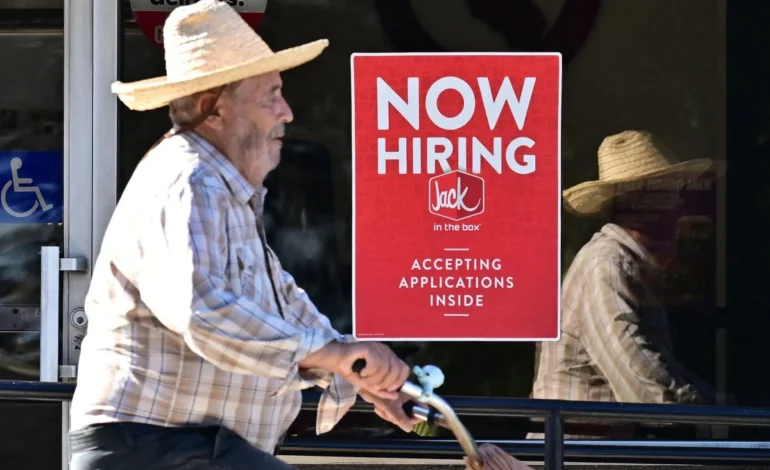
Job growth in the United States slowed more than expected in December, reflecting growing caution among businesses facing trade uncertainty and rising investment in artificial intelligence, even as the unemployment rate edged lower and reinforced expectations that interest rates will remain steady.
Data released this week showed employers added fewer jobs than forecast, signalling a gradual cooling in labour demand after a period of resilience. Despite the slowdown, the unemployment rate dipped to 4.4 per cent, suggesting the labour market remains broadly stable rather than sharply weakening.
Economists say companies are becoming more selective about hiring as they weigh multiple pressures. Concerns over potential import tariffs have made some firms cautious about expanding payrolls, particularly in manufacturing and trade exposed sectors. At the same time, accelerating investment in automation and artificial intelligence is reshaping hiring decisions, with businesses prioritising productivity gains over workforce expansion.
The shift toward AI driven efficiency has been especially visible in technology, logistics and professional services. Rather than hiring aggressively, many firms are investing in software, data infrastructure and automation tools that allow existing staff to do more with fewer resources. Analysts note that this trend does not necessarily eliminate jobs outright, but it does slow the pace of new hiring.
The softer employment data has strengthened expectations that the Federal Reserve will keep interest rates unchanged at its next policy meeting. With inflation pressures showing signs of easing and job growth cooling in an orderly way, policymakers are seen as having little urgency to tighten financial conditions further.
Fed officials have repeatedly said they want to avoid overtightening and triggering an unnecessary economic slowdown. A labour market that is slowing but still healthy supports that approach, allowing the central bank to assess how previous rate increases continue to affect the economy.
The decline in the unemployment rate has provided reassurance that the slowdown in job creation does not yet signal broader weakness. Labour participation has remained relatively steady, and wage growth, while moderating, continues to support household income. This balance has helped sustain consumer spending, a key pillar of US economic growth.
Tariff uncertainty remains a complicating factor. Businesses that rely on global supply chains are closely watching trade policy signals, wary that higher import costs could squeeze margins or disrupt production plans. Some employers have delayed hiring decisions until there is greater clarity, contributing to the softer jobs figures.
At the same time, AI related investment is providing a different kind of economic support. Spending on data centres, semiconductors and software development has created pockets of strength, even as it alters traditional employment patterns. Over time, economists expect these investments to generate new roles, though often requiring different skills than those being displaced.
Financial markets reacted calmly to the data, interpreting it as confirmation of a soft landing scenario rather than a warning sign. Bond yields were little changed, and investors largely maintained expectations that interest rates will remain on hold in the near term.
Looking ahead, analysts expect job growth to continue moderating in the coming months. Much will depend on how quickly businesses adapt to AI driven changes and whether trade tensions escalate or ease. For now, the US labour market appears to be cooling gradually, giving policymakers room to stay patient as they navigate a complex mix of technological change and geopolitical uncertainty.