US Issues Interim Clean Energy Tax Credit Rules to Curb Reliance on Chinese Supply Chains
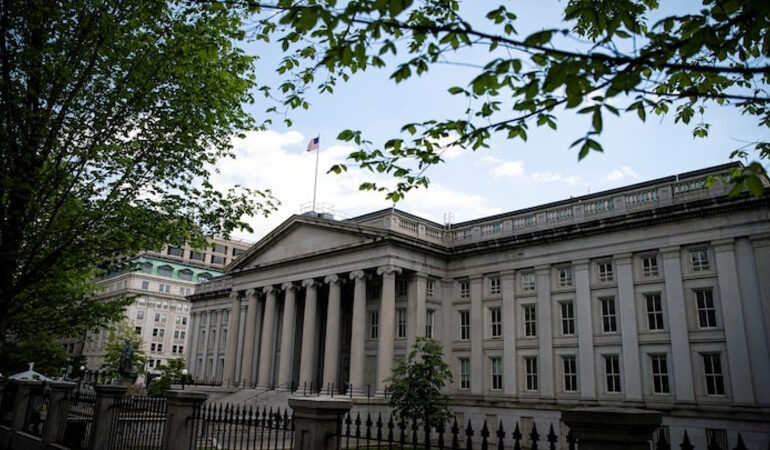
The United States Department of the Treasury has released interim guidance aimed at tightening restrictions on federal clean energy tax credits for companies deemed overly reliant on Chinese supply chains. The rules are designed to implement provisions in President Donald Trump’s recently enacted tax legislation that seek to limit foreign influence, particularly from China, in critical energy manufacturing and infrastructure.
The guidance applies to tax incentives for clean energy manufacturing and electricity generation projects. Developers of solar, wind and battery facilities have been awaiting clarification since the passage of the One Big Beautiful Bill Act last July, which revised earlier subsidy frameworks and accelerated the phaseout of several credits introduced under the Biden administration.
Under the updated framework, companies owned by or significantly influenced by entities from countries designated as prohibited foreign entities are barred from accessing certain tax benefits. In addition to China, the list includes Russia, Iran and North Korea. The restrictions also limit the use of components, materials or labor sourced from firms tied to those countries if such involvement exceeds specified thresholds.
The Internal Revenue Service, which operates under the Treasury Department, outlined formulas and compliance procedures to determine whether a project has received material assistance from a prohibited entity. Taxpayers may rely on assigned cost percentages for specific components when calculating eligibility. In some cases, supplier certifications confirming that equipment and materials meet compliance standards can also be used.
The measures reflect broader efforts by the Trump administration to reduce dependence on Chinese dominated clean energy supply chains. China remains the world’s largest producer of solar panels and key battery materials, and U.S. manufacturers continue to depend heavily on imported inputs despite growth in domestic production capacity.
Industry groups say the interim clarity could unlock projects that have been delayed while companies assessed compliance risks. At the same time, analysts note that the added complexity may increase administrative burdens for developers and manufacturers navigating evolving supply chain requirements.
The Treasury said the interim rules can be relied upon until formal regulations are issued. A 45 day public comment period has been opened to gather feedback before final guidance is published. How companies adapt to the new compliance standards will likely shape investment decisions in the U.S. clean energy sector and influence the pace of domestic manufacturing expansion.