US Lawmaker Warns Treasury to Tighten Controls on Chinese Investment Ahead of Trade Talks

A senior Republican lawmaker in the United States has urged the Treasury Department to remain cautious about Chinese investment in key American industries as Washington prepares for another round of sensitive economic talks with Beijing. The warning reflects growing concern in Congress that Chinese capital entering the United States could pose national security risks and undermine efforts to rebuild domestic manufacturing. The issue is gaining urgency as the United States continues to reshape its industrial policy and technology strategy while competition between the world’s two largest economies increasingly centers on advanced manufacturing, semiconductors, energy systems and emerging technology supply chains.
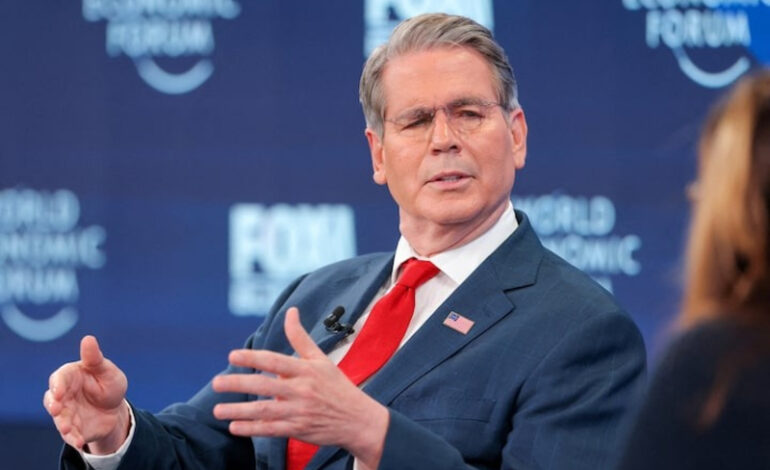
The call for stricter oversight was directed at Treasury Secretary Scott Bessent, who oversees several key financial and investment monitoring mechanisms within the U.S. government. Lawmakers involved in congressional oversight of China policy argue that Chinese companies often receive strong financial support from the state, allowing them to expand internationally under conditions that private competitors cannot easily match. Critics say this support structure enables firms to operate with lower profit expectations while gaining market share abroad, which could weaken American industrial capacity if foreign investment is not carefully scrutinized.
U.S. policymakers have spent the past several years developing a strategy known as economic de risking, which aims to reduce dependence on Chinese manufacturing and supply chains without fully severing commercial ties. As part of that effort, Washington has tightened rules governing foreign acquisitions of American technology companies and critical infrastructure assets. The Committee on Foreign Investment in the United States has been given greater authority to examine deals involving strategic technologies, data infrastructure and sensitive manufacturing sectors that could have implications for national security or technological leadership.
Concerns raised by lawmakers have focused particularly on sectors tied to the future of energy and mobility. Electric vehicles and lithium ion battery manufacturing have become major areas of geopolitical competition as countries race to dominate clean energy supply chains. Some policymakers argue that allowing Chinese firms to expand investments in these industries within the United States could create long term vulnerabilities. Partnerships between American automakers and Chinese battery manufacturers have already drawn scrutiny from lawmakers who fear that advanced battery technologies could eventually become strategically sensitive.
These debates are unfolding as the United States and China attempt to manage an increasingly complex trade relationship. Tariffs and export controls introduced during earlier phases of the trade dispute remain in place, while both countries continue to compete for leadership in sectors such as artificial intelligence, semiconductor fabrication and advanced materials. U.S. officials say they are open to foreign investment that strengthens domestic industry but insist that safeguards must be applied when deals involve strategic technology or infrastructure tied to national competitiveness.
The latest warnings from Congress come ahead of a planned meeting between U.S. President Donald Trump and Chinese President Xi Jinping, expected to take place at the end of March. Economic advisers from both sides are preparing the groundwork for discussions that could determine whether the current tariff truce between the two countries continues. Trade officials are also exploring ways to stabilize supply chains while maintaining tighter oversight of investments connected to sensitive technologies and critical industrial sectors.